
Club Costa Tropical · The Journal
Paths that curb depopulation in Motril's Alpujarra
In Motril's districts like Cázulas or Los Tablones, hiking attracts 12,000 annual visitors and opens a path against rural abandonment. Demographic decline in Motril's Alpujarra districts isn't recent but results from silent erosion spanning decades. ## La Alpujarra de Motril: a territory at risk
In Motril's districts like Cázulas or Los Tablones, hiking attracts 12,000 annual visitors and opens a path against rural abandonment. Demographic decline in Motril's Alpujarra districts isn't recent but results from silent erosion spanning decades.
[[PHOTO:0]]
La Alpujarra de Motril: a territory at risk of emptying out
[[PHOTO:1]]
The demographic decline in the Alpujarra hamlets of Motril is not a recent phenomenon, but rather the result of a process of silent erosion that has been dragging on for decades. Settlements such as Cázulas, Los Tablones or Puntalón, once sustained by smallholding agriculture and dryland farming, have seen their population rolls plummet until, according to the latest INE data, they stand well below 200 registered inhabitants. The profitability of the countryside, drained by the lack of generational replacement and the mechanization of the large coastal estates, pushed young people to seek opportunities on the coast or in the provincial capitals.
This progressive emptying places these localities in a position of extreme vulnerability. Andalusia's Depopulation Law establishes the threshold of 3,000 inhabitants to declare a municipality at risk, a figure that is fifteen times the actual population of these hamlets, which depend administratively on Motril. The lack of basic services acts as an expulsion mechanism: the absence of educational centres, local shops or an efficient public transport network turns daily life into an exercise in resistance for the few residents who remain.
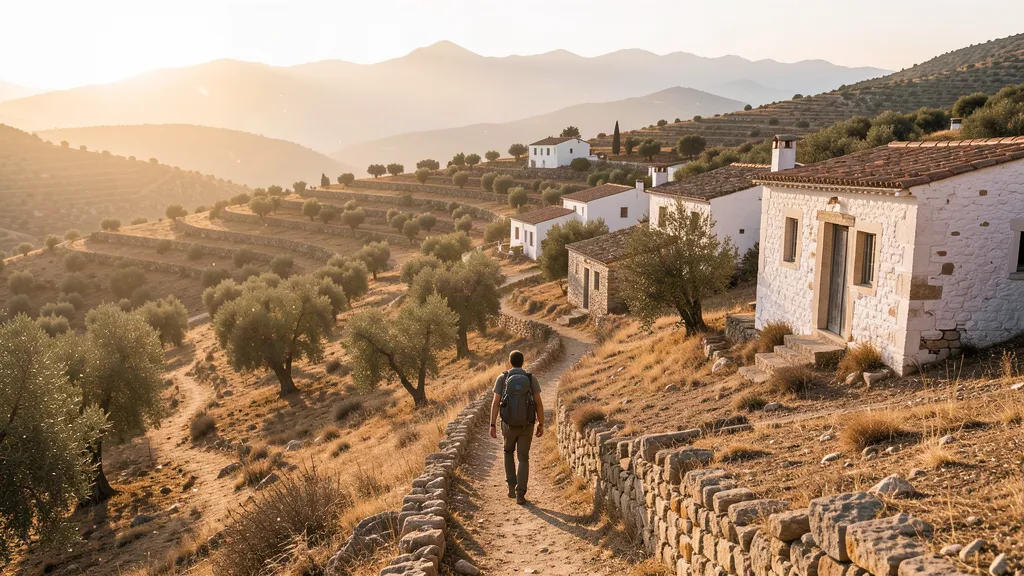
The abandonment of traditional agriculture has had a domino effect on the social and economic fabric of the territory. The irrigation channels of Moorish origin, which for centuries structured the landscape and local economy, are deteriorating without hands to maintain them, while the cultivation terraces become covered in scrubland. Depopulation does not only erase inhabitants from the register; it also erodes a cultural landscape built over generations, a heritage that is now being revalued from other perspectives, such as hiking or rural tourism.
The urban pressure of the Motril coast, barely twenty minutes away by car, has acted as an irresistible magnet for the new generations. The contrast between the employment and leisure opportunities of the coast and the stillness of the Alpujarra peaks has tipped the balance decisively. While the coastal municipalities grow and diversify their economies, the inland hamlets become weekend retreats or second homes, a seasonal use that generates neither permanent social fabric nor demand for stable services.
Public administrations are aware of the seriousness of the situation, although solutions are slow to materialize on the ground. The Provincial Council of Granada and Motril City Council itself have included these hamlets in their strategies against depopulation, with aid programmes for housing rehabilitation or the promotion of their natural resources. However, residents complain that measures arrive in drips and drabs and that bureaucracy holds back initiatives that could retain population, such as the creation of rural accommodation or the recovery of vegetable gardens for self-consumption.
The future of these localities hinges on the capacity to generate an alternative economic model that does not depend exclusively on traditional agriculture. Proximity to the coast and the existence of a unique natural and ethnographic heritage are assets that, if well managed, could attract new settlers. But time is running out: every bar that closes, every house that collapses, every elderly person who dies without replacement, consolidates a dynamic of decline that is very difficult to reverse.
Vía Verde de la Costa Tropical: a corridor that connects and reactivates
[[PHOTO:2]]
The old route of the Motril-Granada railway, closed in the 1980s, has been reborn under a new identity. The Vía Verde de la Costa Tropical has become a corridor of life that winds between the coastline and the first foothills of the Alpujarra, rescuing from oblivion a railway heritage that for decades was the economic pulse of the region. The already rehabilitated section between Motril and Vélez de Benaudalla records more than 50,000 annual uses, a figure that evidences the consolidation of this itinerary as a leisure and daily mobility infrastructure, according to data from the Vía Verde Consortium.
This route of approximately twelve kilometers runs parallel to the course of the Guadalfeo River, offering a changing landscape where subtropical crops give way to limestone cliffs and the tunnels that once bored through the mountain. The rehabilitation has respected the original elements of the line, such as the Puntalón and Los Tablones stations, which now function as rest areas and information points for users. The compacted and accessible surface allows cyclists, walkers, and people with reduced mobility to enjoy a safe route, away from road traffic.
The connection with the hamlets of the Alpujarra de Motril is one of the most relevant aspects of this project. The Vía Verde acts as a backbone axis that connects settlements such as Puntalón, Tablones, or Vélez de Benaudalla itself, facilitating the movement of residents who still live in these small localities. For many of them, this corridor has become a real alternative to the private vehicle for their daily commutes, whether to go to the health center, carry out administrative procedures, or simply to keep the connection with the coastal capital alive.
The tourist impact of the infrastructure is clearly perceived in local businesses. Hospitality establishments in Vélez de Benaudalla have seen their clientele increase on weekends, attracted by a public that combines sports practice with the gastronomic discovery of the area. Rural accommodations in the intermediate hamlets are beginning to receive bookings from visitors seeking a different experience, away from the mass tourism of the coast, and who find in this green corridor the perfect common thread to explore the interior.
The projection of the Vía Verde toward the Alpujarra represents a strategic opportunity to curb depopulation. The Consortium is working on extending the route toward Órgiva, the historical capital of the region, a section that would cross the municipalities most affected by population loss. This extension, which follows the old railway corridor, would allow direct connection between the coast and the middle Alpujarra, creating a sustainable mobility axis that would facilitate the arrival of new residents attracted by the quality of life in the area.
Preliminary studies for this extension contemplate the recovery of several tunnels and viaducts that overcome the unevenness of the Alpujarra geography, a technical challenge that has required meticulous engineering work. The administrations involved, including the Diputación de Granada and the municipalities of the region, have shown their commitment to a project they consider fundamental for the economic development of the interior. European funding, through recovery funds, could cover a substantial part of the costs of this ambitious infrastructure.
Beyond its tourist function, the Vía Verde is emerging as a key element in the strategy for population retention. The possibility of living in a rural environment and moving sustainably to urban centers changes the rules of the game for those who telework or develop professions linked to the service sector. The combination of rehabilitated housing at affordable prices, a privileged natural environment, and a direct connection with the coast turns the hamlets bathed by this corridor into an attractive destination for new settlers.
The phenomenon is not exclusive to this Granada region, but here it acquires its own nuances. The proximity to Motril, a city of more than 58,000 inhabitants, guarantees access to health, educational, and commercial services without renouncing the tranquility of the rural environment. The Vía Verde acts as that invisible thread that unites two apparently opposing realities, demonstrating that depopulation is not an inevitable destiny but the result of a lack of infrastructure and opportunities.
Usage data from the already operational section invites optimism. The 50,000 annual uses are distributed evenly between the high season months and winter, indicating that this is not a seasonal phenomenon but an infrastructure fully integrated into the life of the region. Local schools organize educational outings along the route, cycling clubs have established regular routes, and numerous residents have adopted this corridor as their usual space for physical exercise.
The recovery of railway heritage also has an undeniable symbolic value. The old stations, the iron bridges, and the tunnels excavated by hand during the dictatorship of Primo de Rivera constitute a historical legacy that deserves to be preserved. The Vía Verde not only recovers a transport infrastructure but also rescues the memory of an entire era in which the railway represented the hope of progress for these lands. Each rehabilitated kilometer is a tribute to those workers who built a railway line considered at the time one of the most complex in Spain due to its orography.
The immediate future involves consolidating the achievements made and expanding the radius of action of this corridor. The connection with the Alpujarra trail network, which already has consolidated routes such as the GR-7 or the Sendero de los Cahorros, would allow the creation of a mesh of itineraries that would further enhance the area's appeal. Coordination between the different administrations and the involvement of the private sector will be decisive in ensuring that this project does not remain a mere tourist anecdote, but becomes the engine of a profound transformation of the territory.
Ruta de los Tajos: a trail that revalues rural heritage
[[PHOTO:3]]
The ascent along the Ruta de los Tajos demands respect, but it rewards the hiker who dares to look down more than generously. The trail clings to the rock, carved out over the void, and runs along the cliffs that separate the peaks of the Alpujarra de Motril from the sea that can be glimpsed in the distance. It is, probably, the most vertical and awe-inspiring experience that the region has to offer, and that reputation has ended up making it one of the most sought-after by hiking enthusiasts. Data from the Motril Hiking Association confirms the phenomenon: the route has seen a thirty percent increase in the number of visitors over the last two years, a figure that has caught the attention of the local town councils.
That growth is not a matter of chance, but rather the result of a restoration effort that has known how to look to the past to build the future. The route makes use of ancient bridle paths that for centuries connected the hamlets with the farmsteads and terraced fields, and which abandonment had gradually erased from the map. The rehabilitation has also brought to light a system of irrigation channels of Moorish origin that still waters the orchards, and has consolidated the dry-stone constructions that line the route, from retaining walls to shepherds' shelters. All that heritage, which for decades was considered a mere vestige of the past, has now become the main asset of a territory seeking alternatives to depopulation.
The institutional response has not been long in coming. The town councils of the Alpujarra de Motril have understood that enhancing the value of these resources is a strategic investment, and they have allocated budget funds to the maintenance and signage of the trail. The informational panels that line the route explain to visitors the function of each heritage element, from the irrigation channel that carries meltwater to the remains of a threshing floor. In this way, the route ceases to be a simple physical exercise and becomes a journey into the heart of an agrarian culture that refuses to disappear.
The profile of the hiker who reaches these cliffs has also changed in recent times. Whereas before the occasional visitor, drawn by the spectacular nature of the landscape, predominated, it is now common to find organized groups seeking a more complete experience, one that combines effort with knowledge of the territory. The active tourism companies in the region have incorporated the route into their catalogs, and rural accommodations offer it as one of the main attractions of the area. The result is a constant flow of people who, in many cases, extend their stay and spend money in the shops and restaurants of the hamlets.
The conservation of this heritage is not, however, a completed task. Maintaining the dry-stone walls requires a craft that is being lost, and the irrigation channels need periodic cleaning to fulfill their function. The town councils have begun to collaborate with neighborhood associations and landowners to ensure that the trail remains in optimal condition, but everyone is aware that the success of the initiative depends on the involvement of the local community. The route, in short, has demonstrated that rural heritage can be an engine of development, but also that its conservation demands a constant commitment.
The experience of the Ruta de los Tajos has served as a model for other similar initiatives in the region, which have seen in hiking a way to halt the demographic drain. The paths that for centuries were the only connection between the villages and the outside world have now become an economic opportunity, and residents have begun to look with different eyes at resources that were always right in front of them. The trail, which was once a simple passage between fields, is today a reason to stay and a draw for those seeking a different kind of tourism, far from the hustle and bustle of the coast.
Testimonies from deputy mayors: between nostalgia and hope
[[PHOTO:4]]
The mid-morning sun barely warms the cobbled alleys of Cázulas when its deputy mayor, José Antonio Rodríguez, points to the freshly painted door of a rural house. "There was nothing here five years ago," he says with a mix of pride and caution. The Motril district, which barely exceeds eighty registered inhabitants, has seen two rural accommodations open in the last three years, a sign that something is moving in this corner of the Alpujarra that for decades only knew the way out.
The mayor, who combines his position with agricultural work, recalls that hiking has brought "a fresh air" to streets that seemed condemned to silence. On weekends, groups of walkers travel the Route of the Tajos and then stop at the village bar, the only business that survives. That small economic injection, although irregular, has brought life back to a square that during weekdays is only frequented by the elderly and the occasional child during holidays.
In Los Tablones, the story repeats itself with its own nuances. Its deputy mayor, Francisco Martínez, has promoted the recovery of the old bread oven, an infrastructure that for generations was the social heart of the district and is now offered as a tourist attraction. "People want to see how bread was made the way it used to be," explains Martínez, who has turned the old building into a meeting point between visitors and locals. The initiative has been so well received that they are already considering organizing regular workshops during the peak hiking season.
Both mayors agree that the phenomenon is no coincidence. The signing of routes, institutional promotion, and word of mouth among mountaineering enthusiasts have put these districts on the map for those seeking authentic nature. However, they also share a concern: passing tourism is not enough to reverse depopulation if the structural problems that their municipalities have dragged on for decades are not resolved.
The lack of public transport is, for both, the most urgent pending issue. Those without a private car are practically isolated, depending on the generosity of neighbors or bus schedules that barely exist. "A young person won't come to live here if they have no way to get to work in Motril or Granada," reasons Rodríguez, who sees Cázulas's population aging without a generational replacement in sight. Connection with the regional capital is vital for any life project; today, that connection is a privilege, not a right.
Mobile coverage is the other major battleground. In the 21st century, with remote work as a real option for many professionals, the districts of the Alpujarra de Motril remain digital shadow zones. Calls drop, data doesn't load, and any online procedure becomes an odyssey. Martínez sums it up with a blunt phrase: "It's hard to ask someone to settle here when they can't even answer an email from their own home." This shortcoming, denounced on repeated occasions before the Motril City Council, still has no short-term solution.
Despite the difficulties, the two deputy mayors maintain a discourse in which hope weighs more than nostalgia. Both have seen how hiking has sparked interest among people seeking a second home or an alternative life project to the city. Houses that remained locked with keys and cobwebs for years are beginning to show signs of life, albeit intermittently. "We are not a dead town, we are a town that breathes more slowly," clarifies Rodríguez, who prefers to talk about opportunities rather than laments.
The key, they agree, is for administrations to understand that hiking is not an end in itself, but a gateway to something bigger. A visitor who arrives on foot could become a future resident if they find the right conditions. And those conditions involve basic services that are currently conspicuous by their absence. Meanwhile, the residents of Cázulas and Los Tablones continue to play host, showing their towns with pride and hoping that collective effort bears fruit.
The conversation with both mayors leaves a clear impression: depopulation is not fought only with signed routes or tourist brochures. It is fought with bold policies that guarantee connectivity, mobility, and essential services. Hiking has opened a window of opportunity, but the window can close again if decisive action is not taken. In their words, there is a mix of gratitude for what has been achieved and urgency for what remains to be done.
Neighbors Who Stay: Stories of Rootedness and Entrepreneurship
[[PHOTO:5]]
María's bar in Motril used to close at two in the morning on weekends, but the exhaustion of serving drinks didn't stop her from dreaming of another life. Three years ago, this 45-year-old resident traded the bar counter for the keys to a rural hostel in Puntalón, a hamlet where silence weighs as heavily as history. Her establishment, with capacity for a dozen guests, fills up every spring with hikers traveling the trails that connect the coast with the peaks of Sierra Nevada.
María's decision was not a romantic impulse, but a calculated bet after observing for years how groups of hikers passed through Puntalón without a place to rest. The hostel now offers bunk beds, breakfasts with local products, and an information point about the routes that cross the valley. The income, she admits, doesn't reach the figures of the bar, but the balance between quality of life and work more than makes up for the change.
A few kilometers away, Juan, 60, has played out the other side of this coin: the return to the land. He inherited from his parents some dry-farming plots that had been abandoned for two decades, overrun with scrub and weeds. Instead of selling them to an investment fund, he decided to recover them and plant avocados, a crop that finds a privileged microclimate in the Alpujarra de Motril thanks to its proximity to the sea.
Juan's production doesn't end at the cooperative; it travels directly to restaurants on the Granada coast, where locally sourced avocado has become a gastronomic draw. His trees, which already produce around four tons annually, temporarily employ three neighbors from the hamlet during harvest. The business, he says, won't make him rich, but it allows him to live where he grew up and keep alive a landscape that, without agriculture, would become wasteland.
These two stories illustrate a trend that municipal technicians observe with caution: hiking not only brings visitors who spend money in bars and shops, but also generates an ecosystem of opportunities for those who decide to stay. Hostels, rural houses, and small producers benefit from a constant flow of hikers seeking authentic experiences, far from the mass tourism of the coast.
Rootedness, however, is not an abstract feeling, but a decision that involves overcoming concrete obstacles. María had to renovate an old building with her own savings and face a bureaucracy that, in her opinion, is not designed for small rural entrepreneurs. Juan, for his part, invested three years in preparing the land and waiting for the avocados to start bearing fruit, a period without income that not everyone can afford.
The administrations have begun to take note of these experiences. The Almuñécar hiking program, which organizes monthly routes through the region, has included stops at local businesses such as María's hostel or Juan's farm in its calendar. The idea, organizers explain, is for participants to see firsthand the work of those who keep the territory alive, not just the landscape.
The testimonies of these entrepreneurs coincide on one point: depopulation is not fought only with infrastructure, but with the creation of an economic fabric that makes life viable in the hamlets. Hiking, in this sense, acts as a catalyst that adds value to resources that have always been there, but needed demand to become a livelihood.
María is already thinking about expanding the hostel with a small vegetable garden to feed her guests, while Juan is studying the possibility of opening an online store to sell his avocados outside the province. Both know that their success depends not only on their effort, but also on the trails continuing to attract visitors year after year. That's why they collaborate with neighborhood associations and town councils to keep the paths clean and the routes signposted.
The commitment of these neighbors has not gone unnoticed by younger people. In Puntalón, two brothers in their twenties have begun rehabilitating a family house with the idea of turning it into a rural tourism home. Their project, still in its initial phase, is directly inspired by María's example, who has shown that it is possible to make a living in a village of fewer than two hundred inhabitants.
The future of the Alpujarra de Motril, these stories suggest, is not about recovering the population figures of half a century ago, but about building a sustainable model where each neighbor who stays generates a multiplier effect. A hostel attracts hikers, those hikers buy avocados, and those avocados give work to the harvesters. The chain is fragile, but it works, and each link that joins strengthens the whole.
As the sun sets behind the mountains, María prepares the rooms for a group of Germans arriving the next day. Juan waters his trees with water from the irrigation ditch his grandparents already used. Neither of them thinks about leaving, and that silent stubbornness is, perhaps, the best news for a region that refuses to disappear from the map.
The Rise of Hiking: Figures That Invite Optimism
[[PHOTO:6]]
The numbers paint a picture that contradicts the general trend of the region. According to the records of the Andalusian Mountaineering Federation, the number of hikers in the Costa Tropical has grown by 25% in the last five years, an increase whose main epicenter is the Alpujarra de Motril. The area's trails, led by the Vía Verde and the Ruta de los Tajos, concentrate 40% of all visits in the region, making these paths the main tourist asset of Motril's interior.
The Motril Tourism Office handles figures that reinforce this trend. 60% of tourists visiting the area do some hiking route during their stay, and what is most significant for the local economy: 30% of them stay overnight in the outlying villages. This data breaks with the historical dynamic of sun-and-beach tourism, where the visitor only came down to the coast in the evening, leaving the inland villages as a mere backdrop to pass through.
The profile of the hiker who arrives in the Alpujarra de Motril has evolved in recent years. It is no longer just the occasional day-tripper looking for a complementary activity to their beach days, but rather a more specialized traveler who plans their route in advance and values the authenticity of the landscape and the tranquility of the rural settlements. The Vía Verde, which runs along the old railway line, has become the perfect gateway for those new to this practice, while the Ruta de los Tajos attracts more experienced walkers, those seeking technical difficulty and vertiginous views over the valley.
The economic impact of this influx is felt in the small establishments of the outlying villages. The bars and rural houses of Cázulas, Lobres, or Puntalón have seen their clientele increase outside the summer season, a phenomenon that was unthinkable a decade ago. On spring and autumn weekends, the squares of these villages fill with cars bearing license plates from Granada, Málaga, and Madrid, and local businesses have learned to adapt their hours and offerings to this new profile of visitor.
Seasonality remains a pending challenge, but the data suggests that hiking is helping to smooth the curve. While tourist activity traditionally concentrated in July and August, now the months of March, April, May, September, and October register notable occupancy on the trails and in rural accommodations. This more balanced distribution throughout the year allows local businesses to maintain more constant activity, which in turn generates stable employment rather than temporary contracts tied exclusively to summer.
Public administrations have taken note of this trend and have begun investing in improving signage and trail maintenance. The Junta de Andalucía, through its route homogenization program, has worked on unifying informational panels and creating new paths that connect population centers with points of greatest scenic interest. These actions, although still insufficient, have contributed to making the Alpujarra de Motril trails more accessible and safer, a factor experts consider key to maintaining the growth in visitor numbers.
The phenomenon is not exclusive to this region, but here it takes on a particular dimension due to the context of depopulation in which it occurs. While municipal censuses continue to decline, the trails register growing traffic of people who, although they do not stay to live, do leave an economic benefit that helps maintain basic services in the villages. The relationship between hiking and repopulation is not direct, but the consulted village mayors agree that without this activity, the situation of their localities would be even more critical.
The data from the Andalusian Mountaineering Federation also reveals a change in the origin of hikers. While a decade ago the visitor was mostly British or German, now the weight has shifted toward domestic tourism, with a special presence of Andalusians and Madrilenians. This change has positive implications for the area: the domestic visitor tends to return, to recommend destinations to their circle, and to spend more in the local economy than the international tourist who arrives with everything included from their country of origin.
The consolidation of this model will depend on the ability of administrations to keep the trails in good condition and on private initiative to offer quality services. Some outlying villages have already begun organizing their own guided routes, with the collaboration of residents who know every nook and cranny of the terrain and who act as natural ambassadors for a heritage that belongs to them. These experiences, still incipient, demonstrate that hiking can be more than just a leisure activity: a tool for rural development with tangible effects on the economy and demographics of the region.
Economic Impact: Hiking as a Local Business Engine
[[PHOTO:7]]
The economic impact of hiking in the hamlets of the Alpujarra de Motril is no longer measured only in kilometers walked or snapshots shared on social media. A study by the University of Granada quantifies the real effect: each visitor who laces up boots on these trails leaves an average of 25 euros per day in restaurants, accommodation, and local shops. That figure, seemingly modest, has translated into the opening of three new dining establishments in Cázulas and Los Tablones over the past two years—a statistic that contrasts with the closure trend dominating other areas of inland Granada.
The restaurant sector has been the first link to benefit from this flow of hikers. The old roadside bars, which survived for decades thanks to local clientele, have expanded their terraces and renewed their menus to welcome a public seeking local products after a day of trekking. The steady stream of hikers on weekends, especially in spring and autumn, has made it possible to consolidate workforces that were previously reduced to the family unit, generating stable employment in communities where job opportunities are traditionally limited to agriculture.
Beyond bars and restaurants, the phenomenon has driven the creation of small active tourism businesses operating from these hamlets. Certified local guides offer interpretive routes along the old irrigation channel paths and chestnut forests, while other initiatives have bet on mountain bike rentals and ecotourism experiences that include birdwatching or traditional craft workshops. These businesses, mostly managed by entrepreneurs under forty, have found in hiking a way to establish themselves in the territory without depending on the seasonality of the sun-and-beach tourism of the nearby coast.
Rural accommodation has undergone a parallel evolution, albeit slower. The rural houses that previously rented by full weeks during summer have adapted their offering to shorter stays, designed for the hiker staying one or two nights. Data from the university study indicate that accommodation spending represents approximately one third of the hiker's total daily outlay, which has encouraged several owners to rehabilitate old family homes for rural tourism—a process that also helps curb the deterioration of the housing stock in these communities.
The economic revitalization is not limited to sectors directly linked to the visitor. Bakeries, small grocery stores, and local producers of honey, wine, or cheese have seen their sales increase thanks to demand from hikers seeking to take home a gastronomic souvenir of the region. Some establishments have begun offering kilometer-zero products in their breakfasts and menus, creating a consumption circuit that benefits the entire local production chain and reinforces the territory's identity as a sustainable tourism destination.
The creation of these active tourism businesses has also had a multiplier effect on youth employment. Positions such as mountain guides, activity monitors, or equipment rental managers require specific qualifications that have led several young people from the hamlets to train in degrees related to sport and the environment. This professionalization of the sector constitutes a real alternative to emigration toward the coast or large cities, offering a life project tied to the territory and its natural resources.
The Motril City Council, on which these hamlets administratively depend, has observed this phenomenon with attention and has begun to incorporate hiking into its local development strategies. The signposting of new routes, the adaptation of rest areas, and the joint promotion of the Alpujarra de Motril trails at active tourism fairs are some of the measures intended to consolidate a trend that, for now, rests on private initiative and word of mouth among mountaineering enthusiasts.
Local shops, which for years watched tourist buses pass by without stopping, have learned to adapt their hours and offerings to the hiker's needs. The sale of water, nuts, fresh fruit, or spare footwear has become a not-insignificant income supplement for establishments that previously depended exclusively on the village's regular clientele. This adaptation demonstrates that the economic impact of hiking does not require large investments, but rather a receptive attitude toward a visitor who values the authenticity of the surroundings.
The sustainability of the model will depend, to a large extent, on the ability of these hamlets to manage growth without losing the values that attract the hiker. Pressure on the most popular trails, the need for parking, or waste management are challenges already beginning to be raised in neighborhood meetings, aware that the balance between economic development and landscape conservation will be the key to ensuring this engine does not run dry.
The role of administrations: investments and future plans
[[PHOTO:8]]
The institutional commitment to trails as a tool against depopulation is materializing in concrete figures. Motril City Council, in collaboration with the Regional Government of Andalusia, has allocated €1.2 million to improving the trail network of the Alpujarra de Motril, an investment framed within the Tourism Sustainability Plan. This budget is not limited to paving routes: it includes signage for new routes, the creation of rest areas, and the rehabilitation of old communication routes that abandonment had gradually erased from the map.
The most ambitious action in this package is the formal request for the Vía Verde (Greenway) to be declared a Site of Cultural Interest. This recognition, currently under review by the Regional Ministry of Culture, would grant this corridor a legal protection framework that would facilitate both its conservation and its long-term tourism promotion. Municipal technicians consider that this administrative designation would shield the route against future urban speculation or environmental degradation, ensuring that the resource continues to generate economic activity for the hamlets for decades to come.
Public investment is not limited to physical infrastructure; it seeks to create an economic ecosystem around hiking. The Tourism Sustainability Plan funds include specific allocations for training local guides, creating a promotional brand for the region, and developing mobile applications that allow visitors to explore the routes independently. These initiatives aim to keep the added value of the activity within the territory, generating skilled employment that anchors young people in rural communities.
Coordination between administrations has been one of the most complex challenges of this process. Motril City Council acts as the executing entity, but the Regional Government of Andalusia provides the funding, and the Provincial Council collaborates in maintaining the sections that run outside the municipal boundaries. This shared governance scheme has required months of technical negotiations to delimit responsibilities, although the result has been a comprehensive plan that addresses both the tourism and social dimensions of the hiking phenomenon.
Municipal officials are already working on the next phase of the project, which contemplates connecting the trail network with neighboring municipalities of the Alpujarra of Granada. The idea is to create a continuous itinerary that allows hikers to traverse the region from end to end, staying overnight in the different villages and generating an economic flow distributed more equitably. To this end, conversations have been initiated with the city councils of Cádiar, Ugíjar, and Torvizcón, which have shown their willingness to join the project.
European funding plays a decisive role in these future plans. The Next Generation funds, channeled through the Recovery, Transformation, and Resilience Plan, have opened a window of opportunity that local administrations do not want to waste. Municipal technicians are working against the clock to present eligible projects before the fund execution deadline, scheduled for 2026. Administrative bureaucracy thus becomes a daily obstacle that municipal teams navigate with patience and expertise.
Beyond infrastructure, administrations have begun to address the housing problem, one of the main obstacles to settling population in the hamlets. The scarcity of affordable rental housing has led Motril City Council to study the rehabilitation of unused municipal buildings to convert them into social rental housing for young people and families who want to establish themselves in the area. This project, still in the study phase, would complement the hiking initiatives with a housing policy that tackles the root of the demographic problem.
The commitment to hiking as a tool for rural development is not without its critics. Some neighborhood groups have expressed concern about the impact that overcrowding of routes could have on the natural environment, especially on sections that run through protected areas of Sierra Nevada. The administrations have responded by developing a capacity management plan and implementing advance reservation systems for the most popular routes, a measure that seeks to reconcile economic development with the preservation of natural heritage.
The immediate future involves consolidating the achievements made and expanding the scope of action. The declaration of the Vía Verde as a Site of Cultural Interest, expected in the coming months, would mark a milestone in the region's revitalization strategy. Meanwhile, workers continue to install signage on the new sections, set up information panels, and prepare the rest areas that line the routes. The landscape of the Alpujarra de Motril is slowly transforming, adapting to a new economic model that seeks to reconcile development with the conservation of a territory unique in Europe.
Comparison with other regions: lessons from the Alpujarra of Almería
[[PHOTO:9]]
On the other side of the provincial border, the Alpujarra of Almería offers a mirror to look into. Municipalities such as Laujar de Andarax or Pampaneira have achieved what the Granada side still pursues: turning the trails into an industry capable of retaining population. Data from the Diputación de Almería reflect a 40% increase in rural house overnight stays over the last five years, an unmistakable sign that visitors no longer pass through but stay to sleep and spend.
The difference lies not so much in the beauty of the landscape, which is comparable, but in the management of the tourism product. In the Almería region, the hiking routes are signposted with a coherence that allows walkers to move around without relying on mobile apps or the goodwill of a local. Each trail has information panels, rest areas, and a direct connection with local hospitality establishments, creating a closed economic circuit that benefits the entire value chain.
The Almería model is built on a public-private collaboration network that in Granada is still perceived as a pending task. The tourism business associations of Laujar or Pampaneira hold regular meetings with the town councils to coordinate activity calendars, joint promotions, and infrastructure improvements. That fluid communication has allowed the routes to adapt to real demand, with an offering that combines low-difficulty routes for families with more demanding proposals for experienced hikers.
External promotion is another front where the Alpujarra of Almería has gained an advantage. Marketing campaigns are specifically aimed at European markets with a strong hiking tradition, such as Germany, the Netherlands, or the United Kingdom, with translated materials and an active presence at international active tourism fairs. That strategy has managed to de-seasonalize demand, so that autumn and winter months record occupancy rates that on the Granada side are considered unthinkable outside summer.
Population figures support this effort. Laujar de Andarax, historical capital of the Alpujarra of Almería, has managed to stabilize its census at around 1,500 inhabitants, a modest figure but one that contrasts with the constant drain suffered by similar towns on the Granada side. Pampaneira, with barely 300 residents, has managed to keep its traditional shops open thanks to the constant flow of day-trippers who walk the Alpujarras route, one of the most established itineraries in the south of the peninsula.
The key to Almería's success lies in conceiving hiking as a serious economic activity, not as a folkloric complement. The town councils have invested in creating specialized employment, with tourism technicians who design specific products and attend to visitor demands with professional criteria. That commitment to qualification has generated stable jobs in areas where traditional agriculture no longer offers opportunities for young people.
The contrast with the Alpujarra of Motril is evident in such basic aspects as the connection between routes. While in Almería the trails form an articulated network that allows you to travel through the region for several days without repeating paths, on the Granada side isolated itineraries predominate, designed for a one-day excursion and with barely any intermediate overnight options. That lack of continuity limits the average visitor spending and reduces the economic impact on the territory.
Welcome infrastructure marks another substantial difference. The Alpujarra of Almería has developed a network of rural accommodations with quality standards comparable to any European mountain destination, with certifications that guarantee minimum services and a satisfactory experience. On the Granada side, the rural house offering remains heterogeneous, with establishments that do not always meet the necessary conditions to compete in an increasingly demanding market.
The lesson from this comparison is clear: depopulation is not fought with subsidies or institutional declarations. What is needed is a comprehensive strategy that turns natural resources into real economic assets, with sustained investment in signage, promotion, and training. The Alpujarra of Almería has shown that reversing the demographic trend is possible when there is political will and coordination among the stakeholders involved.
The room for improvement for the Alpujarra of Motril is considerable, but so is the potential. The landscapes, the proximity to the coast, and the authenticity of its villages are assets that no competitor can easily replicate. What is missing is translating that potential into a structured offering, with professional criteria and a long-term vision that transcends electoral cycles.
The Almería experience shows that hiking can be much more than a leisure activity for weekends. Well managed, it becomes a rural development tool that generates employment, retains population, and preserves natural heritage. The question hangs in the air: is the Granada side willing to learn from its neighbor, or will it prefer to keep watching its villages empty while the trails fill with visitors who find no reason to stay?
Local and provincial administrations now have the floor. European funds earmarked for the fight against depopulation offer a historic opportunity to undertake the necessary investments, but money without strategy dissolves. The Alpujarra of Almería has done nothing extraordinary: it has only applied common sense and persistence over the years. That is the model that the Motril region should study carefully if it truly wants to stop the demographic hemorrhage that threatens it.
Pending challenges: accessibility, transportation, and basic services
[[PHOTO:10]]
The mirage of paradise fades as soon as one tries to reach these hamlets without a private vehicle. The bus line connecting Motril with the towns of the upper Alpujarra offers only two daily services, a schedule that turns any administrative procedure, medical visit, or banking transaction into an all-day odyssey. Residents without a car, mainly the elderly and young people, remain trapped in a structural dependency that conditions their daily lives and discourages new settlers from arriving.
The digital divide hits with particular harshness in this corner of Granada. Mobile phone coverage is intermittent, and fiber-optic internet connection remains a pending issue in most of the scattered settlements. This shortcoming not only frustrates the expectations of digital nomads who might settle in the area, but also hampers the digitalization of the few existing businesses and complicates telemedicine services, an increasingly necessary resource in a progressively aging population.
The condition of the secondary road network constitutes another open front. The roads that wind between the ravines have an uneven surface and suffer periodic landslides after rainfall episodes, forcing constant detours and slowing down travel. Residents have been demanding a comprehensive improvement plan for years to guarantee road safety, especially on the stretches connecting the hamlets with the urban centers on the coast, where specialized services are concentrated.
Healthcare has become the most visible symbol of these shortcomings. The medical clinic in Cázulas, which serves several surrounding hamlets, only opens its doors two days a week, forcing patients to travel to Motril for any emergency or medical follow-up. The opening of a clinic with daily care has become a historic demand of residents, who see how the quality of life in the territory suffers due to an administrative decision that does not take into account the particularities of geographic dispersion.
The administrations have presented initiatives to alleviate these deficiencies, although results seem slow in coming. The Motril City Council has included budget allocations for the improvement of rural roads, and the Junta de Andalucía has announced studies to improve digital connectivity in mountain areas. However, deadlines keep being delayed, and residents express skepticism toward what they consider recurring promises that never quite materialize into tangible improvements.
The underlying issue lies in the economic viability of these services. The administrations argue that maintaining regular transportation lines or full-time medical clinics in areas with such low population density is hardly sustainable. Residents, for their part, respond that without guaranteed basic services, it is impossible to retain population, creating a vicious circle that perpetuates depopulation.
Some voices point to innovative solutions that combine traditional provision with new formulas. On-demand transportation, already successfully implemented in other Andalusian rural regions, could be adapted to the needs of these hamlets, optimizing resources without giving up coverage. Likewise, telemedicine could complement in-person care at the Cázulas clinic, reducing unnecessary travel and improving healthcare response.
Universal accessibility presents itself as another pending challenge. The hiking trails that have revitalized the local economy do not always have adequate conditions for people with reduced mobility, limiting a growing tourism segment. The adaptation of certain sections and inclusive signage could broaden the range of visitors and, with them, business opportunities for local entrepreneurs.
Public transportation, beyond the connection with Motril, suffers from a lack of interconnection between the hamlets themselves. Travel between neighboring settlements often requires passing through the municipal capital, which multiplies travel times and makes any economic activity requiring mobility more expensive. A coordinated regional transportation network, connecting the hamlets with each other and with neighboring municipalities, could energize a productive fabric that is currently fragmented.
Pressure on basic services intensifies during weekends and holiday periods, when the floating population multiplies due to the influx of visitors and second-home owners. Existing resources, sized for a small registered population, become temporarily overwhelmed, generating tensions between permanent and seasonal residents that require more flexible planning.
The future of the Alpujarra de Motril does not depend exclusively on the promotion of its trails, but on the ability of the administrations to address these structural shortcomings. The commitment to active tourism has demonstrated its potential as an economic stimulus, but it can hardly be consolidated if those who visit the area do not find minimum conditions of habitability that invite them to stay. The improvement of accessibility, transportation, and basic services thus becomes the indispensable condition for hiking to stop being a simple tourist anecdote and become the engine of a true territorial revitalization project.
The future: can hiking reverse depopulation?
[[PHOTO:11]]
Geographer José Antonio Camacho, a professor at the University of Granada, prefers to steer clear of dogmas when asked about the future of the region. In his analysis, hiking is not a panacea that will on its own bring back the inhabitants who have left, but it does constitute a fundamental cog for reactivating an economy that has been stagnant for decades. The key, he maintains, lies in understanding that the trails and viewpoints are only the spearhead of a much more complex strategy that must address structural deficiencies.
The expert stresses that job creation linked to trail maintenance, hospitality, or guide companies generates a productive fabric that did not previously exist in the hamlets of the Alpujarra de Motril. That economic activity, however modest, acts as a magnet for some young people to consider staying or returning. However, Camacho warns that this initial boost will fizzle out if it is not accompanied by decisive policies on housing, public services, and digitalization.
The underlying challenge is to prevent these rural communities from becoming mere tourist backdrops, picturesque settings visited on weekends and abandoned the rest of the year. The transformation must be deeper: getting people to want to live here, not just admire the landscape. To that end, the town councils and the provincial government have the final say, with initiatives ranging from rehabilitating empty houses to improving road connectivity.
Digitalization emerges as a differentiating factor on this chessboard. A digital nomad who can telework from a house overlooking the fertile plain needs reliable fiber optics, not an intermittent signal that forces them back to the city. In this regard, investments in technological infrastructure are just as important as signposting a new mountain trail. Without that foundation, hiking remains a one-day experience, with no capacity to retain population.
The demographic data for the area remain worrying, with an average age exceeding fifty in several hamlets and a birth rate that does not reach the replacement level. The experts consulted agree that hiking will not reverse this trend on its own, but it can be the catalyst that makes the area attractive for new life projects. The combination of nature, tranquility, and a minimally active economy is a cocktail that is already working in other regions of southern Europe.
The experience of the neighboring Alpujarra almeriense shows that the path is possible, though not without difficulties. There, nature tourism has managed to retain population in municipalities that twenty years ago seemed doomed to abandonment. The difference, specialists point out, lies in the ability of local administrations to forge alliances with the private sector and with residents themselves, preventing tourist speculation from driving out those who are still holding on.
In the Alpujarra de Motril, the future hinges on the ability to turn the trails into a tool for comprehensive development, not an end in themselves. The routes that wind between terraced fields and irrigation channels are the shop window, but the real battle against depopulation is fought in schools, health centers, and bank branches. If those basic services are not guaranteed, no trail, however spectacular, will convince a family to put down roots in these mountains.
The coming years will be decisive in seeing whether the announced investments materialize into tangible improvements for residents. The regional administration has shown sensitivity toward the problem, but coordination between the various departments and the region's town councils remains a pending subject. Meanwhile, residents who have decided to stay look with hope at every new signpost, every group of hikers filling the village bars, every project promising to bring a little life to their streets.
The question of whether hiking can reverse depopulation has no single answer. It depends on how it is managed, what policies accompany it, and the collective will not to turn these villages into open-air museums. What seems clear is that, without this activity, the outlook would be even more bleak. Hiking is not the magic solution, but it is one of the few cards left on the table to try to change the course of a region that refuses to disappear from the map.