
Club Costa Tropical · The Journal
The Costa Tropical irrigates with algorithms
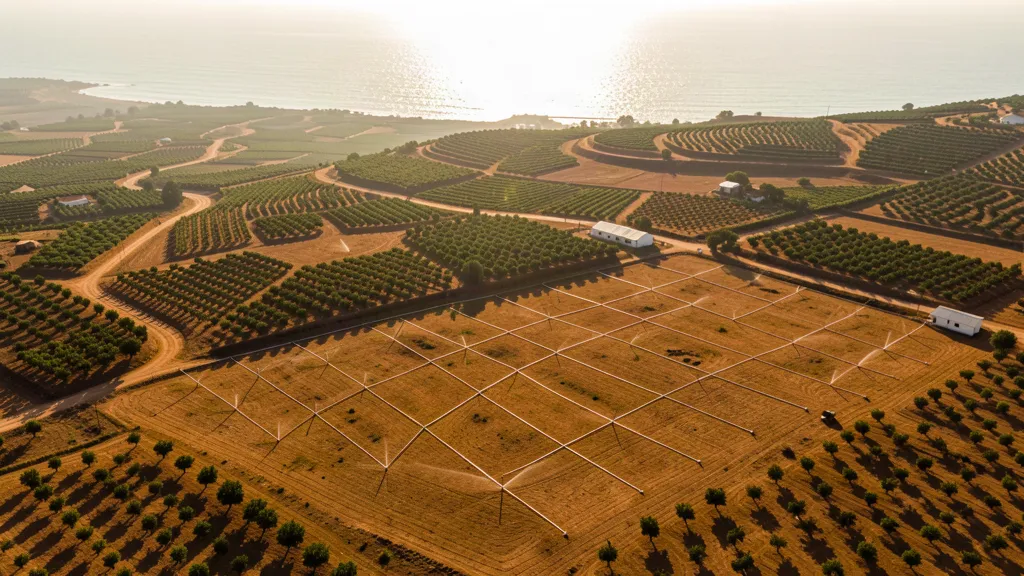
In Motril, 1,200 moisture sensors guide irrigation across 3,500 hectares of subtropical crops, blending traditional irrigation channels with artificial intelligence.
In Motril, 1,200 moisture sensors guide irrigation across 3,500 hectares of subtropical crops, blending traditional irrigation channels with artificial intelligence.
[[PHOTO:0]]
From hard graft to the tablet: the new skin of the countryside
[[PHOTO:1]]
The furrow opened in the damp soil of the Motril plain is no longer measured solely with an olive picker's rod, nor is it checked only by plunging a finger into the mud. On the workbenches of many farmers in the Costa Tropical, two tools that seemed incompatible a decade ago now coexist: the hoe inherited from grandfather and a tablet with a sun-cracked screen. The new skin of the Granadan countryside is being stitched together with moisture sensors, portable weather stations, and apps that promise to tell you when, how much, and how to irrigate. But the process is neither uniform nor by any means simple, because technology advances faster than the trust of those who have spent their whole lives reading the sky.
Data from the Universidad de Granada paints a picture of accelerated but incomplete transition. Sixty percent of the cherimoya and avocado farms on the Granadan coast already incorporate some type of sensor, ranging from moisture probes buried half a meter deep to weather stations that measure evapotranspiration in real time. This figure is surprising when compared to the stereotypical image of the farmer averse to any novelty. However, the same study reveals a crucial nuance: most of these producers use the technology as a complement to, not a substitute for, traditional knowledge. The sensor confirms what the farmer already intuited by observing the color of the leaves or the texture of the soil at dawn.
This coexistence between the analog and the digital defines the current moment in the Motril countryside. Antonio Jiménez, a field technician for a local fruit and vegetable cooperative, explains it with an image that circulates among irrigators: the app is like the radio weather report, you listen to it, but then everyone looks out the window before heading out. The phrase is not a dismissal of the tool, but a precise description of how technological adoption is taking place. The farmer does not abandon their judgment; they refine it with data they previously lacked. The problem arises when the generational gap turns that refinement into a privilege.
According to official records from the Junta, 80% of Andalusians use digital administration, but in the Motril countryside, reality falls short of that regional average. Only 35% of farmers over the age of 55 handle irrigation apps with ease, a figure that contrasts with the near-total penetration among those under 40. The gap is not just about access to devices, which in many cases are already present in households, but about familiarity with interfaces designed in urban offices. An electronic administration form can be filled out with patience; an irrigation app requires interpreting moisture graphs, adjusting thresholds, and trusting algorithms that recommend opening or closing valves.
Technicians from the Oficina Comarcal Agraria de Motril have detected a recurring pattern in their visits to the farms. Veteran farmers agree to install the sensors, even paying for them, but then delegate the reading to a son, a grandchild, or an external technician. The information arrives filtered, translated into the language of the fields, and the farmer makes decisions without touching the screen. This model of technological intermediation works as long as someone is available to act as a bridge, but it becomes fragile in smallholdings where generational renewal is not guaranteed. The Costa Tropical produces avocados and cherimoyas of very high value, but its agrarian structure remains based on small family plots with narrow margins.
The paradox is that smart irrigation technology promises precisely to save water, an increasingly expensive and closely monitored resource in a region with chronic water stress. Sensors allow irrigation below traditional allocations without reducing production, something that UGR trials have demonstrated in experimental avocado plots. Average savings range between 15% and 25% depending on soil type and land slope. Those percentages, translated into euros and cubic meters, should be enough to convince any producer. But adoption is not driven solely by economic logic; distrust of what is not understood, the fear of losing a crop due to a technical failure, and the inertia of methods that have worked for generations all play a part.
On the terraced fields that climb toward the sierra, the data signal does not always hold. There are farms where the sensor sends intermittent readings because mobile coverage is lost among the terraces. This technical discontinuity fuels the skepticism of the older generation: if the tool fails just when it is needed most, the responsibility still falls on the human eye. Equipment manufacturers have begun installing repeaters and offering solutions with local storage, but the underlying problem persists in the most rugged areas of the Granadan coastline.
The new skin of the Motril countryside is not a clean substitution of the old by the new. It is a hybrid fabric where hard graft and the tablet coexist, the wisdom of flood irrigation and the precision of the monitored dripper. UGR data confirm that 60% of farms with sensors have not abandoned their traditional practices; they have enriched them with a layer of information that did not previously exist. The challenge for the coming years will not be so much to install more devices as to ensure that those who today depend on an intermediary to read them can one day do so on their own. Meanwhile, the Granadan countryside will continue to be irrigated with a mixture of algorithms and memory.
Sensors That Speak with the Acequias
[[PHOTO:2]]
In the coastal strip that separates the Alpujarra mountains from the Mediterranean, water modernization has taken an unusual form: a dialogue between Nasrid ceramics and silicon. The Plan REGADÍA, aligned with the Sociedad Mercantil Estatal de Infraestructuras Agrarias (SEIASA), funds the modernization of 12,000 hectares in the Costa Tropical of Granada. This is not about replacing old systems with new ones, but rather grafting technology onto a hydraulic skeleton that has been functioning for centuries. The region has become a testing ground where algorithms learn to read the language of the acequias.
The irrigation community of the Río Verde in Almuñécar exemplifies this coexistence. Its managers have installed 450 flow meters and 120 moisture probes distributed across an irrigation network that dates back, in some sections, to the Nasrid era. The flow meters measure the exact flow circulating through each branch, while the probes record soil moisture at various depths. All this information is sent to a central platform where farmers can check from a mobile phone exactly how much water each plot needs in real time. The acequia remains the same; what has changed is the precision with which the decision is made to open or close a sluice gate.
The results of this hybridization have caught the attention of researchers. According to data from the Universidad de Granada, water savings in the area have reached 22% in just two years. This percentage does not translate into a reduction in irrigation that could harm the region's subtropical crops—avocados, mangoes, cherimoyas—but rather into a more refined management of the resource. The water that was previously lost to runoff or unequal distribution among plots is now reinvested in improving the efficiency of the historical infrastructure. The acequias, far from becoming obsolete, are given a second life thanks to the data generated by their own users.
The Río Verde case dismantles the idea that the digitalization of agriculture necessarily implies the abandonment of traditional knowledge. The acequieros, figures historically responsible for distributing water according to turns and customs, remain essential. What happens is that they now have an additional layer of information: they know, for example, that a specific farm needs less water because the probe indicates the soil retains moisture from the previous night. That decision, which once depended on intuition and accumulated experience, is now supported by objective measurements. Technology does not replace the acequiero; it provides them with an additional tool to practice their trade.
The Plan REGADÍA has prioritized precisely this approach to respectful modernization. Instead of funding large concrete works that transform the landscape, the funds are allocated to sensors, telecontrol systems, and small interventions that improve the watertightness of the channels. The logic is clear: every cubic meter not lost in transit is a cubic meter that does not need to be extracted from the aquifer or desalinated at the Motril plant. In a region where pressure on water resources is growing due to tourism and intensive agriculture, this saving has strategic value.
The coexistence of sensors and acequias also poses maintenance and training challenges. A flow meter installed in a centuries-old branch requires periodic calibration and adequate protection against flash floods. Older farmers, accustomed to reading the flow by the water level in the acequia, have had to familiarize themselves with digital interfaces and automatic alerts. The irrigation communities have organized training sessions so that no member is excluded from the new system. The process has not been without resistance, but the evidence of water savings has gradually convinced the most skeptical.
The data collected by the Río Verde sensors also feed academic research on the hydrological behavior of the region. The Universidad de Granada uses this information to model drought scenarios and evaluate the resilience of subtropical crops to climate change. In this way, a medieval infrastructure becomes a source of scientific knowledge for planning the future of irrigation on the Andalusian coast. The paradox is fertile: the more the acequia is digitalized, the more its original logic of equitable distribution and adaptation to the terrain is understood.
The Costa Tropical model is beginning to attract interest in other irrigated areas of Andalucía. The combination of low-cost sensors, accessible management platforms, and respect for historical infrastructure offers a modernization path that does not require large investments in civil works. The Plan REGADÍA, with its 12,000 funded hectares, demonstrates that smart agriculture is not the exclusive domain of the large intensive farms in Almería or Huelva. It can also take root in a region of smallholdings and terraces, where every drop of water has always been a commodity negotiated among neighbors.
The UGR as a Bridge Between Two Worlds
[[PHOTO:3]]
In the building of the Institute of Agricultural and Fisheries Research and Training, on the outskirts of Granada, a team of agricultural engineers observes a screen divided in two every morning. On the left, the raw data arriving from the Sentinel-2 satellite, with its spectral bands and normalized vegetation indices. On the right, a map of the tropical coast dotted with green, yellow, and red dots indicating, farm by farm, whether an avocado tree needs water today, tomorrow, or the day after. Between these two worlds lies a translation effort that the Irrigation Technology research group, affiliated with the University of Granada, has been perfecting for fifteen years.
The team, coordinated from the Higher Technical School of Agronomic and Forestry Engineering, began monitoring subtropical crops on the Granada coast when avocado cultivation had not yet reached its current extent. Back then, they worked with scattered weather stations and manual field sampling, a slow method that required visiting each plot to measure soil moisture with portable probes. The emergence of open-access satellite imagery completely changed the approach, allowing them to observe vegetation water stress from space with a frequency of just a few days.
The current accuracy of the system reaches 92% in estimating the water needs of avocados, a figure the researchers consider sufficient for making real-time irrigation decisions. The predictive model cross-references two main sources: multispectral images from the Sentinel-2 satellite, which capture leaf reflectance and allow the physiological state of the tree to be inferred, and meteorological data from the Motril station, which provide temperature, relative humidity, wind speed, and reference evapotranspiration. Using these variables, the algorithm calculates how much water each area of the crop has consumed and how much it will need in the coming days.
The work of the UGR does not end with the mathematical calculation. The real challenge, the group explains, lies in converting a time series of spectral values into a recommendation that a farmer can apply without needing to interpret complex graphs. To achieve this, they have developed an interface that translates the results into simple language: a mobile alert stating "irrigation recommended in plot 4, north sector, for 3 hours at medium flow rate." This single message summarizes what the satellite took days to measure and the server minutes to process.
The relationship between the university and the coastal producers was not immediate. During the first few years, many farmers were wary of a system that aimed to replace inherited knowledge with a computer application. The researchers then opted for a strategy of continuous validation: they set up pilot plots on collaborating farms, compared the model's recommendations with the decisions of experienced irrigators, and documented the results in terms of water savings and crop quality. The data accumulated over more than a decade have ultimately convinced a large part of the sector.
The role of the UGR as a bridge between the digital world and the agricultural world is also materialized through training. The group organizes technical workshops at cooperatives in Motril, Almuñécar, and La Herradura, where researchers explain how the system works using practical examples and gather questions arising from the field. These sessions have served to adjust the model to local particularities, such as the influence of the westerly wind on evapotranspiration or the differential behavior of the Hass and Fuerte varieties in response to water stress.
The monitoring work now covers a significant area of the tropical coast, with a particular focus on the municipalities of Motril, Salobreña, Almuñécar, and Vélez de Benaudalla. Researchers have found that water needs vary notably between the coastal strip and the higher slopes, where solar radiation and slope modify the crop's water balance. The model incorporates these differences through a zoning system that divides the territory into homogeneous management units, each with its own water demand curve.
The project's funding comes from regional and national calls for applied research, supplemented by collaboration agreements with irrigation communities and sector companies. This combination of public and private funds has allowed the team to maintain continuity for fifteen years, an unusually long period for a research project in the agricultural field. Stability has been key to accumulating the historical data series that now underpins the model's accuracy.
The group's next steps point towards the integration of real-time soil sensors and the expansion of the system to other subtropical crops, such as mango and cherimoya. They are also exploring the possibility of incorporating medium-term weather forecasts to anticipate irrigation needs a week in advance, which would allow irrigation communities to better plan water distribution during periods of scarcity. In this scheme, the university does not aim to replace the farmer, but rather to provide them with a tool that expands their decision-making capacity.
The bridge between the two worlds rests on a premise that the researchers repeat at every field day: data is only valuable if it translates into action. A satellite map without interpretation is just a pretty picture; an irrigation recommendation without field validation is just an opinion. The UGR has built its credibility on the tropical coast precisely because it has managed to travel that path in both directions, bringing science to the furrow and bringing the furrow to the laboratories.
Cherimoya and Avocado: The Crops That Learn
[[PHOTO:4]]
At the El Zahorí experimental farm, on the outskirts of Motril, the cherimoya has ceased to be a crop of guesswork to become a closely monitored organism. The technicians from the Universidad de Granada have found that this fruit tree, an emblem of the Granada coast, responds with extreme sensitivity to water stress. The lack of water not only reduces production, but also penalizes fruit caliber, that parameter that determines whether a cherimoya reaches the premium commercial category or is relegated to the secondary market.
The trials conducted over several growing seasons demonstrate that regulated deficit irrigation, guided by algorithms that process data from sensors and weather stations, maintains stable production. The most relevant finding is that the caliber improves, because the tree stops competing with itself and concentrates water resources on the fruits it has already set.
The algorithm does not decide arbitrarily, but learns from each phenological cycle. In the vegetative growth phase, the cherimoya tolerates a moderate water reduction without a yield penalty. In the fruit enlargement phase, the system adjusts the inputs to prevent splitting and premature drop.
The data collected at El Zahorí indicate that water savings range between 15 and 20 percent depending on the season, without significant losses in kilograms per hectare. The key lies in anticipation: the algorithm cross-references soil moisture with crop evapotranspiration and the five-day weather forecast. Thus, irrigation is brought forward or delayed based on what the tree will need, not on what it has already consumed.
The avocado, that crop that has transformed the landscape and economy of the tropical coast over the last two decades, presents a different water use behavior. Its root system is deeper and its water demand more constant throughout the year. Sensors installed at three depths—30, 60, and 90 centimeters—allow real-time monitoring of where available moisture is and where the wetted bulb is moving. This information is crucial to avoid superficial irrigation, which wets the first centimeters of soil but does not reach the active roots. The trials coordinated by the Universidad de Granada in commercial farms in the Motril plain have managed to reduce water consumption by 18 percent without loss of harvest.
Adjusting irrigation to the avocado's phenology requires a precision that traditional irrigation cannot offer. During flowering and fruit set, the tree needs constant moisture in the soil profile, but without waterlogging that causes root asphyxiation. In the fruit enlargement phase, water demand surges and the system must respond with more frequent inputs. The sensors at three depths detect whether water is being retained in the surface layer or percolating beyond 90 centimeters, where avocado roots barely reach. This information allows correcting the irrigation dose and frequency in a matter of hours, not days.
The comparison between both crops reveals an interesting paradox. The cherimoya, with its shallow root system and sensitivity to stress, benefits from deficit irrigation that would be counterproductive in the avocado. The avocado, with deep roots and a more stable demand, responds better to a fine-tuning of frequency and dose than to an overall restriction of water. The algorithms do not apply universal recipes, but adapt strategies to the physiology of each species. That is the difference between precision agriculture and the simple automation of irrigation.
Local farmers have begun to observe these results with a mix of curiosity and pragmatism. The cost of sensors and management platforms has dropped enough for a medium-sized farm to afford it without relying on subsidies. The water users' community of the Motril plain, which manages water from the Guadalfeo river, has integrated some of these systems into its irrigation turns. The result is a more equitable distribution of the resource and a reduction in conflicts among irrigators during the low-water months.
The 18 percent savings in avocado is not a laboratory figure, but an average obtained in commercial plots with trees in full production. Measurements were taken over three consecutive seasons, with Hass and Fuerte varieties, the two most widespread on the Granada coast. Production remained within the usual ranges for each farm, with a slight improvement in the average caliber of the fruit in the monitored plots. The technicians attribute this improvement to greater water stability during enlargement, which reduces tree stress and favors the accumulation of dry matter in the fruit.
The cherimoya, for its part, has found in regulated deficit irrigation a tool to survive the water restrictions that have become recurrent in the Guadalfeo basin. Prolonged drought periods, increasingly frequent, force farmers to choose between irrigating less or uprooting trees. The El Zahorí trials demonstrate that the first option is viable if applied with sound technical criteria. The fruit caliber, far from suffering, improves in the plots where water deficit is applied in the appropriate phases of the cycle.
The transfer of this knowledge to the farming sector has not been immediate. Veteran farmers distrust a system that recommends irrigating less than custom dictates. The work of the technicians from the Universidad de Granada and the Instituto de Investigación y Formación Agraria y Pesquera has consisted of demonstrating, with data from their own farms, that water savings do not imply a drop in income. The field days organized at El Zahorí bring together dozens of producers every spring who come to see the sensors, touch the soil, and compare the calibers of the fruit.
The next step in this line of work is the integration of irrigation data with crop forecasting models. If the algorithm knows how much water each tree has received and what phenological phase it was in, it can estimate the volume and caliber of the production weeks in advance. This information would allow cooperatives to better plan marketing and negotiate prices with distribution chains from a position of greater knowledge. The cherimoya and the avocado, two crops that for decades depended on the farmer's clinical eye, are beginning to generate data that is worth as much as the fruit itself.
The generational shift that comes with Wi-Fi
[[PHOTO:5]]
At the Motril cooperative, the irrigation assemblies have changed their landscape over the last three years. Where men with cracked hands and faded caps once sat, grandchildren now appear with a mobile phone in hand and a tablet under their arm. The statistic that summarizes this transformation comes from the Universidad de Granada: 45% of the farmers in the Costa Tropical are over sixty years old, but 70% of the farms that have adopted smart irrigation are managed by those under forty-five. The gap is not just technological; it is also biographical.
UGR technicians working at the Instituto de Investigación y Formación Agraria y Pesquera have detected a consistent pattern in their field surveys. The young people who inherit family farms are the ones driving digitalization, while the older generation resists with arguments that mix distrust and professional pride. A seventy-year-old farmer who has spent half a century reading the sky and the texture of the soil does not easily accept an algorithm telling him when to irrigate. His son, on the other hand, grew up with the internet and sees sensors as a tool just as natural as the hoe was for his grandfather.
The generational shift in the Andalusian countryside is not a new phenomenon, but digitalization has given it an unprecedented nuance. In the past, inheriting a farm meant learning the gestures of the trade: pruning, fertilizing, harvesting. Now it also means configuring a network of sensors, interpreting moisture graphs, and making decisions based on data that arrives on a phone. Agronomic engineers advising the cooperatives in the region describe recurring scenes: the father watches skeptically as the son installs a measurement node next to the trunk of an avocado tree. Months later, when the water bill goes down and the harvest is maintained, the father starts asking how it all works.
The Junta de Andalucía has identified this generational shift as a training opportunity. The Elevate program, originally conceived for the tourism sector, has served as a model for a pilot course on agricultural digital skills held in Motril. The call attracted two hundred attendees, a figure that surprised even the organizers. The audience was not homogeneous: there were young people who had just entered agricultural activity, middle-aged farmers looking to update their skills, and some veterans attending with the curiosity of someone peering into an alien world. The course did not aim to turn anyone into an engineer, but rather to familiarize participants with the basic tools of smart irrigation and digital farm management.
The program trainers detected a particular dynamic during the practical sessions. Attendees under forty-five absorbed the content quickly and asked questions about data integration or platform compatibility. The older participants, on the other hand, needed more time to assimilate concepts that clashed with decades of empirical knowledge. A UGR technician who participated in the course summed it up with an image: the young arrive with the manual in their heads, and the older ones with the field in their hands. The key, according to this specialist, lies in getting both languages to meet.
That meeting is not always easy. On some farms in the Motril plain, coexistence between generations has generated tensions that go beyond the technological. The father who has flood-irrigated for forty years feels that the sensor-controlled drip system questions his authority. The son who proposes installing a connected weather station perceives his father's resistance as a hindrance to modernization. Rural psychologists who have worked with farming families in the region speak of a silent mourning: that of the farmer who sees his knowledge become dispensable just as the time comes to pass the torch.
UGR data, however, point to a smoother transition than the conflictive cases suggest. The 70% of digitalized farms managed by those under forty-five does not imply that the older generation has disappeared from the map. Many continue to work the land but have delegated technology-related decisions to their children. Others have found a middle ground: they maintain control over pruning and harvesting, while water and fertilization management is left in the hands of the generation that understands the graphs. In these cases, digitalization does not replace the traditional farmer, but rather redistributes functions within the family unit.
The Motril pilot course has left a lesson that the Junta is studying to apply in other Andalusian agricultural regions. Training in digital skills cannot be limited to teaching how to use applications; it needs to incorporate a component of generational mediation. The organizers observed that the most productive workshops were those in which a young person and an older relative from the same family worked together in front of the same screen. In those sessions, the young person translated the software menus and options, while the older person contributed the on-the-ground knowledge that no sensor can capture: which plot gets waterlogged in winter, where the wind blows the hardest, when it is advisable to bring pruning forward.
This combination of knowledge is, according to UGR researchers, the true engine of agricultural modernization in the Costa Tropical. Sensors measure soil moisture, but they do not know that a specific slope receives less sun in December. Algorithms calculate evapotranspiration, but they ignore that an avocado tree planted next to a stone wall needs less water than one exposed to the wind. The generational shift that comes with Wi-Fi does not consist of replacing experience with technology, but of running a cable between both worlds. The two hundred attendees at the Motril course represent that bridge under construction.
The memory of water: knowledge that cannot be programmed
[[PHOTO:6]]
At seven in the morning, when the sun barely grazes the ridges of the sierra de la Almijara, Antonio Jiménez walks through the cherimoya terraces with a gesture that no sensor has managed to imitate. He bends down, picks up a handful of soil, crumbles it between his fingers, and smells it. Then he looks at the underside of a leaf, where the green has begun to turn matte, and decides that there will be no need to open the sluice gate today. He has been irrigating in Almuñécar for fifty-three years and insists that the soil speaks to him, just in a language that cannot fit on a screen.
That language is what a team from the Universidad de Granada has attempted to document before it disappears. For three years, researchers from the Department of Social Anthropology and the School of Agricultural Engineering have conducted forty in-depth interviews with farmers over the age of seventy from the Costa Tropical region. The project, funded by the Andalusian research plan, does not seek to turn this knowledge into algorithms, but rather to preserve it as intangible heritage and, above all, to understand what information veteran irrigators handle that sensors fail to capture.
The study's results reveal an uncomfortable paradox for the triumphalist discourse of digitalization. Eighty-five percent of those interviewed state that moisture sensors and agroclimatic stations "don't know what they know." The phrase, repeated with variations in almost every conversation, is not just the quip of a skeptical grandfather. It is the realization that traditional knowledge operates with variables that current technology does not measure: the exact texture of the soil depending on the slope, the behavior of ants before a change in the weather, the precise shade of yellowing that indicates a lack of water rather than an excess of salt.
María del Carmen Rivas, the project's lead researcher, explains that veteran farmers have developed a system for reading the land that integrates very subtle signals. Ants, for example, build their nests deeper when the soil retains less moisture than usual. An experienced irrigator detects this change during a quick inspection and adjusts the irrigation without needing to consult any data. Sensors, on the other hand, measure moisture at a specific point and at a given depth, but they do not interpret the behavior of soil fauna or the microtopography of the terrace.
The memory of water is also a collective memory. The irrigators of Almuñécar have inherited from their parents and grandparents an irrigation calendar that aligns with the phases of the moon, the easterly and westerly winds, and the orientation of each plot. This calendar is not written down anywhere, but it is passed down in conversations by the irrigation ditch, in the assemblies of the irrigators' community, and in the shady breaks after a hard day's work. Researchers at the UGR have found that many of these traditional criteria coincide with what agronomic models recommend today, even if the farmers cannot explain why they work.
What the interviewees do acknowledge—and here lies the nuance that prevents the idealization of the past—is that digital data has helped them avoid mistakes during years of extreme drought. The drought of 2023 and 2024 marked a turning point in the region. Flows in the Guadalfeo basin dropped to historic levels, and restrictions forced irrigation with minimal allocations. Under those conditions, decades of accumulated experience were no longer enough, because the farmers were facing situations they had never experienced before. Moisture sensors and satellite imagery allowed them to verify, with objective data, whether their decisions were correct.
Antonio Jiménez recounts this with a mix of pride and pragmatism. "I know when a tree is thirsty, but in 2024 I didn't dare trust what I saw, because everything was dry and there was no frame of reference," he explains, pointing to the probe now poking out between two cherimoya trees. The sensor confirmed that the soil was retaining more moisture than it appeared to on the surface, and that he could space out the irrigations without risking the harvest. That piece of data saved him water at a time when every cubic meter counted.
The UGR project has also recorded the voices of female farmers, a group traditionally invisible in irrigation management. Several of the interviewees describe how they learned to read the land from their mothers and grandmothers, who tended the family vegetable plots while the men worked in fishing or construction. This knowledge, passed down within the domestic sphere, rarely appears in the official records of the irrigators' communities, but it has proven fundamental to the survival of many farms.
Documenting this knowledge raises an uncomfortable question for the proponents of smart agriculture. What is lost when a farmer stops looking at the soil and only looks at their mobile phone? The UGR researchers do not have a definitive answer, but they suspect the loss is not only cultural but also operational. An irrigation system that relies exclusively on sensors is vulnerable to technical failures, connectivity outages, and calibration errors. A farmer who retains the ability to read the land has a Plan B that does not depend on network coverage.
At the cooperative in Motril, some young farmers have started asking the veterans to teach them these reading cues. They do not do this out of nostalgia, but for practical reasons: sensors tell them how much water is in the soil, but they don't tell them if the tree is suffering for another reason, if the wind is going to change in the next few hours, or if it's best to wait until the full moon has passed to prune. That information, which does not appear in any app, continues to live in the memory of those who have spent a lifetime looking at the sky and touching the earth.
The UGR team is now preparing a publication that will include the forty complete interviews, along with a glossary of local terms related to irrigation and a map of the points in the region where the most specific knowledge is concentrated. The idea is that this material will serve as a basis for future training programs that combine technology with traditional knowledge. Because, as María del Carmen Rivas points out, "a sensor can tell you how much water is there, but it doesn't tell you how much water the tree will need tomorrow, and that is something the old irrigators have known for centuries."
Algorithms that decide: who is in charge of irrigation?
[[PHOTO:7]]
At the El Zahorí experimental farm, moisture sensors send data every fifteen minutes to a server at the University of Granada. The predictive model processes this information along with weather forecasts and returns a specific recommendation: irrigate tomorrow at six in the morning, for forty minutes, at a specific flow rate. The precision is astonishing, but the data that truly intrigues the researchers is not found in the sensors or the algorithms. It lies in the hand holding the mobile phone, in the finger pressing the accept button, or in the gesture of ignoring the notification and heading out to the plot with a hoe over the shoulder.
Field studies conducted by the UGR team during the 2024 and 2025 campaigns yield a revealing figure: seventy percent of the farmers using these systems state that the final decision remains theirs. This is not a rejection of technology, but a selective integration. They consult the recommendation, compare it with what they see in the field, with the texture of the soil between their fingers, with the color of the leaves at sunset, and only then do they decide. The algorithm acts as just another advisor, like an expert who provides data but does not give orders.
However, within that remaining thirty percent lies a phenomenon that the university's sociologists have begun to document with some concern. Among farmers under the age of thirty-five, fifteen percent admit to delegating completely to the app. They do not check the data, they do not cross-reference it with direct observation, they exercise no control over the recommendation. They simply irrigate when the system tells them to and in the exact amount indicated on the screen. Researchers have dubbed this behavior "automation of trust," a term describing the total transfer of agronomic judgment to a mathematical model.
The problem is not theoretical. An error in the data chain can trigger severe consequences in a crop as sensitive as the avocado or the cherimoya. If the nearest weather station records rainfall that never occurred, or if a moisture sensor breaks down and sends false readings, the algorithm will recommend insufficient irrigation. In the height of the Granada summer, with temperatures exceeding thirty-five degrees, three days without water can compromise flowering and, with it, the entire harvest for the following year. Blind trust in the system turns an isolated technical failure into irreparable economic loss.
María del Carmen Rodríguez, an agricultural engineer in the Department of Soil Science at the UGR, has been coordinating a project for the past two years that seeks to resolve this tension between automation and human judgment. Her team is working on what they call hybrid decision systems, a computational architecture that incorporates the farmer's knowledge as just another variable in the model. The idea is to record the decisions farmers make when they override the algorithm, analyze the outcomes of those deviations, and feed that information back into the machine learning system. The goal is for the algorithm to learn not only from the sensors but also from the wisdom accumulated over generations in the plots of the Costa Tropical.
The project's initial results show that human deviations are not whims. When a veteran farmer decides to irrigate twenty percent less than recommended because they observe low clouds over the mountain range, they are right more than eighty percent of the time. When they delay irrigation because they sense it is going to rain, their experience-based prediction proves more reliable than some short-term weather models. The hybrid system is beginning to incorporate these patterns and, in recent simulations, has reduced water consumption by twelve percent without any loss in production.
The underlying issue transcends the technical and enters the realm of food sovereignty. Whoever controls irrigation controls production, and whoever controls production controls the territory. If agronomic decisions are massively delegated to applications developed by tech companies or to models trained on data that do not reflect local realities, the farmer becomes a mere executor of external instructions. The Costa Tropical, with its unique microclimate and subtropical crops, represents an extreme case of this tension: generic models do not work here, and local specificity is precisely what algorithms still cannot capture without human assistance.
The youngest farmers, those who have grown up with a mobile phone in hand, are the most exposed to the automation of trust. They have learned to irrigate using an app, not from a mentor who taught them to read the sky. Their connection to the land is mediated by the screen, and this mediation, if not balanced with agronomic training and the transmission of traditional knowledge, can leave them defenseless in the event of a system failure. The UGR has begun to include specific modules on the limits of predictive models in the courses for joining the agricultural enterprise that it teaches in collaboration with the local cooperatives.
The debate over who is in charge of irrigation has no single answer. On most farms, the algorithm and the farmer coexist in a constant negotiation, a sort of dialogue between data and experience that is resolved differently each morning. On others, technology has taken the place of judgment without anyone yet measuring the long-term consequences. What the UGR data confirm is that the digital transition in the Andalusian countryside does not consist of replacing people with machines, but rather redefining the terms of a relationship that, for now, still needs both parties to function.
The Cost of Being Modern: Investment and Return
[[PHOTO:8]]
At the Motril cooperative, the debate is no longer about whether the technology works, but about who can afford it. The figures handled by the technicians at the Universidad de Granada are clear: installing a complete smart irrigation system on one hectare of avocado costs between 3,000 and 5,000 euros, depending on sensor density, the type of automated valves, and the required connectivity. For a twenty-hectare farm, this figure represents an affordable outlay within a multi-year plan, but it becomes an almost insurmountable barrier for a farmer cultivating just two or three hectares and living on the razor's edge of profitability. Modernization has an entry price, and not everyone arrives at the ticket counter with the same kind of ticket.
The Plan REGADÍA, driven by the Consejería de Agricultura, Pesca, Agua y Desarrollo Rural, has attempted to correct this imbalance with a line of subsidies covering up to 60% of the investment in associative farms. The formula is deliberate: it prioritizes the collective adoption of technology, allowing several small farms to share weather stations, signal repeaters, and data management platforms. A farmer who partners with their neighbors can reduce the effective cost of their installation to just over 1,200 euros per hectare, a figure that is starting to become digestible. But the fine print matters: subsidies are paid upon proof of expenditure, which forces the farmer to advance the money and wait months to recover the grant. For many family economies, this upfront cost is precisely the obstacle the aid was meant to eliminate.
Return on investment studies conducted by the Department of Hydraulic Engineering at the UGR place the payback period between four and six years, a reasonable horizon for any productive investment. The calculation rests on two pillars: water savings, which reach up to 25% on monitored farms, and reduced energy consumption, with a 15% decrease in pumping by adjusting irrigation cycles to the crop's actual demand. In a region where the price of desalinated water and electricity rates have risen steadily since 2023, these percentages translate into annual savings of between 600 and 900 euros per hectare. The arithmetic, on paper, is convincing.
However, paper does not water avocados. According to data collected by researchers from Granada in surveys conducted among the irrigation communities of Almuñécar, Salobreña, and Motril, 40% of small farmers in the Costa Tropical still cannot afford the initial outlay. This percentage is not uniform: among owners of less than two hectares, the figure exceeds 55%, while on farms of more than ten hectares it barely reaches 10%. The gap between large and small farms is widening at a rate that worries technicians at the regional agrarian offices, who see the digitalization of irrigation at risk of becoming a new factor of structural inequality in rural Granada.
The paradox is that small farmers are, in many cases, those who could benefit most from the savings. A one-and-a-half-hectare farm, managed by a part-time farmer who irrigates in shifts and pays water at community rates, can reduce its water bill by more than 400 euros a year with a basic system of moisture sensors and programmable solenoid valves. But that same farmer lacks access to credit on reasonable terms, does not have the capacity to advance the Plan REGADÍA subsidy, and, in quite a few cases, distrusts a technology they perceive as alien to their way of working. The result is a vicious circle: those who need efficiency the most are those who have the fewest tools to achieve it.
Cooperatives have begun to explore intermediate formulas to break this cycle. In some irrigation communities, the joint purchase of equipment is being studied, with shared maintenance contracts and deferred payment agreements that do not depend on traditional banking. Others have opted to install community weather stations and offer their members a subscription-based irrigation recommendation service, at an annual cost of between 150 and 250 euros per farm. This is a path that does not require initial investment in proprietary sensors, although it sacrifices the precision provided by plot-by-plot monitoring. UGR technicians advising these cooperatives insist that there is no one-size-fits-all solution: technology must adapt to the structure of land ownership, and not the other way around.
The debate over the cost of modernization has also reached agrarian organizations, which are calling on the Junta de Andalucía to revise the criteria of the Plan REGADÍA. The proposal gaining support among representatives of small producers is the creation of a revolving fund to advance the subsidy without the farmer needing to turn to the banks, so that the reimbursement is made with the savings generated by the system itself. The Consejería, for its part, defends that the current design of the aid already prioritizes associative farms and that the coverage percentage is among the highest in the country. The discussion, at its core, is not technical but political: it is about deciding whether the digitalization of the Andalusian countryside will be an inclusive process or a privilege reserved for those who already have the financial backing to assume the risk.
Meanwhile, on the avocado and cherimoya terraces of the Costa Tropical, the transition is advancing at two speeds. Large farms are rolling out sensors, their own weather stations, and dashboards that can be checked from a mobile phone. Small farms continue to irrigate with the accumulated experience of generations, with the shift schedule set at the irrigators' assembly and with a watchful eye on the sky. Technology promises efficiency, but efficiency also has a price, and that price is drawing a new geography on the Granada coastline.
Drought as an Accelerator: When Necessity Compels
[[PHOTO:9]]
The summers of 2022 and 2023 broke all records in the Guadalfeo basin. Reserves fell below the critical threshold, and the Confederación Hidrográfica imposed irrigation restrictions that many farmers in the Costa Tropical had not seen in decades. Water allocations were halved in some sections, and the cherimoyas, avocados, and mangoes began to show signs of water stress that no one could ignore. It was in this context of emergency that technology ceased to be an option and became a lifeline.
The Universidad de Granada, through its experimental station in the vega of Motril, recorded a revealing figure during that period: the demand for technical advice from farmers grew by forty percent in just two years. These were not large estates with innovation departments, but small and medium-sized producers who, until then, had viewed soil moisture sensors and automatic weather stations with skepticism. Necessity, as it has so often done in agrarian history, did more for modernization than all institutional campaigns combined.
The UGR technicians handling those inquiries describe a common pattern. The farmer would arrive with a very specific question: how much to irrigate and when to do it to save the crop with the available water. The answer inevitably involved installing soil sensors, linking the data to an evapotranspiration model, and adjusting irrigation doses to the crop's actual demand. Many of those skeptics discovered that the system not only saved water but also prevented over-irrigation, which damages roots and promotes fungal diseases.
Data from the Motril station, collected during the harshest months of the drought, offer an eloquent comparison. Farms that had adopted smart irrigation systems suffered thirty percent less damage from water stress than those that maintained traditional methods. The difference was not limited to the volume of water applied, but to the precision with which it was distributed throughout the crop cycle. Traditional irrigation tends to concentrate water at specific times, whereas the smart system administers it in small, continuous doses that follow the plant's demand curve.
That thirty percent difference translated into better-sized fruit, less premature drop, and a faster recovery when the first autumn rains arrived. Farmers who had bet on technology before the crisis were able to see that their investment acted as insurance against climate uncertainty. Those who joined during the emergency, often with rushed installations and steep learning curves, found that the system started yielding results from the very first season.
The drought also transformed the relationship between farmers and data. Before 2022, many saw sensors as a dispensable add-on, a tool to optimize costs in times of plenty. After two years of restrictions, soil moisture data became the foundation of daily decision-making. Farmers checked readings on their mobile phones before opening the valves, and some even began scheduling nighttime irrigation to take advantage of lower evaporation rates—a practice recommended by digital models but rarely applied systematically.
The change in attitude was neither uniform nor immediate. There was resistance, especially among older producers, who trusted their empirical knowledge of the land and distrusted recommendations generated by algorithms. However, the pressure of the drought gradually eroded these hesitations. When a farmer saw that his neighbor with sensors was keeping his trees in better condition with the same water allocation, evidence overrode tradition. Word of mouth in the cooperatives and the bars of Motril did more for technological adoption than any technical workshop.
The UGR took advantage of that period to expand its monitoring station network and offer a more accessible data interpretation service. Researchers adapted their models to the specific conditions of each plot, incorporating variables such as soil type, slope, and tree age. This fieldwork, intensified during the drought, made it possible to fine-tune recommendations and win the trust of a sector that had historically been reluctant to adopt standardized solutions.
The legacy of that crisis is ambivalent. On the one hand, the drought accelerated a modernization that would probably have taken another decade to occur. On the other, it exposed the vulnerability of an agricultural model that depends on increasingly uncertain water resources. Sensors and algorithms do not create water, but they allow the available supply to be stretched to limits that previously seemed impossible. That lesson, learned through the harsh blow of restrictions, is now etched in the collective memory of the Costa Tropical.
Women in the Digital Revolution of the Countryside
[[PHOTO:10]]
In the warehouse of the Motril cooperative, the scent of freshly harvested mangoes mingles with the hum of servers monitoring the area's farms. There, amidst screens displaying moisture curves and weather forecasts, works Carmen Rodríguez, the entity's digitalization manager and one of the voices that best explains the silent change sweeping through the Granada countryside. Her story is not a statistical exception, but a reflection of a phenomenon that data is beginning to quantify with precision.
A recent study by the Universidad de Granada has put figures to a reality that many technicians already suspected: 30% of farms with smart irrigation in the Costa Tropical are managed by women. This figure is surprising in a sector that remains predominantly male in terms of land ownership and leadership positions in major agricultural organizations. However, the explanation has deep roots in the traditional division of labor within family farming.
For decades, the women of the Granada coast have handled the accounting for the farms, managed administrative procedures, and negotiated with banks and suppliers while the men took care of the fieldwork. That familiarity with numbers, forms, and daily management has become an unexpected advantage in the age of algorithms. When the first smart irrigation platforms arrived, many of these women saw the potential of a tool that turned water management into a data problem before their husbands or brothers did.
The transition has not been easy. Cultural resistance persists in an environment where technical authority has historically been associated with masculinity. Women who have driven digitalization on their farms recount meetings where their proposals were met with skepticism, and looks seeking the approval of the male family member before accepting a technical recommendation. However, the results have been eroding those prejudices with the forcefulness of harvest and water-saving data.
The European 'Elevate' program, designed to promote female inclusion in digital agriculture, has served as inspiration for a local initiative that has taken shape in Motril over the past year. Fifty female farmers from the region are participating in a specific training program on digital tools for irrigation management. The project, driven by the local cooperative with support from the regional administration, combines in-person sessions with personalized tutoring on the farms themselves.
The participants are not a homogeneous group. There are young women who have returned to the village after studying agronomic engineering or business administration, and who see digitalization as an opportunity to professionalize the family farm. There are also middle-aged women who have spent their entire lives managing household and agricultural accounts, and who are now discovering that those skills are transferable to handling digital platforms. And there are widows who have inherited the management of farms previously run by their husbands, and who find in technology an ally to maintain profitability without relying on external advisors.
The training covers everything from the most basic aspects—how to interpret data from a moisture sensor—to configuring automatic alerts and integrating meteorological data into irrigation planning. The sessions are held at times adapted to family responsibilities, a logistical detail that the organizers consider fundamental to ensuring attendance. The program also includes a module on leadership and communication, aimed at enabling participants to defend their technical decisions before their families and within cooperative structures.
The initial results of the program point to a multiplier effect that extends beyond the fifty direct participants. Several of them have begun to train other women in their municipalities in turn, creating informal technical support networks that operate through messaging groups and periodic meetings. This dynamic of peer-to-peer knowledge transfer, without formal hierarchies, is proving to be more effective than traditional courses taught by external technicians.
The economic impact of this female integration into the digital management of irrigation is beginning to show in farm balance sheets. According to preliminary data from the cooperative, farms managed by women who have completed the training show a faster adoption of irrigation recommendations generated by algorithms. The explanation offered by technicians is that these managers tend to trust data more than intuition, and to adjust parameters with greater precision than their male counterparts, who are more attached to traditional decision-making methods.
The gender digital divide, which remains a persistent obstacle in other sectors, is closing in the agriculture of the Costa Tropical at an unexpected pace. The reasons are multiple: prior familiarity with administrative management, the need to demonstrate competence in a hostile environment, and the support of specific programs like the one in Motril. The result is an agricultural ecosystem where technical knowledge is beginning to flow through channels that were previously closed to women.
There is still a long way to go. Land ownership remains overwhelmingly male, and the women who manage digitalized farms often do so without their names appearing in official records. The power structures in cooperatives and agricultural organizations have barely begun to reflect this new reality. But the data from the Universidad de Granada and the experience of the Motril program suggest that the digital revolution in the Andalusian countryside has an increasingly female face, and that this silent transformation is changing not only the way we irrigate, but also the way we decide who irrigates.
Cooperatives Turning into Platforms
[[PHOTO:11]]
At the headquarters of the Cooperativa Agrícola de Motril, the member service desk shares space with a screen where irrigation data for over a thousand farms is updated in real time. The organization, which brings together 1,200 farmers from the region, has ceased to be merely a place to deliver the harvest, becoming a sort of technological platform that mediates between the field, the climate, and the market. The central tool of this transformation is an internally developed mobile application that centralizes irrigation, weather, and market price information into a single point of reference.
The application was not born as an ambitious technological project, but as a practical response to the data fragmentation suffered by farmers. Before its launch, each member managed paper field notebooks, consulted generic weather reports, and made irrigation decisions based on intuition or inherited habit. Now, the app allows users to check soil moisture in specific plots, wind and temperature forecasts for the next 48 hours, and the prices of mangoes, avocados, and cherimoyas in major European markets. 55% of the members use it daily, a remarkable figure considering the average age of farmers in the area, which exceeds fifty.
The qualitative leap came with the incorporation of the Universidad de Granada into the project. The research group in water resources and precision agriculture at the UGR has been collaborating since 2024 in the analysis of the data collected by the cooperative, with a specific objective: to optimize the scheduling of collective irrigation. Researchers cross-reference data from moisture sensors, local weather stations, and authorized flow rates from the Confederación Hidrográfica del Guadalfeo to propose irrigation schedules that reduce consumption without penalizing production. The results obtained to date are significant: the cooperative has managed to reduce water consumption by 20% on its associated farms.
This saving is no minor detail in a region where water has become the most fiercely contested resource. The Costa Tropical depends on a system of reservoirs and aquifers subjected to growing pressure, exacerbated by the drought episodes that have marked recent years. Every cubic meter saved on an avocado or mango farm represents an additional guarantee for maintaining the viability of the holdings during the driest months. The cooperative's technicians insist that the savings have not been achieved at the expense of reducing the irrigated area, but by fine-tuning the timing and doses to adapt them to the real needs of each plot.
The collective data management model is what sets this cooperative apart from other precision agriculture initiatives. Instead of each farmer hiring their own sensors and managing their information in isolation, the cooperative acts as an aggregator: it receives data from the farms, processes it with the support of the university, and returns personalized recommendations to each member. This architecture allows even farmers with fewer technological resources to benefit from a system that would be unaffordable on an individual basis. The membership fee includes access to the platform and periodic irrigation recommendation reports.
The pending challenge is the integration of individual sensors into a common platform. Currently, several measurement systems coexist within the cooperative, installed at different times and by different providers, which do not always share communication protocols. Some members have purchased moisture probes on their own, others use the equipment the cooperative made available on the pilot farms, and a third group continues to record data manually into the application. Unifying these information flows into a compatible standard is the next step for the platform to reach its full potential.
This technical integration has implications that go beyond operational convenience. If all sensors could stream their data in real time and without manual intervention, the cooperative could build a water map of the region with unprecedented resolution. That map would make it possible to detect anomalous consumption patterns, anticipate water demands based on weather forecasts, and negotiate with the water administration from a position of greater knowledge. The transformation of the cooperative into a platform is therefore not a matter of aesthetic modernization, but of accumulating informational power.
The leaders of the organization are aware that this process also generates internal tensions. Not all members look favorably upon having their irrigation data recorded in a centralized system, even if the cooperative guarantees its exclusively technical use. Distrust toward the administration and the fear that the information could be used to impose additional restrictions are present in the assemblies. Management has opted for a strategy of radical transparency: aggregated data is presented at open meetings, and any member can consult the reports drawn up with information from their own farm.
The case of Motril illustrates a trend that is beginning to replicate itself in other Andalusian agricultural areas. Cooperatives, structures born in the 20th century to concentrate supply and defend prices, are discovering that their role in the 21st century also involves concentrating data and turning it into useful knowledge for their members. The difference between a traditional cooperative and a platform is, at its core, a matter of layers: over the traditional structure, a digital layer is superimposed that allows decisions to be made with more information and less uncertainty. The water saved in Motril is proof that this layer is not an ornament, but a tool for survival.
The Almería Mirror: Lessons Not to Be Imported
[[PHOTO:12]]
The western region of Almería has become a staple of Andalusian agricultural discourse: the sea of plastic, productivity per square meter, and the fruit and vegetable exports that sustain trade balances. From the offices in Brussels to the agri-food fairs in Berlin, Almería's intensive model is presented as the great success story of the Spanish countryside. However, when technicians from the University of Granada began comparing that system with that of the Costa Tropical, the conclusion was as simple as it was uncomfortable: no technology is worthwhile if it is not adapted to the crop and the territory.
Almería's plastic-covered agriculture operates with an almost industrial logic of precision. Short-cycle, high-rotation herbaceous crops allow for the standardization of drip irrigation, the calibration of fertigation with millimetric accuracy, and the replication of the same protocol across thousands of hectares. The soil, covered with sand and artificially leveled, behaves like a controlled substrate. In the Costa Tropical, on the other hand, the protagonists are woody crops: avocados, mangoes, cherimoyas, loquats. Trees that remain in the same land for decades, developing deep root systems, and that do not forgive a year's mistakes with a simple replanting.
The rugged terrain of Motril and Almuñécar adds another layer of complexity. Farms are staggered on hillsides, with slopes exceeding twenty percent and terraces inherited from past generations. A poorly calibrated dripper on a high terrace not only affects the tree it irrigates, but also alters the runoff that feeds the lower plots. UGR researchers express this clearly: precision irrigation is not about applying more sensors, but about understanding how water moves in a living, heterogeneous system.
The comparison between the two models has helped Granada's farmers identify which lessons should not be imported. The most obvious is the overexploitation of aquifers. In western Almería, decades of intensive extraction have left water tables in sustained decline and episodes of seawater intrusion in coastal areas. The Costa Tropical, with the Guadalfeo aquifer as its main strategic reserve, has opted for a different path: moisture sensors that prevent superfluous irrigation, programmers that adjust doses to actual evapotranspiration, and community monitoring of authorized flow rates.
Another unimported lesson is varietal uniformity. Almería bet on extreme specialization: few species, many hectares, synchronized production schedules. This model generates logistical efficiency, but also vulnerability to pests, market fluctuations, and soil fatigue. The Costa Tropical maintains a diversity of subtropical crops that acts as a natural buffer. A bad year for mangoes can be offset by a good avocado season, and the alternation of species reduces the pressure of specific pathogens.
The technicians at the Motril cooperative have incorporated this differential vision into their irrigation algorithms. It is not about copying the crop coefficients of Almería's tomatoes and applying them to avocados, but about building their own models based on local data: soil texture, root depth, the tree's phenological stage, and water stress measured with sap flow sensors. The result is a system that irrigates less than it did a decade ago, but with greater temporal and spatial precision.
The UGR has documented this process in several scientific publications between 2023 and 2025. Their conclusions indicate that water efficiency in the Costa Tropical has improved by eighteen percent since the introduction of smart sensors and programmers, without significant drops in production. This figure contrasts with the yield plateau that Almería has been experiencing for years, where every increase in productivity demands a proportionally higher water and energy cost.
The Almería mirror also reflects a warning about technological dependence. In the west, digitalization went hand in hand with large input and distribution companies, which imposed closed packages of hardware and software. In the Costa Tropical, cooperatives have opted for open solutions and low-cost sensors, maintained by local personnel trained in the region itself. This technological autonomy, UGR experts point out, is decisive when a connectivity failure or a controller breakdown leaves a farm without irrigation in the middle of a heatwave.
The farmers of Almuñécar have also learned from the social shortcomings of the intensive model. Dependence on migrant labor in precarious conditions, the concentration of land ownership in few hands, and the abandonment of traditional varieties are dynamics that the Costa Tropical observes with caution. The smallholding structure of the region, far from being an obstacle, has allowed for a more gradual and participatory digital transition, where each farmer retains a margin of decision-making over their farm.
The comparison between the two territories does not lend itself to simple judgments. Almería remains a world reference in horticultural productivity and export capacity, and its experience in fertigation has inspired improvements across the entire Mediterranean arc. But the Costa Tropical has understood that the value of a model lies not in its ability to be replicated, but in its ability to adapt. The algorithms that irrigate Granada's subtropical crops are not a copy of those from Almería: they are a translation, with their own grammatical rules and their own water vocabulary.
UGR researchers insist that this lesson should be extended to other Andalusian regions. The temptation to import successful recipes without filtering them through the local territory has led to costly failures in agricultural modernization projects. A sensor that works in a greenhouse in El Ejido may prove useless on a hillside in Jete, and a fertigation protocol designed for peppers makes no sense for a centuries-old cherimoya tree. Technology, they conclude, is not an end in itself: it is a tool that only gains value when it is molded to the landscape, the crop, and the community that uses it.
The Future: Autonomous Irrigation or Shared Decision-Making?
[[PHOTO:13]]
In the laboratories of the Universidad de Granada, a team of researchers has spent three years pursuing an idea that sounds like science fiction applied to agriculture: an irrigation system that does not need the farmer to decide when, how much, and how to irrigate. Sensors installed on the experimental farms in the Costa Tropical collect data on soil moisture, temperature, wind speed, and evapotranspiration every few minutes. An algorithm processes this information and activates the solenoid valves without human intervention. The initial results at the El Zahorí farm, right in the Vega de Motril, indicate water savings of nearly thirty percent compared to conventional scheduled irrigation systems.
This figure is no small matter in a region that has experienced several episodes of water restrictions in recent years. The cultivation of mangoes and avocados, which dominate the area's agricultural landscape, requires a constant and well-calibrated water supply. Excess water rots the roots and drives up the energy costs of pumping. A deficit reduces the fruit's size and, consequently, the price the market pays. In this precarious balance, the promise of autonomous irrigation is tempting: a machine that never forgets to turn off a valve, that does not irrigate out of habit but out of measured need, that adjusts every drop to the plant's actual demand.
However, the farmers of the Costa Tropical do not seem willing to hand over the keys to their farms to an algorithm. Studies conducted by the Universidad de Granada itself among the region's irrigators reveal a telling fact: only twenty-five percent would trust a fully autonomous system without human supervision. The rest prefer to maintain control, even if it means giving up some of the potential savings. This distrust is not whimsical. A farmer who has spent decades reading the sky, feeling the soil, and observing the color of the leaves does not feel comfortable delegating that accumulated wisdom to a black box that does not explain its decisions.
This reluctance has deep roots. In the Costa Tropical, many farms are family-run operations where irrigation is a task passed down from parents to children, laden with rituals and tacit knowledge that is difficult to codify. The farmer knows that the soil on the north-facing slope retains more moisture than the flatland, that the westerly wind dries young trees faster than the easterly wind, and that after a night of dry land breeze, it is advisable to bring forward irrigation even if the sensor says otherwise. An algorithm trained on historical data can learn these patterns, but it needs time and, above all, it needs the farmer to teach it.
The Universidad de Granada has understood that the path forward does not lie in imposing total automation, but in building an intermediate model that researchers call shared decision-making. In this scheme, the algorithm does not command: it suggests. Every morning, the farmer receives a proposal on their mobile phone for irrigation over the next twenty-four hours, drawn up from sensor data and agronomic models. The farmer can accept, modify, or reject it. And every decision they make is recorded and fed back into the system, which learns from the corrections to refine its future recommendations.
The mechanism is both subtle and powerful. When a farmer rejects the algorithm's proposal because they know it will rain the next day, the system incorporates that information and adjusts its models. When another farmer reduces the suggested irrigation time because they know of a clay vein that retains water, the algorithm learns that that area of the farm has a different water behavior. Over time, the proposals become more accurate, and the farmer tends to trust them more. But the final decision remains theirs, and that detail marks the difference between acceptance and rejection.
The trials at El Zahorí have shown that this intermediate model achieves significant water savings, albeit slightly lower than those of fully autonomous irrigation. The difference is around a few percentage points, a cost that researchers consider acceptable in exchange for the farmer's active involvement. Because the goal is not just to save water, but to transform the way producers relate to technology. A system that the farmer feels is their own, that incorporates their knowledge and respects their authority, has a much greater chance of becoming established than an externally imposed one.
The technical challenge of this approach is considerable. The algorithm must be able to process not only the quantitative data from the sensors but also human decisions, which often respond to factors that are difficult to measure: a hunch, a past experience, a neighbor's recommendation. Researchers at the UGR are working with machine learning techniques that allow the system to identify patterns in the farmers' corrections and translate them into operational rules. It is not about replacing local knowledge, but amplifying it with the machine's computing power.
In meetings with the irrigation communities of Motril, Salobreña, and Almuñécar, researchers have found that the shared decision-making model arouses an interest that autonomous irrigation fails to achieve. Farmers are willing to try a system that consults them, explains why it proposes what it proposes, and accepts their corrections without questioning them. The transparency of the algorithm becomes an essential requirement: no one wants to follow the recommendations of a black box that gives no reasons. That is why current developments include interfaces that show, in plain language, the reasons for each proposal: soil moisture has dropped below the threshold, the wind forecast advises bringing forward irrigation, the fruit fattening phase requires an extra supply.
The future of irrigation in the Costa Tropical will not be decided in the laboratories of Granada, but on the farms and in the cooperatives. The technology is mature enough to take the leap toward total automation, but the social reality of the Andalusian countryside imposes its own pace. The shared decision-making model proposed by the UGR represents a meeting point between the efficiency demanded by climate change and the prudence required by a profession accustomed to living with uncertainty. It is not the most ambitious solution from a technical point of view, but it may be the only viable one from a human perspective. And in agriculture, as in almost everything, solutions that ignore people usually end up abandoned in a drawer.
La Costa Tropical as a Laboratory for the World
[[PHOTO:14]]
The uniqueness of La Costa Tropical lies not in a single factor, but in the convergence of three elements that rarely coincide in the same territory. The subtropical microclimate allows for the cultivation of mangoes, avocados, and cherimoyas in the only corner of continental Europe where they ripen profitably. These high-value crops justify investments in technology that would be unthinkable for cereals or olives for milling. And it is upon this economic foundation that a community of irrigators, organized for decades into water user communities, manages water with almost administrative discipline.
This combination has turned the Granada coast into a case study that transcends the local sphere. The Universidad de Granada has published fifteen scientific papers on this experience over the last five years, in journals specializing in agronomy, water management, and remote sensing. These studies range from the calibration of moisture sensors in tropical soils to predictive models of water demand in avocado orchards. None of these studies would have been possible without the active collaboration of the irrigators, who have opened their plots and their data to the research teams.
International interest has not been long in coming. Technical delegations from Morocco, Peru, and Chile have visited the region to study the model on the ground. The three countries share a similar pattern: coastal regions with microclimates conducive to subtropical fruit trees, growing pressure on water resources, and a structure of small and medium-sized producers who need to coordinate in order to invest in digitalization. What they are looking for is not to copy a piece of software, but to understand how the system's governance was built: who decides, who pays, who validates the data.
The answer, in the Granada case, lies in a delicate balance between technological innovation and traditional structures. The water user communities are not startups: they are centuries-old organizations with their own rhythms, assemblies, and local leadership. Digitalization has worked where it has respected this social architecture, integrating into it rather than replacing it. The technicians installing sensors on a farm in Motril know that the final decision on when to irrigate still rests with the farmer, and that the algorithm is a support tool, not a substitute for judgment.
The Smart Costa Tropical project represents the next step in this trajectory. Its objective is to scale digitalization to the fifteen thousand hectares of irrigated land in the region, a figure that multiplies by several times the area currently monitored with sensors and remote control. The challenge is not only technical, but also economic and educational: hundreds of smallholders must be convinced that the initial investment in probes, flow meters, and connectivity will pay off in water and fertilizer savings. And an aging agricultural population must be trained in the use of mobile applications and data dashboards.
Scale introduces new problems that did not exist in the pilot projects. A system that works with fifty collaborating farms could collapse with five hundred, because data management multiplies and the heterogeneity of crops, soils, and slopes demands more sophisticated models. Researchers at the UGR are working on machine learning algorithms capable of grouping farms by similar water behavior, so that a farm without sensors can benefit from the data generated by other comparable plots. It is a way of democratizing information without the need to saturate the territory with devices.
The educational component is just as relevant as the technological one. Foreign delegations visiting the region always ask about the profile of the farmers who have adopted digitalization. The answer points to a generational factor: younger producers, many of them with university education or experience in other sectors, act as advocates within their own cooperatives. Word of mouth among neighbors has proven more effective than any institutional campaign in overcoming resistance to change.
The climate dimension adds urgency to the project. La Costa Tropical suffers from increasingly frequent drought episodes, and the aquifers that supply part of the irrigation show signs of overexploitation. Digitalization does not solve scarcity, but it allows it to be managed with efficiency criteria that did not exist before. Knowing exactly how much water each tree needs at any given time prevents over-irrigation, which, in addition to wasting resources, causes salinization problems and fungal diseases in sensitive crops such as avocados.
The Granada model also arouses interest for its institutional dimension. The collaboration between the Universidad de Granada, the water user communities, and local administrations has woven an innovation ecosystem that works without large budgets or heavy bureaucratic structures. This organizational agility is precisely what countries like Morocco or Peru are seeking to replicate, where public administration tends to be slower and producers more distrustful. The lesson from Granada: trust is built with tangible results, not with speeches.
The coming years will tell whether scaling up to fifteen thousand hectares consolidates this laboratory or dilutes it. The experience of other territories suggests that the leap in scale is the most delicate moment in any agricultural digitalization process. La Costa Tropical starts with an advantage: fifteen scientific papers, international visits, and a community of irrigators that has already demonstrated its capacity for adaptation. The world is watching, and the Granada coast irrigates with algorithms while deciding whether its model is exportable or just a subtropical mirage.