
Club Costa Tropical · The Journal
The Last Toll: The Agony of Manual Bell Ringing in Almuñécar
In Almuñécar, only three bell ringers over 70 still decipher the codes of a sound language declared Intangible Heritage by UNESCO since 2022.
The Last Toll: The Agony of Manual Bell Ringing in Almuñécar
[[PHOTO:0]]
A Language Fading Away: The Death of the Last Bell Ringers
[[PHOTO:1]]
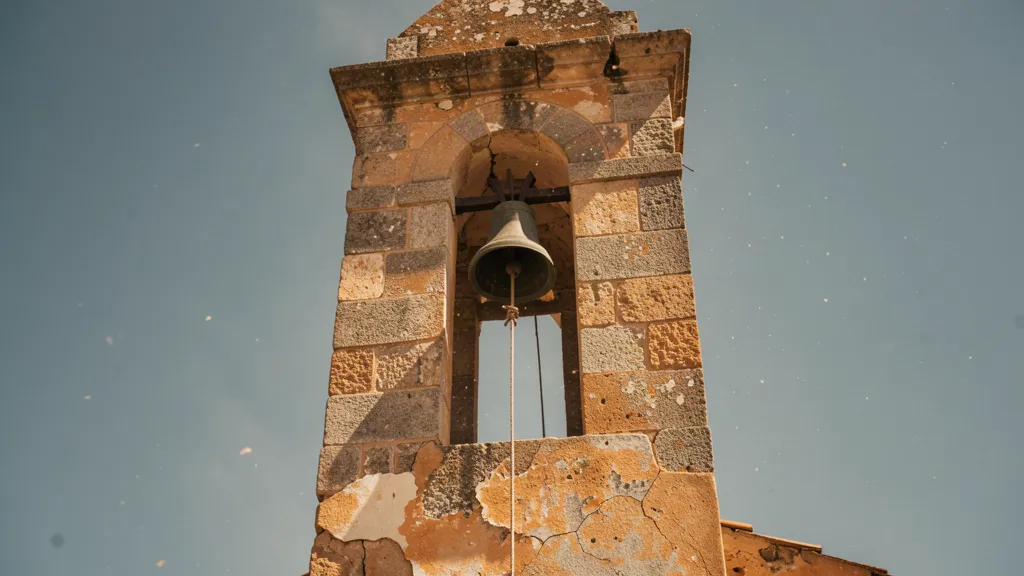
In Almuñécar, the international recognition of manual bell ringing as Intangible Cultural Heritage of Humanity by UNESCO coexists with a paradox that is hard to ignore: generational transmission has completely broken down. While international bodies safeguard the symbolic value of this practice, in the towers of this town in Granada, the knowledge is concentrated in just three men over the age of seventy. None of them has an apprentice waiting for their turn by the rope.
The contrast with other Spanish regions is devastating. In León, bell ringers preserve a tradition documented for centuries, passed down from parents to children and maintained through gatherings such as the one in Villavante, which has been held for nearly four decades. There, the craft is learned from childhood, when children accompany their elders to the tower and memorize the rhythms by listening, repeating, and making mistakes. In Almuñécar, that thread has been cut without anyone knowing how to tie it back together.
The local brotherhoods, historically responsible for managing the bell ringing, acknowledge the gravity of the problem. Without urgency, without a structured training program, the knowledge accumulated over centuries will be lost in less than a decade. This is not a catastrophist hypothesis: one only needs to do the math. If the three active bell ringers are all over seventy, biology imposes a timeline that no heritage declaration can stop.
Manual bell ringing is neither a folkloric adornment nor a relic for tourists. It is a complete language, with its own grammar, syntax, and local dialects. Every peal, every pause, every acceleration communicates something different: a wedding does not sound the same as a funeral, a fire warning is not confused with the call to mass. Whoever masters this code possesses a communicative competence that no mobile application has managed to replicate with the same emotional depth.
In Almuñécar, the three bell ringers who still climb the towers bear a knowledge that no longer interests the younger generations. The reasons are multiple and intertwined: the mechanization of the bell towers, the depopulation of historic centers, the loss of centrality of parish life. But the result is the same: no one asks, no one observes, no one asks to learn. The craft is fading away in silence, precisely in the place where silence was never an option.
UNESCO declared manual bell ringing an Intangible Cultural Heritage in 2022, following a candidacy promoted by several European countries. The recognition was accompanied by solemn speeches and safeguarding commitments. However, in Almuñécar, as in so many other municipalities in the southern peninsula, the declaration has not altered the daily reality of the towers. The bell ringers continue to climb the spiral staircases with the same worn-out knees and the same uncertainty about who will take their place.
The comparison with León is especially painful because it demonstrates that continuity is possible when there is a collective will to maintain it. There, bell ringers are not an ethnographic rarity: they are respected figures, integrated into community life, with a status that attracts young people. In Almuñécar, the craft has been reduced to a practice for the elderly, a custom that is tolerated as long as it doesn't bother anyone too much and that will disappear without anyone raising their voice.
The local brotherhoods acknowledge that there is no emergency plan. There are no bell ringing schools, no introductory workshops, no recruitment campaigns among teenagers. Nor is there a systematic record of the area's traditional bell tolls, those local nuances that distinguish the ringing of Almuñécar from that of any other Andalusian town. When the three current bell ringers stop climbing the towers, they will take with them a sonic vocabulary that no recording will be able to fully reconstruct.
The problem is not exclusive to Almuñécar. In most municipalities along the coast of Granada, the mechanization of bell towers advanced over the past decades with the promise of efficiency and savings. Electric motors replaced hands, digital programmers replaced human memory. What was gained in punctuality was lost in nuance: a motor can reproduce a pre-recorded toll, but it cannot improvise, it cannot adapt the rhythm to the emotion of the moment, it cannot engage in a dialogue with the community.
The three bell ringers of Almuñécar represent the last generation of a lineage documented since the mid-16th century in the town's chapter acts. Their hands hold the memory of thousands of tolls: patron saint festivals, funerals, storm alerts, council calls. That memory is not written in any manual, it cannot be downloaded from the internet, it is not learned in an intensive course. It is transmitted through contact, through repetition, through years of living alongside the sound and the tower.
Time is running out. Every year that passes without a replacement emerging is a year of knowledge eroding, a year of nuances fading away. The brotherhoods know it, the bell ringers know it, the institutions know it. But knowing is not enough. An active commitment is needed, a collective decision that this language does not deserve to die in silence. And that decision, for now, has not been made in Almuñécar.
The UNESCO declaration should have been a turning point, a spur to act before it was too late. Instead, it has become an uncomfortable reminder of the distance separating official discourse from local reality. While in Pamplona academic conferences are held on the value of manual bell ringing, in Almuñécar the three bell ringers climb the towers without knowing if they will be the last to do so.
The language of the bells is slowly fading, like an echo receding into the mountains. Every manual toll that still rings out in Almuñécar is an act of resistance, an affirmation that this code remains alive as long as there are hands to play it. But resistance has an expiration date. And that date is approaching faster than the brotherhoods are willing to admit in public.
The Secret Code of the Bells: How Every Toll is Deciphered
[[PHOTO:2]]
The tolling of a bell was never a random sound. Every strike, every pause, and every rhythmic sequence responded to a precise code that the locals learned from childhood without the need for manuals or formal explanations. In Almuñécar, as in so many towns across the Spanish landscape, the bell tower functioned as a communications center where bronze substituted for the spoken word. It took only a few seconds of listening to know if someone had died, if fire threatened the threshing floors, or if the procession was already turning the corner of the square.
The most revealing case of this system is the toll for the dead, traditionally known as the clamor. The elder bell ringers of Almuñécar describe a slow, rope-rung execution, where two bells alternate in a deep, spaced-out dialogue that seems to imitate the community's contained weeping. The key lay not only in the cadence but also in the number of strikes: in Almuñécar, two tolls announced the death of a woman, three that of a man, although these codes varied notably from region to region. This seemingly minor detail allowed the locals to immediately identify the sex of the deceased before the news spread through the streets.
The precision of the code left no room for ambiguity. A bell ringer who miscounted the number of tolls could sow confusion throughout the town, attributing the loss to the wrong family or generating unnecessary alarm. For this reason, the craft demanded absolute concentration and a profound knowledge of local variations, passed down from master to apprentice over years of practice in the bell tower. The elders of Almuñécar still remember how their grandparents would halt any conversation upon hearing the first toll of the clamor, mentally counting the strikes to decipher the message.
In contrast to the solemnity of the toll for the dead, the festive peals unleashed a completely different energy. The rhythms accelerated until they became almost frenetic, with the bells spinning at high speed and the clappers striking the bronze in uninterrupted cascades. No two festivals were alike: the patron saint's day, Corpus Christi, or the arrival of the bishop each had their own characteristic sequence, recognizable even from the most distant orchards on the outskirts of town. The bell ringer became a sort of folk musician, interpreting centuries-old scores with no other instrument than the rope and the counterweight.
Alarm tolls occupied a place apart in this sonic vocabulary. They were repetitive, intense peals, devoid of the rhythmic grace of celebrations or the meditative pause of funerals. Their function was purely practical: to mobilize the locals in the event of a fire, a flood, or any collective threat demanding an immediate response. In an era without sirens or public address systems, the bell tower was the only loudspeaker capable of waking an entire town in the dead of night or summoning the men from the fields in a matter of minutes.
Processions, for their part, required an accompanying toll that marked the route of the brotherhoods through the streets. This was neither a festive peal nor an alarm, but a steady pulse that guided the pace of the bearers and announced to the sick, who could not leave their homes, the exact moment the image was passing by their door. The bell ringers of Almuñécar adjusted the intensity according to the distance: softer when the procession was far away, more powerful as it approached the church, creating a sonic geography that the locals interpreted effortlessly.
This system functioned as an authentic "WhatsApp of the past," according to an expression popularized by recent ethnography. The comparison is not exaggerated: the bells transmitted information in real time, without the need for the recipient to move or for a complex technological infrastructure to exist. A farmer working in his plot could know, simply by looking up and listening, whether he needed to return to town for an emergency or if he could continue his day without worry. Information traveled at the speed of sound, with an efficacy that is hard to imagine today.
The coding was not limited to major events. There were tolls for the Angelus, which structured the working day into three moments of prayer; tolls to call the council, which summoned the locals to the square to discuss communal affairs; and storm tolls, intended to ward off the storms that threatened the harvests. Each had its own rhythm, duration, and intensity, forming a vocabulary of dozens of distinct messages that any adult local mastered naturally. The bell tower was, ultimately, the nerve center of community life.
Today, when automation has replaced the human hand and the tolls are programmed via electronic systems, that vocabulary is vanishing at an alarming rate. The elder bell ringers of Almuñécar keep the keys to a language in their memory that almost no one else knows how to interpret, and with them disappears a way of understanding the community based on attentive listening and shared knowledge. The code of the bells, documented in Almuñécar since the mid-16th century, is slowly fading out without contemporary society having found a substitute that transmits as much information with so few resources.
From the 16th Century to the Digital Age: The Documented History of Bell-Ringing
[[PHOTO:3]]
The earliest written records mentioning the use of bells in Almuñécar appear in the chapter acts and the account books of the Parish of la Encarnación, whose oldest preserved archives date back to the mid-16th century. In those pages, the sacristans meticulously recorded the payments received for ringing for the council, tolling for the dead, or pealing for the festivities of the liturgical calendar. This was no mere decorative trade: the bell-ringer was both a municipal and ecclesiastical employee, with duties outlined in ordinances that regulated everything from the number of strikes to the exact duration of each ring.
The municipal archives of Almuñécar preserve indirect references to those ordinances in the council minutes, where such prosaic matters as the maintenance of ropes, the purchase of clappers, or the repair of bell towers damaged by storms were debated. The documentation reveals that the ringing served a triple function: it summoned the residents to open council meetings, marked the rhythms of the working day, and warned of dangers such as fires, storms, or incursions by Berber pirates, a constant threat on the coast of Granada during the 16th and 17th centuries. Each of these warnings had a distinct rhythmic pattern, and its correct execution could mean the difference between calm and collective panic.
Comparing this with other localities helps to gauge the antiquity of the craft. The bell-ringers' gathering in Villavante, in the province of León, has been held uninterruptedly for thirty-nine years, a respectable figure that nevertheless pales in comparison to the more than four centuries of documented bell-ringing in Almuñécar. This longevity does not imply stagnation: the craft has evolved in its techniques, repertoires, and meanings, adapting to the needs of each era. What in the 16th century was an essential communication system for survival, in the 19th became a marker of local identity, and in the 20th began to be perceived as a relic of the past.
The turning point came in the 1960s, when the electrification of bell towers began to take hold in most Spanish municipalities. In Almuñécar, as in so many others, motors replaced hands and programmable clocks replaced the sacristans who climbed the tower several times a day. Automation promised regularity, savings, and a precision that the human touch could not always guarantee.
But with it, something harder to quantify was lost: the ability to improvise nuances, to adjust the intensity of the strike to the mood of the town, to differentiate a peal for a major feast from one for a minor feast with variations that no motor could reproduce. The parish account books of that era record the entries for the installation of the first electric mechanisms, alongside the final wage payments for manual bell-ringers.
Some of these men continued to climb the tower for years, not because it was necessary, but because they refused to abandon a craft they had inherited from their fathers and grandfathers. The parish records do not capture their names with the detail they deserved, but they do bear witness to a silent transition: the replacement of a human language with a mechanical hum that sounded the same at baptisms as at funerals.
Historical documentation also allows us to reconstruct the sonic geography of the municipality. It was not the same to hear the large bell of la Encarnación, reserved for solemn announcements and death knells for illustrious figures, as the smaller bell of the convent or the small bells of the hermitages scattered throughout the municipal district. Each had a specific timbre, range, and function, and the locals knew how to distinguish them without needing to see the tower. This auditory cartography, which today can barely be glimpsed in the documents, constitutes one of the most fragile intangible heritages of Almuñécar.
Notarial archives add another layer of information, and by no means a minor one. In the wills and marriage contracts of the 17th and 18th centuries, there appear bequests intended to pay for bell-ringing for the soul of the deceased, with precise instructions on the number of peals and the required solemnity. These seemingly minor clauses demonstrate just how deeply the sound of the bells was embedded in the social and spiritual contract of the community. To die without a proper toll was, for many, a way of dying twice: once on earth and once in the memory of the living.
The digital age has added a new chapter to this story, and not a particularly reassuring one. Current systems allow the ringing to be programmed from a mobile phone, the volume to be adjusted, traditional peals to be simulated, and even pre-recorded sounds to be played without anyone needing to set foot in the bell tower. The paradox is evident: it has never been easier to make a bell ring, and there have never been fewer people capable of truly ringing it. The technology that promised to preserve the sound has ended up emptying it of meaning, turning a language into a mere acoustic notification.
Local historians who have worked with the parish and municipal archives of Almuñécar agree on one point: the documentation exists, it is abundant, and it allows for a remarkably precise reconstruction of the evolution of manual bell-ringing from the 16th century to the present day. What is lacking is the generational handover that turns that archival knowledge into living practice. Papers can wait in files for centuries, but the hands that know how to interpret what those papers describe are fading away one by one, without anyone yet having found a way to pass on what cannot be learned by reading.
The Brotherhoods Against Silence: The Struggle for Generational Renewal
[[PHOTO:4]]
In the parish office of the church of the Encarnación, the leaders of the Hermandad del Cristo del Mar keep a laminated poster advertising a manual bell-ringing workshop. The date is from last autumn, and the number of registrations did not even fill half of the available spots. This scene accurately summarizes the state of a battle that the brotherhoods of Almuñécar have been waging for years against the progressive silence of their bell towers.
The Cofradía de Nuestra Señora de la Antigua, linked to the church that dominates the old town, attempted a similar strategy during the spring. They organized two introductory sessions on manual bell ringing, with the selfless collaboration of a retired bell ringer who offered to pass on the rudiments of the craft. Four people attended, two of them direct relatives of the bell ringer himself, and none returned for the second call. The heads of the brotherhoods consulted agree that the problem is not the promotion of the activity, but the nature of the commitment it requires.
The contrast with other towns in the Andalusian region is especially painful for those familiar with the bell-ringing tradition. In Villavante, a small town in León, bell ringers keep the manual tradition alive as an inheritance passed down from parents to children without the need for manuals or formal calls. There, generational renewal happens organically, because bell ringing remains integrated into daily life and the celebrations that structure the community calendar. In Almuñécar, that chain of transmission has broken at some point over the last three decades.
Young people in Almuñécar show a genuine interest in local heritage, as demonstrated by their participation in historical tours or initiatives to recover the municipality's photographic memory. However, this enthusiasm does not translate into a willingness to regularly climb the bell tower, learn the coded ringing patterns, and take on the responsibility of keeping them alive. The craft demands an availability that clashes with the work and leisure rhythms of the new generations, but also with a perception of the bell ringer as a figure from the past, detached from the concerns of the present.
Funding constitutes another structural obstacle that the brotherhoods have been unable to overcome. The budgets of these brotherhoods are primarily allocated to the conservation of images, processional floats, and liturgical items, leaving minimal margin for training activities. A manual bell-ringing workshop requires, under optimal conditions, fair remuneration for the instructor, teaching materials, and civil liability insurance covering access to the bell tower. None of the brotherhoods consulted currently have sufficient funds to sustain a continuous learning program.
The paradox is evident to those observing the situation from the outside. The bells of Almuñécar continue to ring, but they do so increasingly through electronic mechanisms that play recordings or activate automatic hammers. The sound remains, but the language disappears, because manual ringing precisely implies the ability to modulate, improvise, and adapt each toll to the specific circumstance. An automatic peal does not distinguish between a wedding and a funeral, between the patron saint festival and a weather alert.
The brotherhoods' attempts to reverse this trend have also included seeking alliances with educational centers. The Hermandad del Cristo del Mar proposed an extracurricular activity to the local secondary school that combined the history of manual bell ringing with a practical demonstration in the bell tower. The response from the teaching staff was courteous but evasive, and the initiative was shelved waiting for a schedule availability that never materialized. The episode illustrates the difficulty of integrating traditional knowledge into the margins of an educational system focused on other priorities.
Meanwhile, the veteran bell ringers who still retain the knowledge of the traditional ringing patterns are aging without a replacement. Some have begun recording home videos with their mobile phones, aware that these images may become the only available testimony for future generations. The brotherhoods keep these recordings with a zeal that reveals an awareness of preserving a heritage in a critical state, but they know that no video can replace direct transmission, the embodied learning that is only acquired by climbing the bell tower time and time again.
The struggle for generational renewal is being fought on a terrain where willpower is not enough. The brotherhoods of Almuñécar have identified the problem, designed responses, and collided with the limits of their own resources. The silence threatening the bell towers of Almuñécar is not the product of neglect, but of a combination of structural factors that no single brotherhood can solve on its own. The question left hanging in the air is whether the UNESCO declaration as Intangible Cultural Heritage will serve to mobilize the institutional support that has so far failed to materialize.
The Profile of the Bell Ringer: Trade, Vocation, and Oral Memory
[[PHOTO:5]]
In Almuñécar, there are just three men left who still climb the stone steps to the bell tower with the certainty of someone repeating a gesture learned in childhood. All three are retired, over seventy years old, and learned the trade between the fifties and the sixties, when manual ringing was not a heritage rarity, but the sonic pulse that ordered daily life. None appear on parish payrolls or municipal registers as professional bell ringers; such a position never formally existed in the town. Their bond with the bells was forged through family proximity, living near the tower, and a vocation that was then indistinguishable from simple availability.
The transmission of knowledge among the bell ringers of Almuñécar has followed a strictly oral pattern, similar to that documented by ethnographers in the Leonese regions where manual ringing retains a certain vitality. There, they describe a code of signals passed down from parents to children for generations, with local variants that function as dialects within a single language of bronze. In Almuñécar, this generational succession took place in the central decades of the twentieth century, when children accompanied their elders to the tower to hold the ropes, observe hand placement, and memorize the rhythmic sequences that distinguished a festive peal from a funeral toll. There was no written manual or formal school: learning was based on repetition, immediate correction, and the trust the veteran bell ringer placed in the apprentice, with a keen ear and patience.
The testimonies gathered from these three active bell ringers reveal that the trade was always linked to a social responsibility that transcended the merely technical. The bell ringer was neither a musician nor a laborer, but an intermediary between events and the community, someone capable of translating news into a sequence of strikes that all the neighbors knew how to interpret without need for explanation. This function demanded absolute availability: the bell ringer had to go to the tower at any hour of the day or night, in the middle of the harvest or during a storm, because the message allowed for no delays. The three men who keep the practice alive today in Almuñécar remember having interrupted meals, days of work in the fields, and family celebrations to answer an urgent call.
The oral memory preserved by these bell ringers is not limited to the technique of the ringing. Their accounts include anecdotes that illuminate the social meaning of each peal and the way the community responded to the coded messages. The alarm call, for example, was not an abstraction: it warned of fires in the nearby drylands or the presence of suspicious vessels off the coast, a distant echo of the Berber pirate attacks that ravaged the Granadan coastline for centuries. When the bell sounded with that urgent and staccato rhythm, the men abandoned their tasks and ran to the established meeting point, while the women secured the doors and gathered the children. The bell ringer who executed that call knew that the speed of the neighbors' response depended on the clarity of his ringing.
The funeral toll constitutes another fundamental chapter of that oral memory, and the bell ringers of Almuñécar describe it with a precision that reveals the complexity of the code. There was no single toll to announce a death, but variants that conveyed the age of the deceased and, consequently, the nature of the mourning. A child received a different toll than an adult, and that of an elderly person was in turn differentiated by a slower rhythm that the neighbors interpreted as the natural conclusion of a life cycle. This sonic gradation allowed the news to circulate through the town before anyone uttered a word, and prepared the community for the type of ceremony that was to be held.
The vocation of these bell ringers rests on a paradox that they themselves articulate without melodrama: they dedicate hours to a task that is no longer essential, in a time when electronic mechanisms can reproduce any peal with perfect regularity. However, their insistence on climbing the tower responds to a conviction that automation cannot replace. Manual ringing introduces variations imperceptible to an inattentive ear but significant to those who know the code: a slightly stronger strike, a pause an instant longer, an almost involuntary acceleration that betrays the bell ringer's emotion. This human texture of the sound constitutes, according to their own testimonies, the difference between informing and communicating.
The oral memory treasured by these three men also includes the names and peculiarities of the bells they have rung throughout their lives. Each has its own character, its response to the strike, its exact point where the clapper produces the cleanest sound. This knowledge does not appear in any inventory or heritage registry, and it will disappear with them if they do not find someone to pass it on to. The bell ringers know this, and that is why they insist on the urgency of a succession that is not forthcoming, a concern they share with the leaders of the local brotherhoods and which has become the focus of efforts to preserve the practice.
The profile of these retired bell ringers outlines a figure that no longer corresponds to any recognized trade in the labor market or in current ecclesiastical structures. They are, rather, custodians of a community knowledge that was transmitted orally for centuries and that today depends on the individual will of three people. Their authority does not stem from a title or an official appointment, but from the tacit recognition of the neighbors who still identify their names with the Torre de la Encarnación and with the sounds that have marked the decisive hours of local life. That silent legitimacy, built over decades, constitutes the ultimate foundation of a trade that resists disappearing as long as there are hands willing to pull the ropes.
Automation: the silent enemy that has already won the game
[[PHOTO:6]]
The first electric motor to replace a human arm in Almuñécar was installed without ceremony or exceptional witnesses. It was in the mid-1980s, when a technician from a company in Granada climbed the bell tower of the Encarnación with a toolbox and came down leaving behind a mechanism capable of striking the bell with chronometric regularity. The bell ringers of the time watched him with a mixture of curiosity and suspicion, aware that this gadget did not need to learn the ringing patterns or inherit the memory of their elders. All it took was flipping a switch for the bronze to sound exactly as it always had, without nuances, without errors, and without the intervention of a human hand.
Automation arrived in Almuñécar with the promise of solving a practical problem: the lack of generational renewal. The parishes argued that an electric system was cheaper than keeping a person available at any hour of the day or night, and more reliable than depending on the health or willingness of an elderly man. The parish priests of the time saw in those devices an impeccable administrative solution, a way to ensure that the bells kept ringing even if there was no one left willing to climb the bell tower steps. What they failed to calculate was the symbolic cost of that decision, the silent loss of a language that could only be articulated with the hands.
Today, most of the local churches operate with electric systems that reproduce pre-recorded ringing patterns. The sound comes from a speaker or a mechanical hammer operated by a digital programmer, and it sounds identical at every funeral, every wedding, and every patron saint festival. The difference is imperceptible to the untrained ear, but the bell ringers who still remain in the municipality detect it instantly: the human pulse is missing, that minimal variation in rhythm that distinguished one bell ringer's toll from another's. The capacity to improvise is also gone, to extend a peal when the occasion warranted it or to shorten it when the wind threatened to destabilize the bell.
Local bell ringers admit that automation won the game decades ago. They say it with the resignation of someone who has watched their craft fade away without fanfare, without an exact moment to mark on the calendar as the day of defeat. The transition was gradual: first the daily mass rings were automated, then the funeral tolls, and finally the festive ones, until the bell ringer was relegated to a token role that is only claimed on rare occasions. Technology did not need to impose itself by force; it was enough to offer a more convenient and cheaper alternative for the parishes to adopt it without resistance.
The phrase that summarizes the position of the resisters belongs to Villavante, a bell ringer and scholar of manual ringing, who maintains that "AI will never be able to perform manual ringing." His statement is not a technophobic bravado, but a technical observation: manual ringing depends on the strength, balance, and sensitivity of a human body in relation to a specific bell, with its specific weight, its tilt, and even the temperature of the metal. An automatic system can reproduce a sequence of strikes, but it cannot feel the bell, it cannot adjust the gesture to the conditions of the moment, nor can it dialogue with the bronze as an experienced bell ringer does.
The paradox is that automation, presented as a guarantee of continuity, has accelerated the disappearance of the knowledge it sought to preserve. By no longer requiring the physical presence of the bell ringer, the chain of oral transmission that had kept the craft alive for centuries was interrupted. Young people no longer climb the bell tower because there is no one left to teach them, and there is no one to teach them because the parishes no longer needed apprentices. The result is a generational void that no electronic device can fill, a rupture in collective memory that manifests itself in the uniformity of today's ringing.
Automatic systems offer an advantage that manual bell ringers could never match: absolute punctuality. A digital programmer does not run late, does not get sick, and does not forget a funeral toll at three in the morning. The parishes value this reliability above any heritage considerations, and the parishioners have grown accustomed to a predictable sound that no longer demands interpretation. Manual ringing, with its variations and its silences laden with meaning, has become a hazy memory that only the oldest can clearly identify.
In Almuñécar, automation did not encounter organized opposition. The bell ringers of the 1980s were older men, accustomed to a craft that was already considered residual at the time, and they lacked the capacity to articulate a collective defense of their way of working. They accepted the new systems with the same naturalness with which they had accepted other transformations of the urban landscape, perhaps because they sensed that the battle was lost from the start. Technology arrived wrapped in the language of progress and modernization, and opposing it was tantamount to declaring oneself an enemy of the future.
The result is an impoverished soundscape, where all the bells sound the same and no ringing reveals the identity of the person executing it. The bell ringers who still climb the bell towers of Almuñécar do so out of personal conviction, not because the parishes require their services. Their presence is almost an act of silent resistance, a way of remembering that manual ringing was for centuries the sonic heartbeat of the community. Automation won the game, but it has not managed to completely erase the memory of what was lost.
The death knell: a code that distinguishes sex, age, and mourning
[[PHOTO:7]]
In Almuñécar, when a bell tolls for the dead, the air fills with a message that almost all the older residents know how to decipher without needing to ask. The death knell is rung by rope, with two bells conversing with each other in a slow, solemn, unadorned sequence. There is no rush in this tolling: each strike is allowed to fade before the next one arrives, as if the bronze needed time for the mourning to settle in those who hear it from the street, from the kitchen, or from the fields.
The essential code is passed down by ear, from bell ringer to apprentice, without manuals or sheet music. In Almuñécar, two tolls announce that the deceased is a woman; three, that it is a man. This binary distinction, which may seem crude today, functioned for centuries as an instant parish bulletin: it was enough to count the strokes to know whether the impending mourning would be worn by a widow or a widower, whether the children left orphaned had just lost their mother or their father. The entire community found out before the town crier or word of mouth filled in the details.
The older bell ringers of Almuñécar, however, have added nuances that turn this basic scheme into a much richer language. The number of tolls not only indicates sex, but also approximates the age of the deceased: a young deceased receives a shorter, almost timid toll, while an elder is bid farewell with a longer series, as if the tower wished to count the years it takes with it. That variation is not written in any rulebook; it lives in the memory of those who still climb the bell tower and in the sensitivity with which they interpret each loss.
The tolling is interrupted during the religious service, a detail that reveals just how deeply this code is integrated into the liturgy and daily life. While the priest officiates the funeral mass with the body present, the bells fall silent: the mourning moves inside the temple, where silence carries a different weight. Afterwards, when the coffin is carried out to the cemetery, the tolling resumes with the same cadence, accompanying the funeral procession until the cortege disappears from the tower's view. That ritual pause is not an acoustic whim, but a show of respect that the bell ringers have always maintained, even when no one has asked them to do so.
The difficulty of preserving this code lies precisely in its intangible nature. It is not enough to know that two tolls correspond to a woman and three to a man; one must have listened to hundreds of funerals to distinguish the nuance that separates a child from an adult, a middle-aged man from an elder who dies in his bed surrounded by grandchildren. That auditory memory is built over years of exposure and with a sensitivity that no electric motor can replicate. The current bell ringers know this: when they are gone, the code will go with them, because there is no way to write down on paper the sorrow with which the rope is let fall at the funeral of a young person.
In the conversations still held in the bars of the old town, some residents recall how, as children, they learned to count the tolls without anyone formally explaining it to them. It was knowledge absorbed by osmosis, listening to grandmothers remark "they're tolling for a man" or "poor thing, she was just a little girl" as they leaned out onto the balcony. That communal learning, which turned every listener into an interpreter of the bronze, has been fading as automated tolls homogenize the messages and reduce them to a simple, unnuanced sonic alert.
The death knell is, of all the bells in the campanile repertoire, the one that demands the most from the bell ringer. This is not a festival, where the rhythm can be joyful and mistakes are hidden amidst the clamor; here, every strike is an act of solemn communication that admits no improvisation. The rope is handled with special restraint, with an economy of movement that reflects respect for the dead and their family. Veteran bell ringers speak of this tolling with a particular gravity, as if every deceased person they have bid farewell to from the tower had left a mark on their hands.
The community of Almuñécar has understood for generations that this tolling is not a simple notice of death, but a form of companionship. When the double knell sounds, the neighbors interrupt their tasks for an instant and listen, count, interpret. In that brief lapse, the bell performs a function that no mobile application has been able to replace: making the deceased's family feel that their loss does not go unnoticed, that the whole town pauses for a moment to acknowledge the void left by the one who departs. That emotional bond, woven from centuries of repetition, is what is at stake when the disappearance of manual tolling is discussed.
Festivals and alarms: the other languages that are also being lost
[[PHOTO:8]]
In Almuñécar, the festive pealing allowed for no half measures. Bell ringers who still remember the festivals of San Miguel and the Virgen de la Antigua describe a fast, almost euphoric rhythm that overflowed from the bell tower like an invitation hard to refuse. It was not a mere announcement that the party had begun: it was the party itself, transformed into vibration and air. The bells rang out with a contagious joy that spilled through the narrow streets of the old town and climbed the slopes to the most remote farmhouses.
That festive language had its own rules, passed down by ear and from hand to hand across generations of bell ringers. The festive peal was distinguished by its lively cadence, by the way the bells seemed to chase one another without ever catching up. The neighbors did not need to lean out over their balconies to know that the procession was about to set out or that the fireworks would begin shortly. The sound said it all, with a precision that is hard to imagine today in a world saturated with digital notifications and alarms.
In stark contrast to that sonic euphoria, the alarm toll represented the opposite extreme of the emotional spectrum. Bell ringers describe it as a repetitive and intense pealing, devoid of any festive nuance, that lodged itself in the chest of whoever heard it. It served to warn of fires, sudden flash floods, or any emergency requiring the immediate mobilization of the neighborhood. In an era without sirens or public address systems, that sound was the difference between life and death for many families in the municipality.
The intensity of the alarm toll was neither uniform nor arbitrary. Veteran bell ringers recall that the volume and force with which the bell was struck allowed the neighbors to deduce the proximity of the danger. A powerful peal that made the beams of the bell tower vibrate indicated that the emergency was close, perhaps right in the town center or its immediate surroundings. A more restrained sound, on the other hand, suggested that the problem was located on the outskirts, in the farmlands or the higher areas of the municipality.
That acoustic gradation turned the alarm toll into a rudimentary yet effective geographic information system. Those listening from their homes could gauge by ear whether they needed to rush out with buckets of water or if they still had time to organize themselves before heading to the scene of the disaster. The bell ringers needed to explain nothing: the bronze spoke for them, with an eloquence that has now been almost entirely lost. Automation has replaced that nuanced language with a uniform sound, identical for all emergencies and all distances.
The contrast between the festive peal and the alarm toll reveals the communicative richness of a system that today seems condemned to silence. These were not two variations of the same sound, but two distinct languages, each with its own grammar, tempo, and emotional weight. The first invited the community to gather, to celebrate, to forget for a few hours the weariness of daily labor. The second summoned them to immediate action, to urgent solidarity in the face of a shared danger. Both fulfilled a social function that no modern loudspeaker has managed to replicate with the same efficacy.
The bell ringers of Almuñécar insist that the alarm toll was so distinctive that the neighbors never confused it with any other. Even if it rang at midnight, in the midst of a storm, or in the middle of a workday, everyone knew how to recognize it instantly. That communicative clarity was based on the constant repetition of a rhythmic pattern learned since childhood, just as one learns the timbre of a family member's voice. The bells were part of the everyday soundscape, and their current absence has left a void that few know how to name.
The loss of these languages affects not only the memory of the elders. It also affects the community's ability to understand itself as a collective body, with its own codes and its own forms of communication. The festive peal and the alarm toll were, at their core, expressions of the same truth: that Almuñécar functioned as a living organism, capable of rejoicing and alerting in unison. Automation has fragmented that shared experience, replacing it with pre-recorded sounds that make no distinction between joy and danger.
The three bell ringers who still climb the bell tower of Almuñécar keep the memory of those rhythms alive in their hands. They know how the bells were pealed for San Miguel, how they were tolled for the Virgen de la Antigua, and how the bronze was struck when fire threatened the fields. But their knowledge will die with them, because there are no apprentices willing to dedicate hours to mastering a craft that is no longer considered necessary. The last manual peal for a festival or an alarm could sound at any moment, without anyone recognizing it for what it is: the end of an entire language.
UNESCO and Theory: A Recognition That Does Not Translate into Practice
[[PHOTO:9]]
The dossier sent to Paris carried the backing of autonomous communities, provincial councils, bishoprics, and dozens of local associations. The candidacy for manual bell ringing was built on the idea that Spain preserves one of the richest and most diverse sonic heritages on the continent, with dialectal variants that change from valley to valley and from bell tower to bell tower. UNESCO accepted the arguments and in 2022 inscribed the practice on the Representative List of the Intangible Cultural Heritage of Humanity. The announcement was celebrated in many municipalities as a symbolic victory, an international boost that would shield the bell ringing from oblivion.
In Almuñécar, the news was met with a mixture of pride and skepticism. The veteran bell ringers, those who still climb the towers of the Encarnación or the parish of San Miguel, knew that the recognition did not come with any specific obligations for the town councils. UNESCO does not impose binding safeguarding plans nor transfer direct funds to municipalities. Its seal is a moral distinction, a reminder that the international community considers a practice valuable, but day-to-day management still depends on local political will and municipal budgets.
Three years after the inscription, the local brotherhoods denounce that the recognition has not translated into a single tangible measure. There is no municipal school for bell ringers, no training program for young people, and no budget allocation dedicated to the conservation of the bell sets. The historical bronzes of Almuñécar, some cast in the 18th century, remain exposed to the elements, mounted on wooden headstocks that are cracking and fitted with clappers that strike with more force than the structures can withstand. The UNESCO declaration has not changed a single bolt of that reality.
The case of Almuñécar is not an exception in the Andalusian landscape. Inscription on the UNESCO representative list does not automatically generate state or regional funding lines for municipalities that preserve traditional ringing. The aid that does exist is usually tied to architectural restoration projects, not to the transmission of intangible knowledge. A bell tower may receive funds to repair cracks or consolidate walls, but hardly to pay a master bell ringer to teach the tolls for the dead, for festivities, or for alarms to a new generation.
The brotherhoods of Almuñécar have raised on more than one occasion the need to create a bell ringing school that operates on a stable basis. The proposal does not require major investments: it would suffice to set up a space in some parish facility, establish a practice schedule, and rely on the availability of the veteran bell ringers who still hold the complete repertoire. However, the initiative has found no echo in the City Council, which has not included manual bell ringing in its heritage programs or its cultural activities offerings. UNESCO recognition is mentioned in official speeches, but it does not appear in the budgets.
The protection of historical bell sets is another pending task. In Almuñécar, there are bronzes over two centuries old, pieces that have survived wars, earthquakes, and liturgical reforms. Some bear inscriptions with the founder's name, the date of casting, and the dedication to which they were consecrated. These items are not cataloged as movable assets of cultural interest, nor do they have a preventive conservation plan regulating their handling. UNESCO recognizes the value of the ringing, but does not require the protection of the instruments that make it possible.
The paradox is evident to those who know the ground. The international community declares that manual bell ringing is a heritage of humanity, while in Almuñécar the bell ringers who practice it receive no financial compensation or administrative recognition whatsoever. They climb the towers out of devotion, out of habit, or out of a sense of responsibility that is not stipulated in any contract. If one of them stops showing up, the ringing is lost, and no one has a legal obligation to replace them. UNESCO has put the spotlight on the practice, but the spotlight does not warm the bell towers.
Intangible heritage experts insist that effective safeguarding requires measures for transmission, documentation, and support for the bearer communities. Without those three pillars, inscription on the UNESCO list becomes an empty gesture, a plaque hung on the wall while the knowledge silently fades away. In Almuñécar, the documentation of local ringing is fragmentary and scattered: some are recorded on cassette tapes kept in private homes, others exist only in the memory of the oldest bell ringers. There is no municipal sound archive capturing the complete repertoire, nor an inventory of the ringing practiced in each parish.
The distance between theory and practice is measured in meters, not kilometers. One only needs to climb the tower of the Encarnación and observe the condition of the clappers, the frayed ropes, and the headstocks that creak with every toll. UNESCO has said that this sound is valuable to all of humanity. The brotherhoods of Almuñécar hope that someone, in some office at the City Council or the Junta de Andalucía, will translate that declaration into a budget allocation, a training program, or a simple maintenance order. Until now, administrative silence contrasts with the noise of the bells that still endure.
Villavante as a Mirror: What Almuñécar Could Learn
[[PHOTO:10]]
In the Leonese town of Villavante, on the banks of the Órbigo river, a ritual that is now in its thirty-ninth edition is repeated every first weekend of August. Bell ringers from Asturias, Cantabria, Galicia, Castilla y León, and occasionally other regions, climb the parish church tower to take turns ringing the bells manually, exchange techniques, and, above all, make themselves visible to a crowd that packs the square. The gathering began in 1986 as a modest initiative by a group of locals concerned about the disappearance of traditional ringing, and over the decades it has become a benchmark event for bell ringing in the northwest of the Iberian Peninsula.
What happens in Villavante is not a simple folkloric act nor an exhibition for clueless tourists. The organizers insist that the main goal is to build a new generation: each edition brings in young people who have never held a rope and who, after two or three summers, end up taking on responsibilities in their own bell towers. The formula combines practical workshops in the mornings, collective ringing at midday, and a brotherhood meal that serves as an informal space for oral transmission. Veteran bell ringers share anecdotes, correct postures, teach the specific rhythms of each valley, and answer questions that no written manual could ever cover.
Almuñécar lacks an equivalent event, and that absence weighs more heavily than it might seem at first glance. The bell ringers of Almuñécar who still hold the knowledge of local ringing have never been invited to share it in an organized setting, either within the municipality or at gatherings in other regions. There is no date on the calendar that brings them together, puts them in front of a microphone, or presents them to new generations as custodians of valuable knowledge. The contrast with Villavante is eloquent: there, the tradition is celebrated, practiced, and renewed every year; here, it is quietly fading away, confined to the memory of a few and to bells that barely ring anymore.
Visibility, or its absence, largely determines the health of intangible heritage. An annual gathering like the one in León serves a dual purpose: it socially legitimizes the activity in the eyes of the locals and attracts curious onlookers who would otherwise never consider learning to ring. In Almuñécar, the lack of a similar space has turned manual bell ringing into an invisible, almost clandestine practice, one that only emerges at funerals or on certain holidays when the automation fails. The local bell ringers do not feel recognized, and potential apprentices do not even know there is something to learn.
The Villavante model demonstrates that large budgets or complex infrastructures are not needed to reverse a trend of decline. All it takes is an accessible tower, a group of people willing to organize, and the willingness to open the doors to anyone who shows interest. The gatherings are funded by modest contributions from participants and the occasional support of the neighborhood council, and yet they have managed to keep alive a network of bell ringers that spans dozens of towns. The key lies in continuity: thirty-nine years of uninterrupted calls have created a habit, an expectation, and a sense of belonging that transcends specific individuals.
Almuñécar could look into this mirror without needing to copy the exact format. An annual gathering of bell ringers from the Granada coast, for example, would allow the few experts who still reside in the region to connect with others from the Alpujarra, the Axarquía, or the Campo de Gibraltar. The diversity of ringing styles between areas so geographically close yet so distinct in their history would add extra appeal, and the presence of outside visitors would help the residents of Almuñécar rediscover a heritage they have ignored for decades. The tower of the Church of la Encarnación, with its impressive set of bells, offers an ideal setting for such an initiative.
The case of Villavante also teaches that transmission cannot rely exclusively on individual goodwill. The Leonese bell ringers have understood that they need minimal support structures: a fixed calendar, a meeting place, communication channels, and, above all, recognition from local institutions. In Almuñécar, none of these pieces are in place. The local bell ringers have no space to meet, they are not included in the municipality's cultural program, and they have not received any proposals to document their ringing or teach it to younger generations.
The comparison between the two towns is not intended to idealize the Leonese model or present Almuñécar as a lost cause. Villavante has made mistakes, gone through years of low participation, and had to adapt to the demographic changes in the rural environment. However, its persistence demonstrates that collective organization can halt, and even reverse, the loss of a sonic language that seemed doomed to disappear. Almuñécar has historical bells, bell ringers who still remember the tolls for the dead, for festivals, and for alarms, and a social fabric dense enough to sustain an annual gathering if someone were to take the first step.
That first step, according to the experience of Villavante, is usually the hardest. It requires overcoming inertia, getting past the feeling that it is already too late, and convincing the bell ringers themselves that their knowledge deserves to be shared. In the Leonese town, the promoters of the gathering recall that at first many veterans were reluctant: they did not understand why anyone would want to learn ringing that they themselves had practiced out of obligation, without any glamour. The answer came when the first young people approached with genuine curiosity and the veterans discovered that their knowledge, far from being a relic of the past, aroused admiration and respect.
Almuñécar has the opportunity to replicate this dynamic, adapting it to its coastal reality and its festive calendar. A bell ringers' gathering held in spring or autumn, away from the tourist saturation of summer, could become a modest but significant event within the cultural landscape of the Costa Tropical. The raw materials exist: bells, bell ringers, history, and a potential audience that, as Villavante demonstrates, responds when offered the opportunity to listen and learn. What is missing is the decision to convene, to open the tower, and to trust that the sound of the bells still has something to say.
Sound memory: recordings and archives to ensure we never forget
[[PHOTO:11]]
In the pockets of half of Almuñécar, an involuntary archive already slumbers. These are handheld mobile phone recordings, with the levante wind sneaking into the microphone, where a death knell or a festive peal gets trapped between the noise of a motorbike and a child's voice. No one has cataloged them, no one has requested them, but they exist. They are the spontaneous sound memory of a town that senses something is slipping away and, without quite knowing why, decides to save it in the phone's gallery right next to the photos of Sunday's paella.
The municipal archive, on the other hand, holds material of a different nature. There rest reel-to-reel tapes from the seventies with recordings of peals that no one plays anymore, recordings made when mechanization had not yet silenced the bell towers. The problem is that these tapes are degrading in cardboard boxes, without a digitization plan to rescue them before the magnetic rust swallows them forever. There is no allocated budget, no responsible technician, no schedule of action. Only the certainty that with each passing year, the tape loses a little more of its ability to return that sound to us.
The paradox is cruel: Almuñécar preserves sound testimonies from the seventies while letting the current peals, the last manual ones, fade away without systematic recording. The locals record in snippets, with the best of intentions, but without documentary criteria. What is missing is someone to note the date, the festival, the name of the bell ringer, the meaning of the peal. What is missing is someone to ask why that peal has three dry strokes at the end or why that toll stretches longer than usual. Without that data, the recording is just beautiful noise; with it, it becomes an ethnographic document.
The model that could light the way is in León. The bell ringers of that province have built a sound archive with over five hundred recordings, a collection that is not limited to storing audio but contextualizes it, dates it, and links it to the names of those who performed it. That archive was not born of an institution or a European project: it was born of the obstinacy of a few men and women who understood that every lost peal is a word going extinct. Five hundred recordings may seem few compared to the immensity of the peninsular heritage, but they are five hundred more than Almuñécar has.
Current technology would allow this model to be replicated at a reduced cost. A mid-range phone, a twenty-euro lavalier microphone, and an account on a digital repository would be enough to get started. What is lacking is not money, but the decision to do it. What is lacking is for someone in the City Council to understand that digitizing a 1974 tape is not a whim of nostalgics, but a cultural rescue operation as urgent as restoring a retable or shoring up a city wall. Sound is also heritage, even if it does not take up space in display cases or feature in tourist guides.
The Sexitan bell ringers who still climb the bell tower are not eternal. Some are over seventy years old, and their hands, though steady, are beginning to falter during long peals. When they are gone, no one will be able to explain why the toll for the souls is played with that slow, almost dragging cadence that mimics the pace of a funeral procession. Current recordings, taken without method, will not suffice to reconstruct that knowledge. What will be needed is the archive that does not exist today, the project that no one has launched, the will that is delayed while the tapes from the seventies quietly fall apart.
There is a scene that repeats itself on the terraces of the Town Hall square when the bell tower rings. Tourists look up, smile, record ten seconds on their phones, and go back to eating. Those ten seconds, multiplied by hundreds of visitors each summer, form a chaotic and scattered archive that will never be consulted. Meanwhile, the municipal archive holds tapes that no one digitizes, and the bell ringers of León demonstrate that systematic work is possible. Almuñécar has the raw materials: it has the sounds, it has the informants, it has the technology. It just lacks the basket.
Time is running out, and not just because of the bell ringers' age. The reel-to-reel tapes from the seventies have a limited lifespan, and every playback without the proper conditions accelerates their deterioration. If their digitization is not addressed in the coming years, the last manual toll of Almuñécar could be reduced to a hazy memory in the minds of the elderly, without any physical medium to preserve it for future generations. A town's sound memory should not depend on the luck of a mobile phone or the endurance of a tape forgotten in a drawer.
The Impossible Relay: Why Young People Don't Want to Be Bell Ringers
[[PHOTO:12]]
In Almuñécar, the generational relay of manual bell ringing has not broken down for lack of trying. It has worn away due to a combination of factors ranging from economic precariousness to a social perception that associates the trade with a bygone era. The local brotherhoods have organized workshops for teenagers in recent years, hoping to spark vocations among those who have not yet turned sixteen. The results have been meager: some youngsters show up out of curiosity, learn the first beats of the peal, but rarely return to the bell tower once they discover there is no paycheck at the end of the month.
Manual bell ringing requires a combination of physical dexterity, aural sensitivity, and traditional knowledge that cannot be acquired in a single afternoon. It is not enough to just pull the rope; one must understand the rhythms, the pauses, the nuances that distinguish a funeral toll from a festive peal. This knowledge is passed down from master to apprentice, in hours of practice that are not recorded in any contract. For a young person seeking career guidance, the equation is discouraging: months of training for a trade that doesn't pay the bills and receives little public recognition beyond the patron saint festivals.
The lack of remuneration is the first wall. In Almuñécar, traditional bell ringers have carried out their work voluntarily or in exchange for small symbolic gratuities that fall short of making it a job. The brotherhoods do not have the budget to hire apprentices, and local administrations have not allocated a specific fund to keep this practice alive. A teenager who compares the time invested in the bell tower with any summer job in the hospitality sector—a thriving industry on the Granada coast—finds few reasons to choose the rope over the bar of a beach bar.
The low social prestige exacerbates the situation. In a town focused on tourism and the modernization of its image, the bell ringer appears as a figure from the past, almost folkloric, that does not fit into the aspirational references of the youth. The workshops organized by the brotherhoods have run up against this invisible barrier: the boys participate with a mixture of curiosity and condescension, like someone attending a demonstration of an ancient craft in a living museum. They do not see a future in the bell tower, but rather a postcard.
The comparison with Villavante, where manual bell ringing has achieved a certain continuity, reveals a structural difference. There, the tradition has been integrated into a community calendar that gives it meaning and collective pride; in Almuñécar, manual bell ringing competes with a leisure and consumer offering that leaves no room for activities without immediate returns. The young people of Almuñécar do not reject the tradition out of contempt, but out of a pragmatic logic they have been taught since school: time is money, and the bell tower doesn't pay dividends.
The phrase from Villavante, recorded in the context of the heritage file, resonates here with a double reading. "AI will never be able to perform manual bell ringing" is a defense of the human factor, but also a realization that this human factor is dying out for lack of a relay. Artificial intelligence can program tolls, automate peals, and simulate rhythms, but it cannot replace the sensitivity of hands that interpret the wind, the rain, or the mood of the town. The problem is that those hands no longer find anyone to inherit them.
In Almuñécar, the last active manual bell ringer—whose identity the brotherhoods prefer not to expose publicly—has expressed in internal meetings his fear that the trade will die with him. There is no formal apprentice, no transmission protocol, and no municipal plan to guarantee continuity. The occasional workshops have served to document the practice, to record and archive it, but not to create a living chain of transmission. The difference between archiving and transmitting is the same as that between preserving a musical score and training a musician.
The paradox is that Almuñécar boasts of its historical heritage—the Castle of San Miguel, the salted fish factory, the Roman aqueduct—while letting a sonic heritage die, one that requires no architectural restoration, but rather political and social will. A silent bell tower is an incomplete monument, a voice fading away with no one to claim it. The bells are still there, hanging in their yokes, waiting for hands that are no longer coming.
The brotherhoods' attempts to attract teenagers have stumbled upon a methodological problem. The workshops have been set up as extracurricular activities, with no continuity or follow-up, and without a reference figure to act as a long-term mentor. A fourteen-year-old boy might get excited by his first peal, but that enthusiasm fades if there is no clear path, tangible recognition, or a community to embrace him. Learning manual bell ringing is not just another hobby; it is an initiation that requires time, patience, and an emotional bond with the place.
The lack of remuneration is not just an economic issue, but a symbolic one. Paying for manual bell ringing would mean recognizing that this knowledge has value, that it is not a grandfather's pastime or an ethnographic curiosity. As long as the bell ringer remains a voluntary figure, the implicit message is that their work does not deserve compensation, and that message sinks in with young people more forcefully than any heritage discourse. In Villavante, continuity has been sustained by a community network that values the ringing as part of its identity; in Almuñécar, that network has been weakened by tourist pressure and social fragmentation.
The impossible relay is not, therefore, a biological fatality. It is the result of decisions that have not been made, budgets that have not been allocated, and a perspective that continues to see the bell tower as a backdrop rather than a living organ of the social body. Young people are not fleeing manual bell ringing out of laziness or ignorance; they are fleeing a trade that no one has known how to make desirable. And without desire, there is no possible transmission.
The Last Holy Week: Chronicle of a Fading Peal
[[PHOTO:13]]
Holy Week 2025 in Almuñécar was not measured by the number of processional floats or the influx of visitors, but by the physical capacity of three men to climb spiral staircases. The three bell ringers who still practice the craft in this town in the province of Granada took turns during those days with the precision of a military relay, aware that any forced absence would force the brotherhoods to press a button. And the button, although it reproduces the sound, does not reproduce the intention.
The first shift began on Viernes de Dolores, when the brotherhood of the Nazareno required the vespers toll. One of the bell ringers, over seventy years old and suffering from osteoarthritis that deforms his knuckles, climbed the forty-three steps of the tower of the Encarnación, supporting himself against the whitewashed wall. The effort cost him a pause of several minutes before he could grasp the clapper, but the peal rang out clear, with that broken cadence that the locals recognize as the announcement of a procession. Down below, in the square, the elderly looked up at the first toll, like someone recognizing the voice of a family member on the other end of the phone.
Jueves Santo marked the first breaking point. The brotherhood of the Santísimo Cristo de la Expiración had scheduled its procession for nine o'clock at night, but the bell ringer in charge of that shift suffered a bout of vertigo at midday. His family forced him to rest, and the brotherhood found itself with an uncomfortable dilemma: either suspend the manual ringing or activate the automatic mechanism installed in the parish. They opted for the latter. The result was a metallic, regular, soulless peal, which some locals later described as "the sound of a washing machine on the spin cycle." Criticism was not long in coming, especially from the older residents, who interpreted that toll as a lack of respect for tradition and for the titular image itself.
Viernes Santo dawned with palpable tension in the streets of the old town. The other two bell ringers, aware of what had happened the night before, decided to divide the stations of penitence with no margin for unforeseen events. One of them, the youngest of the group at sixty-four, committed to covering the morning and afternoon tolls, while the third, with a hip that had been operated on twice, reserved himself for the grand procession of the night. The coordination worked, but the physical toll was high: at the end of the day, both men had to be assisted in descending the towers, with trembling legs and gasping for breath.
Sábado Santo was experienced as a tense truce. The brotherhoods, gathered in an emergency meeting in the sacristy of the Encarnación, debated the advisability of resorting to automatic ringing for the remaining processions so as not to subject the bell ringers to excessive strain. The discussion pitted two positions against each other: those who defended the preservation of manual ringing at all costs, and those who prioritized the health of the three men. There was no formal agreement, but an intermediate solution prevailed: the bell ringers would only ring for the essential moments—the departure, the passing through the main square, and the return—and the rest of the route would be left in silence or accompanied by the bands.
On Domingo de Resurrección, the Procession of the Encuentro put the final touch to an exhausting week. The oldest bell ringer, the one who had suffered the bout of vertigo on Jueves Santo, insisted on climbing the tower for the peal of glory. He did so accompanied by his granddaughter, a teenager who supported him by the arm during the ascent and who witnessed, for the first time, her grandfather's complete ritual: checking the ropes, adjusting the clapper, leaning his body to put force into the first strike. The peal rang out like a victory, but also like a farewell. No one said it out loud, though everyone thought it: that could be the last Domingo de Resurrección with a fully manual peal in Almuñécar.
The figures from that week summarize the fragility of the craft. Of the fourteen planned processional tolls, only nine were executed manually. The remaining five were resolved with the automatic system or simply suppressed. The brotherhoods, which for decades had taken the availability of the bell ringers for granted, suddenly discovered the precariousness of a tradition that depends on three aging bodies and a will that is running out. The older neighbors, heirs to a language of sound that is no longer taught, expressed their discontent in the huddles of the square and at the doors of the churches, with that mixture of resignation and reproach that characterizes those who see a world disappearing without anyone consulting them.
Holy Week 2025 was not, strictly speaking, the end of manual ringing in Almuñécar. The three bell ringers are still alive and, as far as their strength allows, willing to repeat the experience next year. But it was the first time that automation crept into the heart of the processions, not as a theoretical threat but as a practical necessity. And that, in a craft transmitted through imitation and direct contact with the rope, amounts to a silent surrender. The question left hanging in the air after the last toll of Domingo de Resurrección was not whether the bell ringers could endure another Holy Week, but whether anyone would be there to take up the clapper when they can no longer climb the stairs.
Proposals to Save the Ringing: From the School to Patronage
[[PHOTO:14]]
The declaration of manual bell ringing as Intangible Cultural Heritage is not a mere protocolary adornment: it entails specific legal obligations for the administrations responsible for the bell towers. In the case of Almuñécar, the City Council and the Diócesis de Granada share the responsibility of preserving a practice that, according to UNESCO files, cannot be limited to preserving the bronzes as museum pieces. A silent bell is, for heritage purposes, a mutilated cultural asset, because its value lies in the human gesture that makes it speak.
The first proposal being considered by the town's veteran bell ringers is the creation of a municipal school for manual bell ringing. This would not be a weekend course or a folkloric workshop, but a stable program with symbolic remuneration for the apprentices, along the lines of the dulzaina or bagpipe schools operating in other communities. The model exists and has yielded results in towns like Villavante, in León, where the annual bell ringers' gathering, held for almost four decades, has served to draw young people with no prior link to the tradition to the ropes with technical curiosity and respect for the inherited codes.
This reference to León is no coincidence. Bell ringers' gatherings function as spaces for oral transmission where the ringing is not learned from sheet music, but by imitating the gesture, listening to the rhythm, and correcting the wrist. Almuñécar could host an Andalusian gathering for manual bell ringing, taking advantage of the network of bell towers on the Granada coast and the presence of deeply rooted brotherhoods. Organizing such an event requires little more than political will, coordination with the parishes, and a modest budget for allowances and promotion.
The local brotherhoods, for their part, represent the strongest link between manual bell ringing and daily life. Subsidizing the training of bell ringers within the brotherhoods would not be an aid to religiosity, but an investment in intangible heritage perfectly justifiable under the Historical Heritage Law. An agreement between the City Council and the brotherhoods could fund learning grants, civil liability insurance for the bell ringers, and the maintenance of access to the towers, which in many cases are currently closed for safety reasons.
Private patronage offers another complementary avenue. Local companies in the tourism and agri-food sectors, which benefit from the image of Almuñécar as a destination with identity, could sponsor specific campaigns or annual ringing cycles. This formula is already applied in the restoration of historical organs and in the financing of early music festivals, with tax deductions that make the contribution attractive. A restored and sounding bell tower is a tangible tourist draw: the visitor not only sees the tower, but hears a language that exists nowhere else in the world.
The Universidad de Granada appears on this map as a little-explored strategic ally. The Department of Social Anthropology and the Department of Art History could collaborate in the systematic documentation of the local ringing, professionally recording the peals, tolls, and clamors that are still preserved in the memory of the active bell ringers. This digitization would not be a mere passive archive: it would serve as teaching material for the municipal school and as a basis for future research on the local variant of the Andalusian bell ringing language.
Digitization, however, cannot replace in-person learning. The bell ringers insist that the ringing is transmitted from hand to hand, with the rope in the palm and the ear attentive to the sway of the bronze. Recordings serve to fix the memory, but not to train bell ringers. That is why the municipal school should combine practical sessions in the tower with the study of sound archives, in a methodology already being tested in Catalonia, where the Generalitat has been funding the training of bell ringers for years in collaboration with the bishoprics.
The economic cost of these measures is low compared to other cultural budgets. Maintaining a bell ringing school with two teachers and a dozen students would not exceed the budget of a fair concert. The restoration of the yokes and clappers of the three main parishes could be financed through the 1.5% cultural levy that the law reserves for heritage conservation. What is lacking is not money, but the decision to consider manual bell ringing as a first-need public cultural service.
Time is running out. Every year that passes without generational renewal, nuances of the local repertoire are lost that no recording will ever fully recover. The local bell ringers who are now over seventy hold in their memory specific ringings for storms, for fires, for calling the council, or for bidding farewell to the dead. In Almuñécar, two ringings announced the death of a woman and three the death of a man, a code that is not universal and varies from town to town. When they are gone, that vocabulary will disappear with the same irreversibility as a language dying out without speakers.
The UNESCO heritage declaration is not a goal, but a starting point. It obliges administrations to protect, but also to promote and transmit. In Almuñécar, protection means opening the towers, paying the master bell ringers, involving the brotherhoods, and convincing young people that learning to ring the bells is not a trade of the past, but a form of belonging to the present. Without concrete measures such as the municipal school, agreements with the brotherhoods, or the university documentation of the ringings, the last manual toll in Almuñécar will not be a metaphor: it will be a specific date on the calendar, a sound that is extinguished forever, and a silence that no automatic bell will ever fill.