
Club Costa Tropical · The Journal
The Blue of Almuñécar: From Roman Salting to Haute Cuisine
In Almuñécar (Granada), the artisanal fleet lands 1,200 tons annually of anchovy, sardine, and horse mackerel fueling a gastronomic revolution: from traditional espeto to signature menus with Roman roots. ## Almuñécar, crossroads of cultures and flavors To understand Almuñécar's gastronomic
In Almuñécar (Granada), the artisanal fleet lands 1,200 tonnes annually of anchovies, sardines and horse mackerel feeding a gastronomic revolution: from traditional espeto to signature menus with Roman roots.
[[PHOTO:0]]
Almuñécar, crossroads of cultures and flavors
[[PHOTO:2]]
To understand Almuñécar's gastronomic present, one must walk on its foundations, literally
Almuñécar, crossroads of cultures and flavors
[[PHOTO:2]]
To understand Almuñécar's gastronomic present, you have to walk on its foundations, literally. Beneath the current urban center, the earth preserves the traces of a Roman fish-salting factory, an industrial complex that, two thousand years ago, was already exporting garum throughout the Empire. This heritage, along with the remains of the aqueduct that brought water from the sierra to the coast, is not a mere archaeological attraction; it is physical proof that this enclave was a first-rate logistical and commercial hub in Antiquity.
Before Rome, it was the Phoenicians who chose this rock to found a colony, then came the Arabs, who reshaped the alcazaba and perfected the irrigation systems. Each civilization has left its mark on the landscape and, above all, on the pantry. The result is a mixed culinary identity that today projects itself toward haute cuisine, but that does not deny its humblest and most maritime roots.
Local raw ingredients are the true thread running through this story. The waters of the Costa Tropical, bathed by the Mediterranean and warmer than those of the rest of the province, provide oily fish of exceptional quality, the same fish that was once salted in the Roman tanks. This tradition of preserving and adding value to the product has evolved, but it remains alive in the memory of the chefs who today reinterpret these ancestral flavors with contemporary techniques.
The cultural melting pot is perceived not only in the kitchen, but also in the very urban layout of Almuñécar and its annex La Herradura. Walking through its streets is like crossing superimposed layers of history, where Roman stone sits alongside Arab street layouts and 20th-century tourist architecture. This blend, far from being chaotic, has generated a unique ecosystem that attracts national and international visitors, eager for an experience combining beach, heritage, and an increasingly sophisticated gastronomic offering.
The municipality closed 2025 with record tourism figures, a fact that is no coincidence. The bet on de-seasonalizing the destination, with an active cultural calendar throughout the year, has allowed local cuisine to become an attraction in its own right. People no longer travel to Almuñécar only for its coves and subtropical climate; they also travel there to taste a cuisine that draws on three millennia of commercial and cultural exchange.
The Roman ruins, in this sense, are not an ornament of the past, but an argument for the future. The salting factory, discovered beneath the urban center, has been integrated into the tourist narrative as a visitable space that explains how garum was made, that fermented fish sauce that was the liquid gold of its time. This connection between the historical product and the current offering is what distinguishes this destination from other Andalusian coastlines.
Local haute cuisine has known how to read this heritage. Dishes that recover the intense flavor of oily fish, marinades, escabeches, and artisanal salted preserves coexist on the menus of the most avant-garde restaurants alongside proposals that look toward the eastern Mediterranean, recalling that Phoenician and Arab past. It is a border cuisine, in the best sense of the term, that knows neither geographical nor temporal limits.
La Herradura, for its part, provides that quieter counterpoint tied to fishing tradition. Its bay, considered one of the most beautiful in the Mediterranean, has historically served as a refuge for sailors and is today the stage for a gastronomic offering that values the immediacy of freshly landed produce. This duality between Almuñécar's historic core and the calm of its annex enriches the whole, offering the visitor two complementary ways of understanding life on the coast.
This intangible heritage, the know-how passed down from generation to generation, is the most precious asset the municipality possesses for facing the challenges of the future. While the political battle over the Parque Azul de Vida Submarina project unfolds, gastronomic identity is consolidating as a stable pillar, less visible but equally solid, on which to base tourism development in the coming years. Almuñécar's cuisine is not a passing fad; it is the most authentic expression of a land that has always looked to the sea to survive and to create.
The artisanal fleet: 30 boats and a way of life
[[PHOTO:3]]
The port of Almuñécar awakens to a murmur of rigging and polystyrene crates. Thirty boats, not one more, rock on the waters of the Sexi fish market, a fleet that has learned to survive the push of tourism without giving up its trade. These are small vessels, six to twelve meters long, that fish with selective gear such as trammel nets, longlines, or small-scale seines, techniques that respect the seabed and avoid overfishing.
Each dawn, the skippers of Sexi decide their route based on the weather forecast and inherited experience. Anchovy, sardine, and horse mackerel are the main catches, pelagic species that find a suitable habitat in these temperate waters. Landings amount to around 1,200 tons per year, a modest figure compared to the large Andalusian ports, but one that sustains a local economy based on proximity and freshness.
Small-scale fishing, with the fish market itself as home port, guarantees that the product reaches auction within hours. The restaurants of the Costa Tropical have understood this advantage, and many base their offerings on the fish they see unloaded each morning. It is the first link in a value chain that directly connects the fisherman to the chef, without intermediaries or long cold chains.
This way of life, however, is not immune to the tensions shaking the Andalusian fishing sector. Quotas, closure days, and competition from large industrial fleets weigh on an activity that already operates on the edge of profitability. Despite everything, the thirty boats of Almuñécar-La Herradura maintain their own identity, that of a fishery that seeks not volume but quality, and that has become a hallmark of the municipality.
The Sexi fish market, with its bustle of auctions and stacked crates, is the heart of this whole. There, the veteran fishermen cross paths with the young people beginning to take over, in a generational transfer that, despite the difficulties, continues to happen. The artisanal fleet is not merely a means of production; it is the living memory of a people who have gazed at the sea for centuries, from the ancient Roman fish-salting factories to today's haute cuisine.
Almuñécar's Fish Market: Auction and First Sale
[[PHOTO:4]]
Dawn in the port of Sexi has a pulse all its own, a beat that quickens as the boats begin to dock. On the damp concrete, polystyrene crates line up like dominoes, and the air becomes steeped in that briny smell known only to coastal fishing ports. Almuñécar's fish market, managed by the Fishermen's Guild, becomes the stage for a ritual repeated daily for decades: the auction of freshly landed fish.
The auction system, which can be descending or ascending depending on the species and quantity, sets the price based on supply and demand at that moment. The buyers, mostly owners of local restaurants and distributors working for high-end cuisine, know the rules of the game perfectly. A minimal gesture, a blink of an eye, a slight movement of the hand, and the lot changes hands in a matter of seconds. The precision of the mechanism fascinates the occasional visitor, but for regulars, it is nothing more than the routine that guarantees traceability of the product, from sea to table.
The auction knows no gastronomic hierarchies, although everyone knows that the best pieces have an almost guaranteed destination. The region's cooks, those who have built their reputations on fresh produce, show up each dawn hoping to get their hands on an exceptional-sized horse mackerel or a red mullet at its optimal point. The competition is silent but fierce, and prices can soar when two restaurants need the same lot for their daily menus.
Behind this morning ballet lies an economic logic that supports the entire artisanal fleet. The first sale in the market not only determines the price shipowners will receive for their work, but also sets the benchmarks for the local market for the rest of the day. The distributors who supply the region's markets wait for the auction to end before negotiating their purchases, always attentive to the fluctuations of a market that changes with the tides and seasons.
The Fishermen's Guild, as the managing entity, ensures that the process runs with transparency and efficiency. Its role goes beyond the simple administration of the market: it acts as guarantor of a system that has proven its viability for generations. The fishermen place their trust in this institution, which finds a buyer for every crate of fish and ensures that payments are made within the agreed timeframes. It is a perfectly oiled mechanism that nonetheless depends on a fragile balance between nature and the market.
For the restaurants of the Costa Tropical, the market represents much more than a supply point. It is the guarantee that the product arriving in their kitchens was caught in nearby waters, with sustainable fishing techniques and under optimal freshness conditions. This proximity translates into a competitive advantage that is difficult for establishments dependent on wholesale distributors and longer cold chains to match. Fish auctioned at dawn in Almuñécar can be on the diner's table before the sun reaches its zenith.
The relationship between the market and high-end cuisine has tightened in recent years, as the region's chefs have revalued the traditional species of the Mediterranean. Anchovy, sardine, horse mackerel, or mackerel, once considered minor fish, have found new status on the menus of the most prestigious restaurants in the area. This revaluation has had a direct effect on auctions, where these products fetch prices that would have seemed unthinkable a decade ago.
Distributors working for Spanish high-end cuisine have also set their sights on this market, attracted by the quality of a product that does not travel long distances before reaching its destination. Some of the country's most recognized restaurants, including several Michelin-starred establishments, feature fish from this Granada coastline on their menus. Traceability, that word so often repeated in gastronomic circles, finds its most authentic expression here: a product that travels from sea to plate in a few hours, without unnecessary intermediaries or processes that alter its qualities.
The auction ends when the last crates find buyers and the bustle dissipates. The fishermen gather their gear and return to their boats to prepare for the next outing, while the buyers load their vans with the day's haul. The market falls back into silence, waiting for the cycle to begin again the next day, when dawn will bring with it the bustle of a tradition that refuses to disappear.
From Roman garum to contemporary salting
[[PHOTO:5]]
The sea of Almuñécar keeps in its depths a secret that archaeologists have been unearthing for decades. Beneath the urban fabric, near San Cristóbal beach, lie the remains of the ancient Roman cetariae, salting factories that, between the 1st and 5th centuries AD, made this coast one of the main production centers of garum in the western Mediterranean. This sauce made from fish entrails fermented in the sun, which Roman patricians paid for in gold, was produced in large vats of opus signinum that can still be seen at El Majuelo, at the foot of the statue of Columbus.
Archaeology has confirmed that the Sexitan fishing industry was not a minor activity. The excavations directed by Manuel Pellicer in the 1970s and the subsequent work of Professor Elena Sánchez López, holder of the Chair of Archaeology at the University of Granada, have documented an industrial complex of more than two thousand square meters including salting pools, warehouses, and pressing areas. The Dressel 7-11 amphorae, made in the potters' workshops of the Granada coast, traveled loaded with garum as far as Ostia, Carthage, and the garrisons of the Germanic limes, where the Sexitan product rivaled the famous garum of Cádiz and Málaga.
This two-thousand-year-old heritage is not dead. In the kitchens of the Costa Tropical, a new generation of cooks has rediscovered the fermentation and salting techniques that made this coastal strip famous, applying them to the products that now arrive at the Sexitan fish market. Anchovy and sardine, caught by the local artisanal fleet, are now transformed into gastronomic creations that have nothing to envy of the dishes enjoyed by Roman senators.
One of the leading figures of this movement is chef José Álvarez, owner of the restaurant Estimar in Madrid and culinary advisor to several establishments on the Andalusian coast, who has incorporated into his menus an anchovy garum made with specimens from the bay of La Herradura. The process, which Álvarez describes as "a return to origins with laboratory techniques," combines traditional salting with the temperature and humidity control made possible by modern fermentation chambers. The result is an umami sauce, dark amber in color, that sommeliers compare to a dry oloroso sherry.
In Almuñécar, the family business Salazones La Sexi, founded in 1962 by the Ortega Molina family, has developed a line of premium products that reinterprets the Roman recipes documented during the excavations at El Majuelo. Its salted anchovy with coastal herbs, macerated for forty days in sea salt from the Cerrillos salt flats, is currently served in Michelin-starred restaurants in Málaga, Granada, and Almería. Demand has grown so much that the company has had to expand its facilities in the El Cerval industrial estate, where it employs twelve workers.
The link between the Roman past and the gastronomic present is not merely a marketing strategy. Chemical analyses carried out by the Andalusian Institute of Historical Heritage on residues adhering to the pools at El Majuelo have revealed that Sexitan garum was made with anchovy, sardine, and mackerel, the same species that today are the stars of the region's seafood cuisine. The fermentation technique, based on the action of fish enzymes on salt, has hardly varied in its essence since the Romans perfected it on these coasts.
The youngest cooks in the region have gone even further. At the restaurant El Molino de La Herradura, young Granada-born chef Daniel Rodríguez, trained at the Basque Culinary Center, offers a tasting menu that includes a "sardine garum" marinated for six months in a brine flavored with sea fennel, thyme, and bay leaf, plants that grow wild on the cliffs of Cerro Gordo. The preparation, which Rodríguez defines as "a journey through time via the palate," is served on a slice of sourdough bread with sun-dried tomato from the Motril plain.
The rediscovery of these techniques has also generated an interesting gastronomic tourism circuit. The Archaeological Museum of Almuñécar, housed in the Castle of San Miguel, organizes guided tours of the cetariae at El Majuelo that conclude with a tasting of contemporary salted products made according to Roman recipes. The initiative, implemented in collaboration with the fishermen's guild and the Costa Tropical hotel association, attracted more than three thousand visitors last summer, according to data from the museum itself.
Salt, that humble ingredient that the Romans turned into a medium of exchange and that today gives its name to the very word "salary," remains the common thread of a story that has never ceased to be written on these coasts. From the garum that filled the amphorae resting at the bottom of the bay of La Herradura to the salted anchovy served in avant-garde restaurants, the Sexitan fishing tradition demonstrates that there are flavors that survive the centuries.
El espeto: ritual of fire and salt on the beach
[[PHOTO:6]]
The smoke rises vertically, straight as a column, until the levante wind dissolves it above the sand. On the shore of San Cristóbal beach, esparto grass canes are planted in the ground, forming an imperfect circle around the olive-wood embers. The sardines, threaded three at a time, let their fat drip onto the embers, producing a crackling that smells of sea and burnt wood. It is espeto time, and in Almuñécar, this ritual is experienced as a ceremony that tolerates no haste.
The technique is seemingly simple, but it conceals knowledge passed down from generation to generation. The sardines are threaded alive onto the cane, pierced in such a way that the fish's natural oil permeates them during cooking. Coarse salt is sprinkled just as the fish begins to sweat, creating a crust that seals in the juices and imparts that touch of sea that defines the espeto of Málaga and Granada. The fire, always olive-wood based, must be at its exact point: neither too hot, for it would burn the skin, nor too slow, for it would leave the flesh raw.
In the chiringuitos of La Herradura and Paseo del Altillo, the espeteurs work with a dexterity that borders on choreography. Every movement has its purpose: the rotation of the cane so the heat is uniform, the touch of salt at the precise moment, the exact distance between the fish and the embers. Customers watch the process from their tables, turning the preparation into a spectacle that is part of the gastronomic experience. It is not uncommon to see tourists pull out their phones to film the espeteur as he turns the canes with an ease that only daily practice provides.
The tradition of espeto has deep roots on this coast, but its exact origin is lost in the memory of fishermen. Some trace it back to the need to make the most of the most abundant catches, such as sardine, which arrived at the port in enormous quantities during the summer months. Others link it to the Phoenician and Roman salting culture, which already used fire and salt as preservation methods. What is certain is that espeto has survived all gastronomic trends, remaining faithful to its basic ingredients: fresh fish, coarse salt, cane, and olive-wood embers.
In recent years, however, this age-old technique has made the leap to haute cuisine without losing its essence. Some restaurants in the region have begun experimenting with anchovy and horse mackerel espetos, varieties that were previously reserved for other culinary uses. The result is offerings that maintain the ritual of fire and salt but present themselves with unexpected sophistication: espetos served on beds of seaweed, accompanied by citrus-emulsified sauces from the coast, or paired with white wines from the Málaga designation of origin.
This evolution has not been without debate. Purists argue that sardine espeto is untouchable, that any variation distorts a tradition that has remained unchanged for centuries. Innovators, for their part, maintain that cooking is a living art and that experimentation is necessary so traditions do not become museum pieces. Meanwhile, on the beaches of Almuñécar, both realities coexist: the chiringuitos that maintain the classic espeto, with its cane, coarse salt, and olive-wood fire, and the restaurants that dare to reinterpret it with a contemporary eye.
The pairing with coastal wines has been one of the great successes of this new phase. Young whites, with their natural acidity and saline notes, perfectly complement the intense flavor of the smoked fish. Some sommeliers in the region have also begun recommending orange wines, made with skin maceration, which provide a tannic structure that supports the flavor of the espeto without masking it. The combination has been so successful that wineries on the Granada coast already offer tastings paired with espetos at their own facilities.
The espeto season reaches its peak between June and September, when sardines arrive on the coast in abundant schools. But the oldest locals insist that the best espeto is the one eaten in winter, when the cold makes the contrast between the hot fish and the sea air even more intense. During those months, the chiringuitos that remain open become refuges where locals gather around the fire, in a scene reminiscent of the old fishermen's gatherings on the beach.
Espeto is, ultimately, much more than a way of cooking fish. It is a link to the past, a ritual that connects the Sexitanos to their Roman and Phoenician ancestors, and a sign of identity that defines this coast. When the canes are planted in the sand and the smoke begins to rise, the beach transforms into a stage where fire, salt, and sea merge into a spectacle that has lost none of its magic. And as long as the embers continue to burn, espeto will remain the undisputed king of the beaches of Almuñécar and La Herradura.
Boquerón, sardine and horse mackerel: the blue fish triad
[[PHOTO:7]]
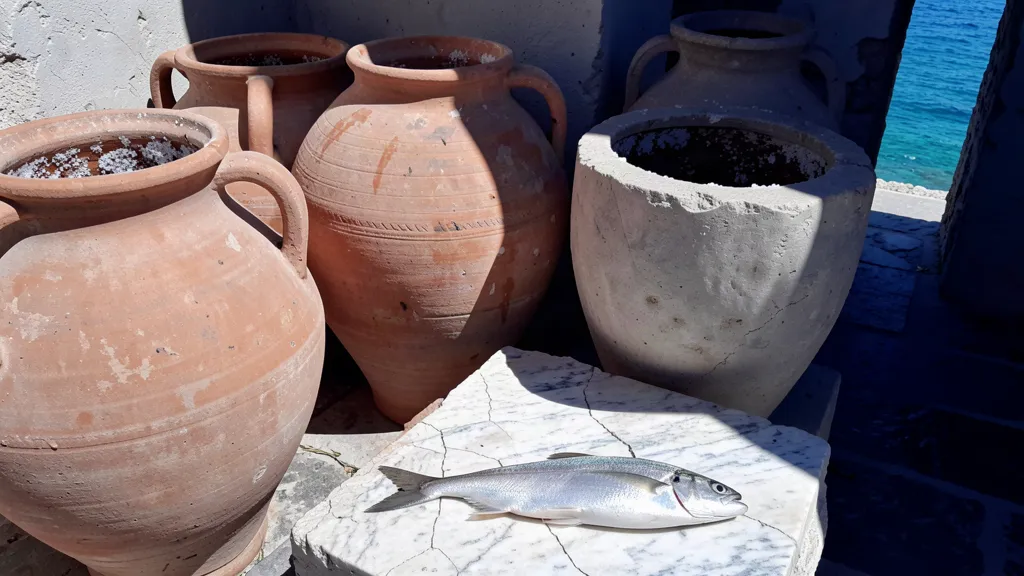
The boquerón, sardine and horse mackerel form the most holy trinity of the Sexitan table, a blue triumvirate that spans the centuries without losing its relevance. They are humble species, which no one boasts about in grand gastronomic forums, but which sustain the culinary identity of an entire people. In Almuñécar, blue fish is neither a concession to tourists nor a seasonal whim: it is the daily pantry, the childhood memory, and the definitive argument that the most honest cuisine needs no artifice.
The boquerón (Engraulis encrasicolus) is the star of the show in its three canonical versions: marinated in vinegar, fried, or threaded onto a reed for the espeto. Each of these demands uncompromising freshness, for this small silvery fish does not forgive waiting. Marinated in vinegar with garlic and parsley, it becomes a classic on Almuñécar's terraces; fried, crispy and golden, it is the appetizer that accompanies every conversation by the sea. But it is in the espeto that it reaches its most ritual dimension, pierced through by the reed and roasted slowly over olive wood embers.
The sardine (Sardina pilchardus) reigns unchallenged over San Cristóbal beach, where the smoke from beached boats mingles with the murmur of the waves. Its fatty, flavoursome flesh, lightly smoked by the fire, melts in the mouth and leaves on the palate that taste of the sea that brooks no reply. Sardine espetos are a spectacle in themselves: the reeds planted in the sand forming a circle around the fire, the sardines glistening in the sun, the oil dripping onto the embers and stoking the flames.
The horse mackerel (Trachurus trachurus), on the other hand, lived for decades in the shadow of its two companions in adversity. Considered for a long time a second-rate fish, it has in recent years found a well-deserved rehabilitation in the kitchens of haute cuisine. Local chefs treat it with the respect it deserves as a first-class product, presenting it raw, marinated, or lightly seared, always with the intention of enhancing its powerful flavour and firm texture. This new perspective has restored to the horse mackerel the place it should never have lost.
Science confirms what tradition already knew: these three fish are an extraordinary source of omega-3 fatty acids, high biological value proteins, and B-group vitamins. Their regular consumption is associated with the prevention of cardiovascular diseases and an anti-inflammatory effect that nutritionists strongly recommend. But in Almuñécar, no one needs scientific arguments to justify their presence at the table; one only has to look at the sea to understand that what it offers is, quite simply, the best it has.
The affordable price of these species makes them a profoundly democratic product, capable of bringing together at the same table the port worker and the luxury hotel holidaymaker. There is no class distinction when sharing an espeto on the shore, nor any hierarchy when the fried boquerón arrives at the table on a sheet of greaseproof paper. This egalitarian condition is perhaps its greatest virtue: blue fish understands nothing of social status, only freshness and skill.
The versatility of this triad is also evident in home cooking, where every family keeps its own recipes handed down from generation to generation. Sardines in adobo, boquerón in escabeche, grilled horse mackerel with a squeeze of lemon: simple dishes that sum up centuries of popular wisdom and continue to fill kitchens with maritime aromas. In the town's fried-fish shops, the greaseproof paper becomes stained with oil and coarse salt while customers devour these unpretentious morsels with their hands.
The open-air markets of Almuñécar and La Herradura reflect this reality every morning: the polystyrene crates fill with glistening boquerones, silver-bellied sardines, and horse mackerel with bright eyes. The fishmongers offer them with the confidence of those who know their merchandise, advising on the best preparation for each piece. The regular customer need not ask the price; they know they are buying quality at a fair price, the same quality that has fed the generations who lived from this sea.
Sexitan gastronomy has managed to transform this humility into a mark of identity, and the region's restaurants have learned to treat blue fish with the respect it deserves. No longer is horse mackerel hidden in tomato stews to mask its flavour; it is now presented raw, with a citrus and fresh herb vinaigrette, as a premium product. This evolution has not betrayed the essence of the product but has elevated it, demonstrating that avant-garde cuisine can also draw from the most traditional sources.
While the town council wages its particular battle for the Parque Azul de Vida Submarina, the reality of the sea continues to assert itself every day in the fish auctions and in the kitchens. Almuñécar's blue fish needs no underwater museums or grand infrastructure to prove its worth: it simply has to keep arriving at the port each dawn, fresh and gleaming, ready to become the protagonist of the table. That is its best calling card, the one that has sustained this people for centuries and will continue to do so as long as the sea keeps yielding its fruits.
From Tradition to Avant-Garde: Chefs Who Innovate
[[PHOTO:8]]
The boquerón arrives at the table of El Trillo restaurant dressed in three different ways: escabeche, marinated, and fried. This is not a whim of author cuisine, but a declaration of intent about the possibilities of a product that, for centuries, has been consumed in only one way. The chefs of the Costa Tropical and Granada capital have made the blue fish of Almuñécar the centerpiece of their tasting menus, and they do so without betraying the artisanal origin of the raw material.
El Trillo's proposal, a gastronomic reference in the region, starts from a simple principle: the product commands. The sexitano boquerón, caught using traditional techniques and treated with the respect that its freshness demands, transforms into textures ranging from the classic Andalusian fried preparation to the most subtle marinated one. The diner thus travels through the history of blue fish on the Granada coast through a single ingredient, presented in three phases that dialogue with one another.
At La Costa, another establishment that has emphasized maritime tradition, the horse mackerel is served as a tartare with citrus emulsions. The acidity of the region's lemon balances the natural fat of the fish, and the result is a dish that looks toward the Mediterranean without renouncing contemporary techniques. The bet on horse mackerel, a historically modest fish, represents a vindication of blue species against the big names of haute cuisine.
This innovative movement is not born from nothing. Behind it lies research work and respect for the salting techniques that the Romans already practiced in the factories of Almuñécar, whose archaeological remains still stand near the city center. Today's chefs draw from this millenary heritage and reinterpret it with modern tools, but the principle is the same: extracting the best from the sea without masking it.
The proximity between the port and the restaurants facilitates this symbiosis. The cooks of the Costa Tropical work with the fishermen's guilds and know firsthand the day's catch, which allows them to design menus that change according to the season and the state of the sea. This immediacy, impossible in large cities, becomes the main argument for a cuisine that boasted of kilometer zero even before the term became fashionable.
The result is a dual path of valorization. On one hand, chefs elevate the status of species considered minor for decades, such as horse mackerel or sardine. On the other, the blue fish of Almuñécar gains presence on the menus of Granada capital's restaurants, where tasting menus incorporate these proposals with a coastal designation of origin.
Innovation, however, does not imply rupture. The escabeches and marinades served in these establishments preserve the proportions of vinegar, oil, and spices used in fishermen's homes, although presented with a contemporary aesthetic. Respect for the traditional recipe coexists with experimentation, and this duality becomes the hallmark of a generation of cooks who have understood that the avant-garde is not incompatible with memory.
The bet on Almuñécar's blue fish also has an economic reading. By revaluing these species, restaurants help support an artisanal fleet that competes at a disadvantage against large industrial trawlers. Each plate of boquerón in three textures or horse mackerel tartare is, at heart, support for the fishermen who keep alive a tradition dating back to the Phoenicians.
The tasting menus at El Trillo and La Costa have become a school for other establishments in the province. The formula is repeated with nuances: blue fish as the common thread, technique at the service of the product, and a presentation that dignifies what for years was the food of the poor. Granada's haute cuisine has found in Almuñécar a vein that other coastal destinations are beginning to look at with envy.
The espeto season, which runs from March to October, sets the rhythm of this cuisine's calendar. When the boquerón is at its best, chefs adjust their menus to take advantage of the maximum quality of the raw material. This synchrony between the sea and the kitchen, between tradition and the avant-garde, defines a way of understanding gastronomy that few territories can offer with such coherence.
The immediate future lies in consolidating this movement and extending it to other products of the bay. The clam, octopus, or mackerel of the Costa Tropical await their turn in the kitchens of restaurants that have made blue fish their banner. In the meantime, the boquerón and horse mackerel of Almuñécar navigate between the memory of Roman salting techniques and the creativity of a new generation of chefs who have found in the Mediterranean their best argument.
Marriage with the wines of the coast: salt and grape
[[PHOTO:9]]
The espeto demands wine, and not just any wine. The richness of the anchovy and the brine that permeates it find their counterpoint in the young whites of the Costa Tropical, wines born a few kilometers from the sea that carry the sea breeze in their DNA. The D.O. Málaga and the Vinos de la Tierra de Granada shelter wineries that work with grape varieties such as Muscat of Alexandria, Chardonnay, and Sauvignon Blanc—grapes that ripen under a generous sun while retaining a vibrant, almost citric acidity.
Wineries like Señorío de Nevada, located in the heart of the region, craft labels that the fishermen of Almuñécar have adopted as their own. Their whites, aged on fine lees, unfold notes of sea fennel and wet stone that blend with the smokiness of the embers. The saltiness of the espeto is not masked but emphasized, and the wine acts as a bridge connecting the dish to its origin: the Mediterranean that both share.
There is an oenological phenomenon that has gained ground on the wine lists of restaurants along the coast: orange wines. These skin-macerated whites, which spend days in contact with the grape skins, offer a tannic structure and texture that withstand the power of grilled oily fish without flinching. Bodegas Barranco Oscuro, in the neighboring Lecrín valley, produces one of the most celebrated examples of this movement—a skin-contact wine that smells of dried apricot, garrigue herbs, and saltpeter.
The pairing is not a matter of chance but of geographic logic that the ancient Romans already sensed. The fish-salting factories that archaeologists have unearthed on the Cerro de San Cristóbal, by the sea, coexisted with vineyards stretching across the nearby slopes. Garum, that fermented fish sauce that was the liquid gold of Baetica, was accompanied on patrician tables by local wines that the palate would still recognize today.
The region's cooks have understood this alliance and incorporate it into their offerings. In the chiringuitos of La Herradura, the espeto is increasingly served with a glass of Vino de la Tierra instead of the classic ice-cold beer, and the trend is spreading to fine-dining restaurants that reinterpret tradition. The marriage requires no great feats: a dry white, a generous glass, and the sound of the waves in the background are enough for salt and grape to seal their pact.
The proximity of the wineries to the coast is no minor detail. The vineyards overlooking the Mediterranean receive constant humidity and a luminosity that accelerates ripening, but also a breeze that cools the nights and preserves acidity. This balance between sugar and freshness is the signature of Costa Tropical wines—a mark of identity that sets them apart from inland whites and makes them natural companions to seafood cuisine.
Orange wine, in particular, has found an unexpected ally in the espeto. Its slight astringency cleanses the palate of the anchovy's richness, while its citric and spicy aromas dialogue with the charred skin. The region's sommeliers recommend serving it slightly chilled, around twelve degrees, so it unfolds its full complexity without losing the freshness the dish demands.
The region's wine offering grows year after year, and local wineries have learned to tell their story. Tastings in the press houses, vineyard tours, and beachside pairings have become tourist attractions that complement the gastronomic offering. The traveler who arrives in Almuñécar in search of the taste of the Mediterranean thus finds a double reward: fish fresh from the water and the wine that accompanies it, both born of the same land and the same sea.
Salt and grape share a common destiny in this corner of Andalusia. The former has preserved fish since Phoenician times; the latter sweetens the afternoons of those who sit down to gaze at the horizon. Together, on a table facing the sea, they sum up the identity of a people who have made their coastline a pantry and their landscape a wine cellar.
The Espeto Route: Beach Bars and Haute Cuisine
[[PHOTO:10]]
San Cristóbal Beach, nestled against the historic center of Almuñécar, remains the best setting to understand where it all began. There, the beach bars plant their rods in the sand at dusk, and the smoke from olive wood mingles with the Poniente breeze. The sardine espeto is prepared in front of the customer, with no artifice other than coarse salt and fire—a liturgy repeated for decades and the first mandatory stop on a gastronomic route that the Municipal Tourist Board promotes in trade shows and on social media.
The route, however, does not end at the water's edge. Just a few meters from these traditional beach bars, the Sexi historic center houses a radically different culinary proposal, where anchovy is crumbled, emulsified, and presented on designer plates. This duality—the embers in the sand and the designer plate—defines the town's gastronomic identity and explains why the espeto route has become a tourist attraction in its own right. Visitors can eat with their fingers on the beach and, two hours later, savor the same sardine in a Michelin-starred restaurant, all without leaving the municipal territory.
La Herradura, for its part, brings its own personality to this itinerary. Its beach bars, more intimate and family-oriented, preserve the essence of the classic espeto but have also incorporated fusion offerings that attract a younger traveler. The bay, with its natural horseshoe shape, provides an incomparable setting for enjoying freshly caught fish, and several establishments have begun offering pairings with coastal wines, completing the circle between sea and vine.
The promotion of this route has found an unexpected ally in social media. Videos of espetos over fire, overhead shots of plated dishes, and stories of chefs working live have multiplied interest in this gastronomic experience. The municipality has capitalized on this digital enthusiasm with seasonal campaigns inviting people to tour the participating establishments, from the most modest to the most sophisticated, with a gastronomic passport stamped at each stop.
The route is not only an attraction for tourists but also an exercise in collective memory. The old-timers on the beach remember when espeto was fishermen's food, an improvised lunch from the day's catch, and today they see how this tradition has been elevated to haute cuisine without losing its essence. This continuity between generations is what gives coherence to a route that spans centuries of culinary history across barely a few square kilometers.
The contrast between the two extremes of the route is especially visible in summer, when San Cristóbal Beach fills with domestic and international tourists. While some queue at the beach bars to eat with their hands, others reserve tables at restaurants in the historic center to enjoy tasting menus that reinterpret the seafood repertoire. The coexistence of both offerings, far from generating competition, has created a unique gastronomic ecosystem on the Costa Tropical.
Local chefs have understood that the key lies in the product, not the technique. Whatever the preparation—an anchovy mousse or smoked sardine ice cream—success depends on the freshness of the fish, which arrives each morning at the Almuñécar fish market. This obsession with raw ingredients directly connects to the tradition of tuna traps and Roman salting works, closing a historical circle that gives meaning to the entire route.
The municipality's commitment to this gastronomic route is part of a broader strategy to reduce tourism seasonality. During the winter months, when the beaches empty out, the restaurants in the historic center maintain steady activity thanks to a local clientele and inland tourism seeking authentic culinary experiences. On weekends, cooking workshops and wine tastings complement an offering that transcends mere dining.
The future of this route lies in consolidating a brand identity that establishes Sexi espeto as a differentiated product. Collaboration between the hospitality sector, the Tourist Board, and the Costa Tropical Designation of Origin is moving in this direction, with joint initiatives to be presented at upcoming national gastronomy trade shows. The ambition is clear: for Almuñécar's espeto to be recognized as a Mediterranean benchmark, on par with Valencian paella or Basque pintxos.
Meanwhile, the route remains alive every day on the sands of San Cristóbal and in the kitchens of the historic center. The traveler who follows it undertakes a journey through time that spans from Roman salting to culinary avant-garde, passing through the humble embers of fishermen. That, in the end, is the true wealth of a tradition that reinvents itself without renouncing its roots.
Sustainability and Responsible Fishing: The Blue Label
[[PHOTO:11]]
The artisanal fleet of Almuñécar operates with selective gear that minimizes impact on the seabed, a practice that contrasts with the pressure experienced in other areas of the Mediterranean. Local fishermen have understood that the survival of their trade depends on the health of an ecosystem that knows no administrative borders. Every morning, the boats go out with nets set for targeted catches, avoiding overfishing and the discard of non-target species.
The Fishermen's Guild maintains close collaboration with marine biologists who monitor catches and study populations of anchovies, sardines, and other key species. This scientific monitoring makes it possible to adjust fishing efforts to the reality of each season, establishing limits that guarantee the regeneration of fishing grounds. The data collected becomes a management tool that the fishermen themselves have learned to value as their best insurance for the future.
This responsible management has become added value that restaurants in the area communicate to consumers, aligning with responsible consumption trends that are gaining ground in the gastronomic sector. The diner who arrives at a beach bar in La Herradura or a Michelin-starred restaurant in the historic center of Almuñécar is not only looking for flavor; they also want to know that their choice does not contribute to the depletion of resources. The traceability of fish, from the auction to the plate, has become a selling point as powerful as the quality of the product.
Local chefs have integrated this discourse into their culinary offering, explaining on their menus the origin of each piece and the capture method used. The Almuñécar anchovy, which arrives at the table with its provenance label, presents itself as a product that respects natural cycles and supports a local economy that has depended on the sea for centuries. This transparency generates trust and builds loyalty among an increasingly informed and demanding clientele.
Sustainability here is not a passing fad but a vital necessity for a sector that has seen historic fishing grounds disappear in other parts of the Andalusian coast. The Sexitano fleet, reduced but resilient, has managed to adapt to new regulatory requirements without losing its artisanal essence. The generational handover, one of the great challenges of fishing throughout Spain, finds in this model an appeal for young people who see a future in a trade that combines tradition and modernity.
The commitment to responsible fishing transcends extractive activity and extends to the entire value chain. The guilds collaborate in seabed cleanups and the restoration of degraded habitats, aware that their activity depends on a balance that must be preserved every day. These initiatives, often discreet, strengthen the image of a sector that wants to shed the stigma of overexploitation.
Origin certification and good fishing practices have become a hallmark that Costa Tropical restaurants proudly display. The end consumer, increasingly aware of the environmental impact of their choices, rewards those who bet on fishing that respects breeding periods and minimum sizes. This virtuous dynamic benefits all links in the chain, from the fisherman who sees his work recognized to the restaurateur who offers a differentiated product.
Almuñécar has understood that its tourist and gastronomic future is intimately linked to the health of its waters. The blue that gives this article its name is not just a color; it is a commitment to a development model that places sustainability at the center of the equation. The battle for the Blue Park of Marine Life, beyond the administrative dispute, represents this aspiration of a municipality that wants to look at the sea with respect and ambition in equal measure.
The "copo" net haul: memory and historical reenactment
[[PHOTO:12]]
On July 15, 2025, Puerta del Mar beach once again witnessed a scene that seemed consigned to the history books. A group of Almuñécar residents, coordinated by the cultural association that promotes local maritime memory, reenacted for the second consecutive year the hauling of the "copo," an ancient fishing technique that was banned in its time due to the impact it caused on the seabed. The maneuver, executed with replicas of the old nets and following the gestures dictated by the oldest fishermen, drew tourists and residents to the shore, who followed the spectacle from the sand and the promenade.
The scene had something of living archaeology about it. The participants, dressed in traditional work clothes, deployed the long net in a semicircle from two rowing boats while a group on land pulled the ropes with a slow, synchronized rhythm. The "copo," which in its original version could sweep immense stretches of coastline, required perfect coordination between those working on board and those waiting on the beach, often women and children who completed the workforce. This ancestral choreography, repeated for centuries on these shores, was reduced to a demonstration of barely an hour, but it allowed many spectators to understand the effort hidden behind every catch.
The reenactment did not seek to advocate for the return of a banned practice, but rather to highlight the contrast between this method and current fishing techniques. The organizers explained throughout the day that the "copo" haul was gradually abandoned during the 20th century, first under regulatory pressure, then by the very evolution of the sector, which found in the trammel net and the longline more selective tools that were less aggressive for the ecosystem. The reflection, far from remaining in nostalgia, connected directly with the present: the fish served today in Costa Tropical restaurants is caught using methods that seek a balance between profitability and conservation, something unthinkable at a time when the "copo" dragged everything in its path.
The event, which took place in the middle of high season, had an immediate effect on the town's tourist offering. Several beach bars in the area joined the day by offering tastings of fried fish and espetos, turning the reenactment into a bridge between memory and current gastronomy. The oldest locals remembered how, in their childhood, the "copo" was synonymous with abundance: when the net arrived on the shore loaded with anchovies, sardines, and horse mackerel, the whole village mobilized to sort the fish and distribute it among families. This subsistence economy, based on collective effort, was highlighted in the explanations that the elders offered to the younger ones, many of them tourists who listened attentively to the stories of a sea that is no longer fished as it once was.
The initiative has been gaining followers since its first edition, and locals are already talking about consolidating it as a fixed date on the summer calendar. The Almuñécar town hall, which collaborated by providing spaces and logistics, sees in this reenactment an opportunity to differentiate the town's tourist offering, betting on cultural tourism that values traditions and intangible heritage. The day concluded with a symbolic release of the catches obtained during the demonstration, a gesture that underscored the educational nature of the event and its commitment to sustainability. As the sun set over the bay, the participants left with more than a photo: a lesson on how the sea fed these people for centuries and on how this legacy remains alive in every dish of the local cuisine.
Women in Sexitana Fishing and Cuisine
[[PHOTO:13]]
The story of Sexitana blue would be incomplete without naming those who, for centuries, worked in the shadow of the port. While men fished at sea, the women of Almuñécar took over on dry land, where fish was transformed into sustenance and merchandise. It was they who kept alive the tradition of salting, a direct legacy of those Roman factories that made these coasts famous, and they who sustained the domestic economy with nets, needles, and the salt cellar.
This historically invisible role has begun to be rewritten over the last decade. Today, a group of Sexitana female cooks and entrepreneurs lead gastronomic projects that reclaim the memory of their mothers and grandmothers, but also their own authorship. This is not mere symbolic vindication: in their kitchens, the local product acquires a new dimension, where the tradition of fish processing meets a contemporary vision aimed at excellence.
The fish value chain in Almuñécar has always had, since its origins, a dual aspect. The sea was a masculine territory, but processing — salting, preserves, auction sales — was for generations a space of feminine power. The women knew the exact salting times, the maturation points, the secrets for getting the anchovy or mackerel to arrive perfectly on the tables of Granada and the interior of the province. This knowledge, passed down from mothers to daughters, constitutes an intangible heritage that is only beginning to be valued at its true worth.
In the local hospitality and restaurant sector, this legacy manifests itself in proposals that go beyond the traditional beach bar. Restaurants run by women have transformed the bay's product into a signature proposal, where espeto is reinterpreted without losing its essence and where artisanal preserves are served as the standard-bearer of a distinct culinary identity. These entrepreneurs do not simply cook: they manage, innovate, and create employment, demonstrating that generational succession in the sector knows no gender.
The visibility of these women has grown in parallel with the rise of gastronomic tourism that the Costa Tropical is experiencing. Travelers arriving in Almuñécar in search of authenticity find in these projects a different narrative, a story that does not appear in traditional guides. It is the story of those who, without taking to the sea, sustained the fishing culture of the municipality through their daily work, often balancing cooking with raising children and caring for the elderly.
Generational succession, one of the great challenges of the Andalusian fishing sector, finds in these women a hopeful counterweight. While fishermen's guilds struggle to attract young people to a hard and poorly paid trade, Sexitana cuisine demonstrates that seafood has a promising future when treated with respect and creativity. The new generations of female cooks have understood that sustainability is not merely a commercial label, but a way of conceiving the profession.
This awareness translates into a direct relationship with the fishermen of the artisanal fleet, from whom they purchase goods at the auction dock, and into a firm commitment to local species rather than imported ones. Women in Sexitana cuisine are therefore neither a folkloric anecdote nor a marketing tool: they are the cutting edge of a movement seeking to dignify the entire chain, from net to plate.
The memory of those women who worked in the old salting factories, hands cracked by salt and cold, thus merges with the reality of professionals who have transformed tradition into a profession. Between these two extremes lies a century of social change, but also a line of continuity that gives meaning to the whole. For if Almuñécar's blue is today a gastronomic reference, it is largely because these women managed to preserve the memory of taste while the world changed around them.
In the kitchens of the municipality's most emblematic restaurants, female presence has ceased to be an exception and become a distinguishing feature. Sexitana haute cuisine, which has already garnered recognition beyond Andalusia, owes much of its personality to this feminine vision that combines technical precision with sensitivity toward the product and toward those who produce it. This alliance between sea and land, between the effort of fishermen and the talent of female cooks, draws a promising horizon for a municipality that has made its relationship with the sea its primary sign of identity.
The Future of the Blue: Challenges and Opportunities
[[PHOTO:14]]
The horizon of the Sexitano blue is taking shape between storm clouds and glimmers of hope. The artisanal fleet, that handful of boats that leaves the port of Almuñécar each dawn, faces a pressing demographic problem: the average age of its skippers exceeds fifty, and young people prefer stable contracts in hospitality to the uncertainty of the sea. Added to this is a Mediterranean that is no longer the one on their grandparents' nautical charts, with waters warming year after year and species migrating north in search of cooler temperatures, disrupting traditional fishing cycles.
The pressure of industrial fishing, which operates in distant fishing grounds and saturates markets with frozen products at unbeatable prices, completes a triangle of threats that strangles the profitability of small vessels. The Sexitano fishermen have nevertheless found in quality their best defensive weapon. The anchovy caught with purse seines in the waters of La Herradura, the mackerel that arrives at the fish market at seven in the morning and sells by nine, have a value that frozen product can never offer. This difference, freshness as a luxury, is what opens the door to new opportunities.
The creation of a proprietary brand, a label certifying the origin and sustainability of catches, is emerging as the key tool to differentiate the product in a saturated market. The Pescado de Almuñécar designation would not be a simple logo, but a promise of traceability that connects the consumer to the bay, its fishing grounds, and fishing techniques respectful of the seabed. The restaurants of the Granada coast, increasingly aware of the value of local produce, are already demanding this type of certification to offer their customers a story to tell on the plate.
Gastronomic tourism presents itself as the natural ally of this strategy. Almuñécar welcomes thousands of visitors each year seeking more than sun and beach, and local produce cuisine has become a top-tier attraction. The hospitality schools of the province, with their training programs in local cuisine, can serve as a bridge between fishing tradition and new generations of chefs. Collaboration between the sector, local administration, and these educational centers could generate a virtuous circuit: students learn to value the product, restaurants incorporate it into their menus, and fishermen find a stable and fair market.
In this context, the Parque Azul de Vida Submarina project, although currently paralyzed by the legal battle between the municipality and the central government, represents a symbol of what the future could be. The initiative, funded by European funds, aimed to create an underwater museum that would showcase the ecological wealth of the Sexitano coast and attract divers from all over Europe. Its paralysis has not only left a multi-million investment in limbo; it has also revealed the fragility of a development model that depends on political will. But the interest it generated, both from the scientific community and tourism operators, demonstrates that marine conservation and economic development are not antagonistic concepts.
Coastal management, with its meadows of Posidonia oceanica and rocky seabeds, has become a matter of primary strategic importance. The oldest fishermen remember when nets came back full of species now hard to find, and this historical memory is a spur for protection. The fishermen's guilds, traditionally reluctant to accept restrictions, are beginning to understand that sustainability is not an external imposition but a guarantee of long-term survival. Marine reserves of fisheries interest, like the one in the neighboring province of Almería, demonstrate that habitat protection translates into more abundant and larger catches.
Generational renewal, the great pending challenge, demands imaginative solutions that go beyond economic aid. The creation of an artisanal fishing school, the possibility of shared ownership of vessels, or diversification into complementary activities such as fishing tourism are paths already explored elsewhere on the Spanish Mediterranean coast. Women, who have historically worked in the shadow of the port, are now emerging as fundamental actors in the transformation of the sector, both in guild management and in direct marketing of the product.
The future of the Sexitano blue is not written, but the pieces on the board are beginning to move. The growing demand for local, quality products, the ecological awareness of consumers, and the natural wealth of a coast that still holds treasures to be discovered outline a scenario of opportunities. The battle for the Parque Azul, beyond its immediate outcome, has put on the table a question the municipality cannot evade: what development model does it want for its coastline? The answer likely lies in the intelligent combination of tradition and innovation, sustainable fishing and responsible tourism, memory and future.
Practical Guide: Where to Eat and What to Order
The traveler arriving in Almuñécar in search of the flavor of the blue has an advantage over the visitor of ten years ago: the gastronomic offering has matured without losing its maritime soul. On the seafront of Puerta del Mar, the chiringuitos preserve the essence of the espeto de sardinas, that wooden skewer that is planted in the sand near the embers of vine shoots and is served here with crispy skin and juicy flesh. A well-made espeto needs nothing more than coarse salt, lemon, and a good local wine, and in establishments like Chiringuito La Herradura, on the beach of the same name, it is prepared with the skill of those who have inherited the craft from entire generations.
For those who prefer the cold of the marinade, boquerones en vinagre are the other great mandatory stop. In the area of the sexitano port, bars like El Mirador de San Cristóbal serve them freshly marinated, with their proper dose of garlic and parsley, accompanied by cracked olives and a crispy bread that invites dipping into the extra virgin olive oil of the region. The grilled horse mackerel, less known outside Andalusia but equally essential, becomes the perfect option for those seeking a rock fish with intense flavor; on the terrace of Restaurante El Pargo, facing La Herradura beach, it is prepared with a touch of pimentón de la Vera that enhances its firm texture.
The complete experience requires pairing it all with local wines. The Costa Tropical boasts wineries that produce wines with their own designation, like those of Bodega de Almuñécar, which crafts a young white from Muscat of Alexandria grapes, perfect to accompany the espeto thanks to its freshness and citrusy notes. For the horse mackerel, a light red from the region, like the one produced by Cooperativa Nuestra Señora de la Antigua, provides the necessary contrast without masking the flavor of the fish. Prices remain reasonable: an espeto of six sardines costs around eight euros, while a portion of boquerones en vinagre generally does not exceed six euros.
It is advisable to get up early to see the arrival of the fleet at the port and to reserve a table in establishments that work with the fish of the day, because the best pieces are gone before noon. At the Mercado Municipal de Abastos, the fish stalls offer the possibility of buying directly from wholesalers and, if the traveler has accommodation with a kitchen, they can reproduce at home the recipes learned in the chiringuitos. For those who prefer to let themselves be carried away, the menus of restaurants in the historic center, like Mesón El Castaño, include more elaborate proposals that reinterpret tradition without betraying it, such as horse mackerel tartare with avocado or smoked sardines on tomato toast.
La Herradura, for its part, offers a calmer and more family-oriented experience. Its chiringuitos, lined up along the beach, rival in conviviality and quality with those of the main nucleus, and some like Chiringuito El Ancla offer fish paellas to share that alone justify the trip. The locals' advice is clear: always order the fish of the day, ask about its origin, and do not be tempted by tourist menus offering generic fried fish. The blue of Almuñécar is best savored when you trust those who know the sea.
To close the journey, nothing beats a walk at sunset along the paseo de las Flores with an ice cream from the heladería La Granja, which for decades has sweetened the sexitano afternoons with flavors of tropical fruits from the region, like mango or cherimoya. It is the perfect finishing touch for an itinerary that demonstrates that the fishing tradition of this corner of Granada not only survives, but reinvents itself every day in the embers and on the tables of those who know how to appreciate the true flavor of the Mediterranean.